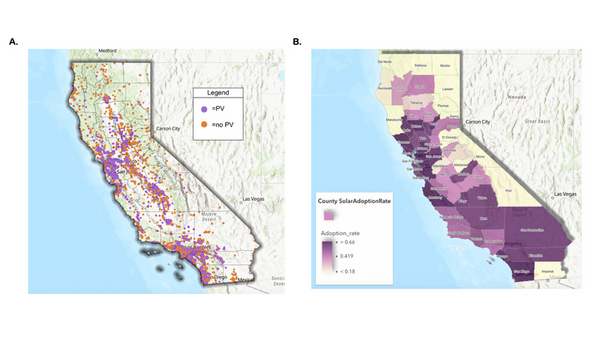
The authors investigated adoption rates of solar photovoltaic power at K-12 schools in California.
Read More...Mapping equity in California K-12 school solar adoption using computer vision
The authors investigated adoption rates of solar photovoltaic power at K-12 schools in California.
Read More...Using satellite surface temperature data to monitor urban heat island
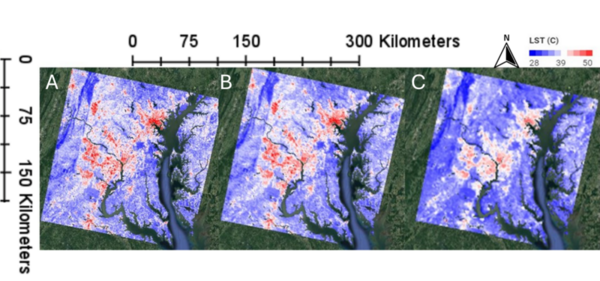
This manuscript investigates the urban heat island (UHI) effect by utilizing two satellite datasets: Landsat (high spatial resolution, lower temporal resolution) and MODIS (lower spatial resolution, high temporal resolution). The authors hypothesized that Landsat would provide better spatial detail, while MODIS would better capture temporal variations. Their analysis in the Washington D.C.–Baltimore region supports these hypotheses, demonstrating that Landsat offers finer spatial details, whereas MODIS provides more consistent seasonal patterns and better detects heatwave frequencies.
Read More...Locating carcinogenic per- and poly-fluoroalkyl substances in Santa Clarita groundwater
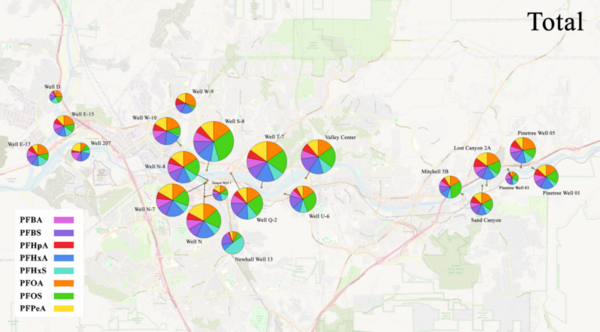
This study investigates PFAS contamination in Santa Clarita groundwater, focusing on potential sources. The study employs statistical analysis to assess data quality and trends which allowed them to identified domestic waste, fire extinguisher materials, and food packaging as the most likely sources of contamination.
Read More...Drought prediction in the Midwestern United States using deep learning
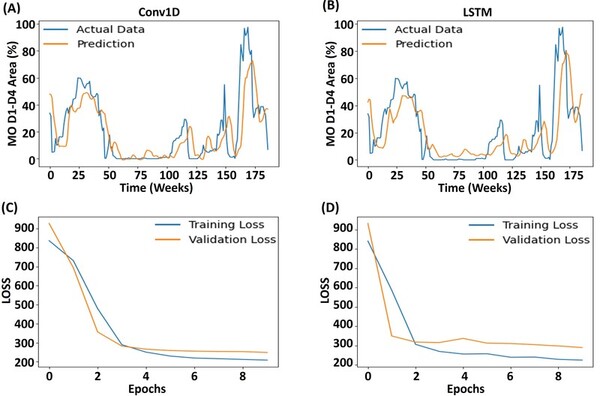
The authors studied the ability of deep learning models to predict droughts in the midwestern United States.
Read More...Fire detection using subterranean soil sensors
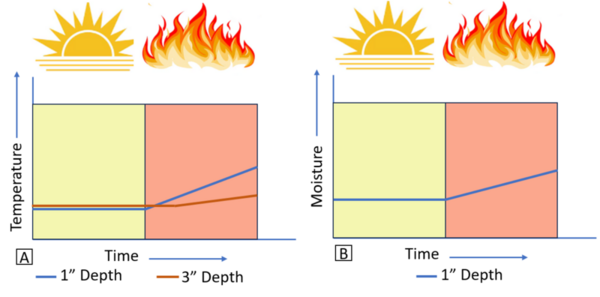
The authors looked at how soil temperature changes with fire to develop a sensor system that could aid in earlier detection of fires.
Read More...AeroPurify: Autonomous air filtration UAV using real-time 3-D Monte Carlo gradient search
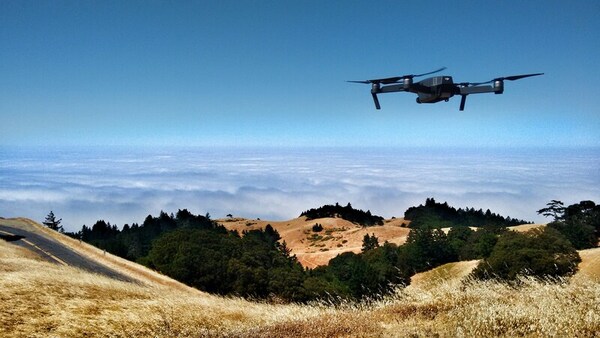
Here the authors present an autonomous drone air filtration system that uses a novel algorithm, the gradient ascent ML particle filter (GA/MLPF), to efficiently locate and mitigate outdoor air pollution. They demonstrate that their GA/MLPF algorithm is significantly more efficient than the conventional gradient ascent algorithm, reducing both the time and number of waypoints needed to find the source of pollution.
Read More...Observing food and density effects on the reproductive strategies of Heterandria formosa
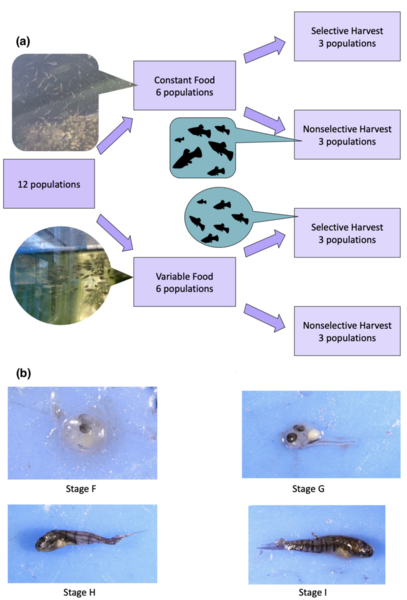
The authors looked at the impact of different harvest and feeding treatments on Heterandria formosa over three generations as a model for changes in marine ecosystems.
Read More...Investigating intertidal sediment sorting and median particle diameter variation on an eroding beach face
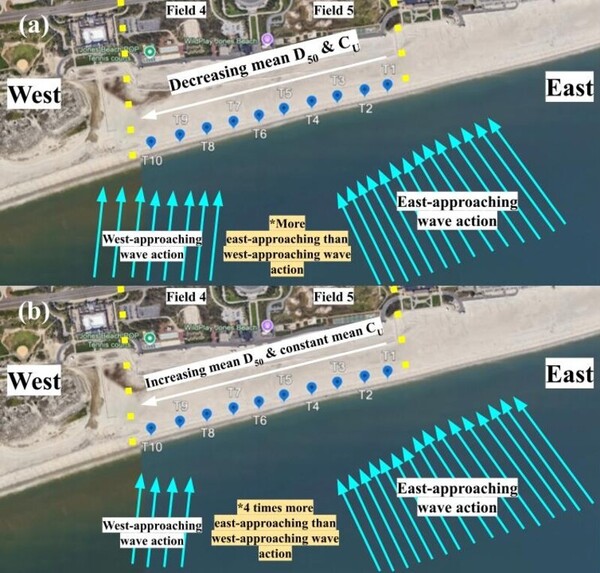
The authors looked at beach nourishment (a way to combat erosion on coasts) and resulting grain size distribution. Their work is important to understand the dynamics of erosion and it's relation to wave action and the implications this has for efforts to mitigate coastal erosion.
Read More...Using two-step machine learning to predict harmful algal bloom risk
Using machine learning to predict the risk of algae bloom
Read More...School sustainability: The implications of implementing living walls at schools for air purification
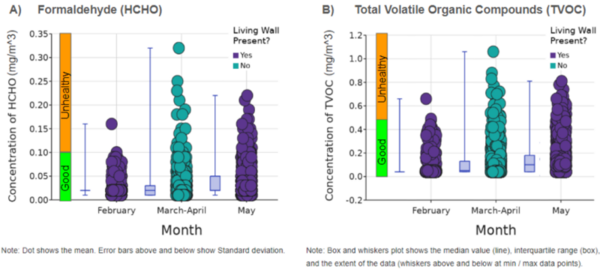
The authors compare air quality in the presence and absence of a living wall in a high school hallway in Brooklyn, NY.
Read More...