Locating carcinogenic per- and poly-fluoroalkyl substances in Santa Clarita groundwater
(1) West Ranch High School, (2) Hong Kong Baptist University
https://doi.org/10.59720/24-323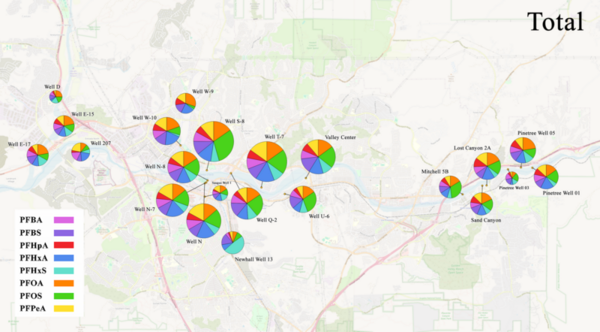
Per- and poly-fluoroalkyl substances (PFASs) are a widespread type of industrial waste notorious for their carcinogenic effects. Specifically, one of the main routes of human exposure is through drinking water. As drought conditions worsen around the world, preserving clean and safe water has become crucial, which necessitates pinpointing different water contamination pathways that can occur. Santa Clarita is an example of a water-stressed region that has been struggling with PFAS contamination and is unique in that residents are mostly reliant on groundwater. The region has a municipal landfill with multiple complaints filed about its leachate production. This study focused on identifying potential sources of the PFASs found in Santa Clarita’s public wells. We hypothesized that the biggest source would be the leachate produced from a nearby municipal waste landfill infiltrating the groundwater. To identify the sources, we used a multivariate factor tool specialized for source apportionment called Positive Matrix Factorization. While our hypothesis was not confirmed with conclusive evidence, we identified three potential sources of PFASs, including domestic waste, fire extinguisher materials, and food packaging. These results indicated that many different physical sources, including leachate, may be contributing to the PFASs derived from domestic waste. We concluded that further research may be necessary to derive a more solid conclusion. Our study could inform California lawmakers about how to address the growing issue of PFASs in Santa Clarita.
This article has been tagged with: