Browse Articles

Overcoming The Uncanny Valley Through Shared Stressful Experience with a Humanoid Robot

Bing et al. | Jun 12, 2018

Overcoming The Uncanny Valley Through Shared Stressful Experience with a Humanoid Robot

The "Uncanny Valley" is a phenomenon in which humans feel discomfort in the presence of objects that are almost, but not quite, human-like. In this study, the authors tested whether this phenomenon could be overcome by sharing a stressful experience with a humanoid robot. They found that human subjects more readily accepted a robot partner that they had previously shared a stressful experience with, suggesting a potential method for increasing the effectiveness of beneficial human-robot interactions by reducing the Uncanny Valley effect.

Read More...

Exploring Interactions between PFAS (Per- and Polyfluoroalkyl Substances) and proteins

Lu-Yang et al. | May 16, 2026

Exploring Interactions between PFAS (Per- and Polyfluoroalkyl Substances) and proteins
Image credit: Authors

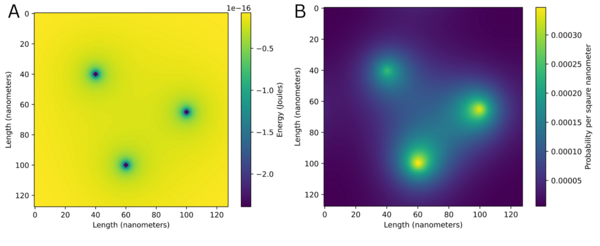
Here the authors investigated how the "forever chemical" perfluorooctanoic acid binds to bovine serum albumin (BSA) using computational software to simulate its potential impact on essential human plasma proteins. They identify a possible, high-energy binding configuration that could persistently impair protein functions, underscoring the critical need for further research into the long-term health risks of per- and poly-fluoroalkyl substances exposure.

Read More...

Validating DTAPs with large language models: A novel approach to drug repurposing

Curtis et al. | Mar 02, 2025

Validating DTAPs with large language models: A novel approach to drug repurposing
Image credit: Growtika

Here, the authors investigated the integration of large language models (LLMs) with drug target affinity predictors (DTAPs) to improve drug repurposing, demonstrating a significant increase in prediction accuracy, particularly with GPT-4, for psychotropic drugs and the sigma-1 receptor. This novel approach offers to potentially accelerate and reduce the cost of drug discovery by efficiently identifying new therapeutic uses for existing drugs.

Read More...