Energy beverages and sugar: How sweetener type dictates specific gravity
(1) Brentwood School, (2) Duke Clinical Research Institute, Duke University
https://doi.org/10.59720/24-267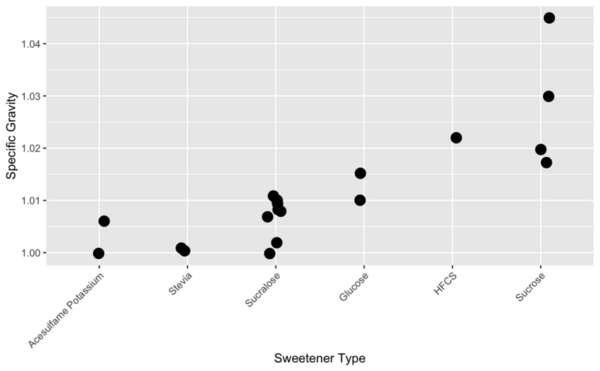
Specific gravity can be used to measure the density of a beverage compared to water. We examined the factors that influence specific gravity in twenty different energy and sports beverages. We hypothesized that sugar content is the main contributing factor in determining specific gravity of a beverage, and that caffeine content, sodium content and carbonation are also correlated with specific gravity. We saw no correlation between caffeine content, sodium content, carbonation and specific gravity. However, caloric density was highly correlated with specific gravity. Beverages that contained real sugar had a higher specific gravity than beverages with zero-calorie sweeteners. Our data supports the fact that zero-calorie sweeteners are 200–700 times stronger than real sugars. This means a lower volume of zero-calorie sweetener needs to be added for the same sweet taste. Zero-calorie sweeteners are marketed as a healthier alternative to real sugars, but the actual health consequences are under debate. It is common for beverage companies to publish their own sponsored research on the reported health benefits of their beverages. Therefore, it is essential that independent research is conducted on these beverages. Globally, energy and sports beverages can lead to disease, therefore a better understanding of the composition of these beverages can support public health.
This article has been tagged with: