Gene expression analysis of febrile seizure’s impact on mesial temporal lobe epilepsy
(1) Great Neck South High School
https://doi.org/10.59720/23-302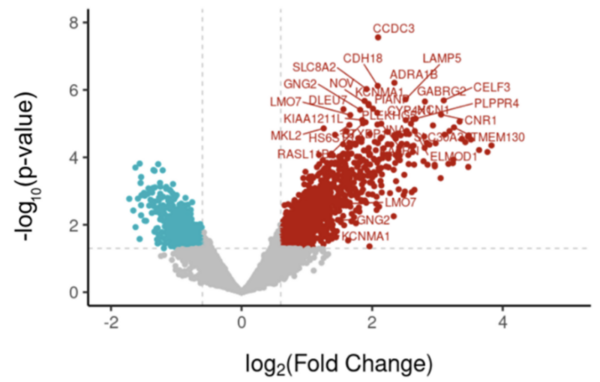
Epilepsy is a neurological disorder characterized by the presence of recurrent and unprovoked seizures. Mesial temporal lobe epilepsy (MTLE) is the most common partial (or focal) epilepsy in adults. Patients suffering from MTLE may or may not have a history of febrile seizures. We hypothesized that patients with a history of febrile seizures have a set of differentially expressed genes and related pathways on their gene interaction network compared to patients without a history of febrile seizure. We acquired data from tissues obtained from patients’ hippocampus area from the NCBI Gene Expression Omnibus (GEO) database and used Limma and Deseq2, two libraries, to identify and analyze differentially expressed genes. In addition, we built a gene interaction network from the differentially expressed genes. We identified five pathways or clusters in the network, together with major hubs that could be later targeted for MTLE treatment. There were also eight highly differentially expressed genes that are not in the network, indicating that further study is needed to better understand their biological mechanism. Findings from this research could lead to the discovery of different treatment options for such patients in the future.
This article has been tagged with: