Browse Articles

Creating a drought prediction model using convolutional neural networks

Bora et al. | Oct 08, 2024

Creating a drought prediction model using convolutional neural networks
Image credit: The authors

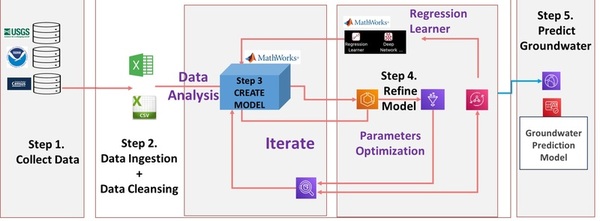
Droughts kill over 45,000 people yearly and affect the livelihoods of 55 million others worldwide, with climate change likely to worsen these effects. However, unlike other natural disasters (hurricanes, etc.), there is no early detection system that can predict droughts far enough in advance to be useful. Bora, Caulkins, and Joycutty tackle this issue by creating a drought prediction model.

Read More...

Identifying shark species using an AlexNet CNN model

Sarwal et al. | Sep 23, 2024

Identifying shark species using an AlexNet CNN model

The challenge of accurately identifying shark species is crucial for biodiversity monitoring but is often hindered by time-consuming and labor-intensive manual methods. To address this, SharkNet, a CNN model based on AlexNet, achieved 93% accuracy in classifying shark species using a limited dataset of 1,400 images across 14 species. SharkNet offers a more efficient and reliable solution for marine biologists and conservationists in species identification and environmental monitoring.

Read More...

Tree-Based Learning Algorithms to Classify ECG with Arrhythmias

Sun et al. | Apr 23, 2025

Tree-Based Learning Algorithms to Classify ECG with Arrhythmias

Arrhythmias vary in type and treatment, and ECGs are used to detect them, though human interpretation can be inconsistent. The researchers tested four tree-based algorithms (gradient boosting, random forest, decision tree, and extra trees) on ECG data from over 10,000 patients.

Read More...

SmartZoo: A Deep Learning Framework for an IoT Platform in Animal Care

Ji et al. | Aug 07, 2024

SmartZoo: A Deep Learning Framework for an IoT Platform in Animal Care

Zoos offer educational and scientific advantages but face high maintenance costs and challenges in animal care due to diverse species' habits. Challenges include tracking animals, detecting illnesses, and creating suitable habitats. We developed a deep learning framework called SmartZoo to address these issues and enable efficient animal monitoring, condition alerts, and data aggregation. We discovered that the data generated by our model is closer to real data than random data, and we were able to demonstrate that the model excels at generating data that resembles real-world data.

Read More...

Using two-stage deep learning to assist the visually impaired with currency differentiation

Nachnani et al. | Jun 02, 2024

Using two-stage deep learning to assist the visually impaired with currency differentiation
Image credit: Omer Shahzad

Here, recognizing the difficulty that visually impaired people may have differentiating United States currency, the authors sought to use artificial intelligence (AI) models to identify US currencies. With a one-stage AI they reported a test accuracy of 89%, finding that multi-level deep learning models did not provide any significant advantage over a single-level AI.

Read More...