Browse Articles

Rhythmic lyrics translation: Customizing a pre-trained language model using stacked fine-tuning

Chong et al. | May 01, 2023

Rhythmic lyrics translation: Customizing a pre-trained language model using stacked fine-tuning
Image credit: Pixabay

Neural machine translation (NMT) is a software that uses neural network techniques to translate text from one language to another. However, one of the most famous NMT models—Google Translate—failed to give an accurate English translation of a famous Korean nursery rhyme, "Airplane" (비행기). The authors fine-tuned a pre-trained model first with a dataset from the lyrics domain, and then with a smaller dataset containing the rhythmical properties, to teach the model to translate rhythmically accurate lyrics. This stacked fine-tuning method resulted in an NMT model that could maintain the rhythmical characteristics of lyrics during translation while single fine-tuned models failed to do so.

Read More...
Large Language Models are Good Translators

Zeng et al. | Oct 16, 2024

Large Language Models are Good Translators

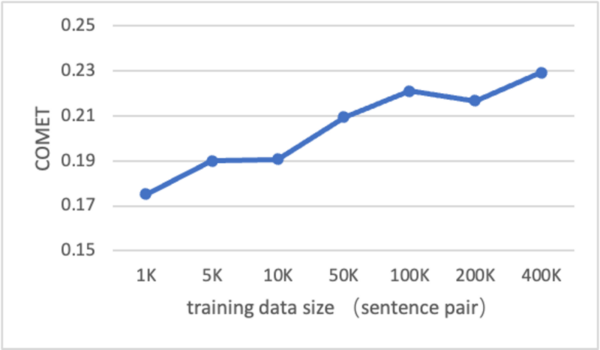
Machine translation remains a challenging area in artificial intelligence, with neural machine translation (NMT) making significant strides over the past decade but still facing hurdles, particularly in translation quality due to the reliance on expensive bilingual training data. This study explores whether large language models (LLMs), like GPT-4, can be effectively adapted for translation tasks and outperform traditional NMT systems.

Read More...

Feature extraction from peak detection algorithms for enhanced EMG-based hand gesture recognition models

Nathan et al. | Jan 10, 2026

Feature extraction from peak detection algorithms for enhanced EMG-based hand gesture recognition models
Image credit: Nathan and Raju

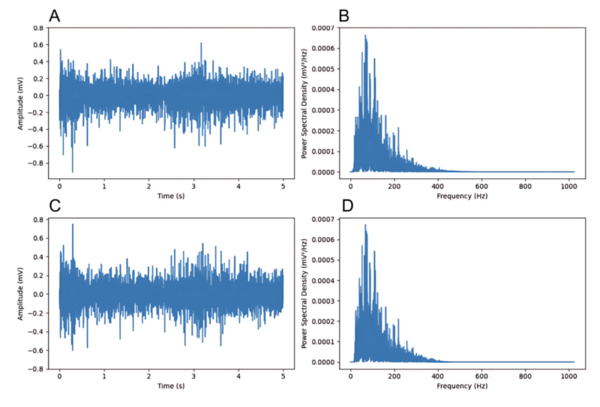
This manuscript evaluates peak detection algorithms for feature extraction in EMG-based hand gesture recognition using a random forest classifier. The study demonstrates that wavelet-based peak detection features achieve the highest classification accuracy (96.5%), outperforming other methods. The results highlight the potential of peak features to improve EMG-based prosthetic control systems.

Read More...

Assessing and Improving Machine Learning Model Predictions of Polymer Glass Transition Temperatures

Ramprasad et al. | Mar 18, 2020

Assessing and Improving Machine Learning Model Predictions of Polymer Glass Transition Temperatures

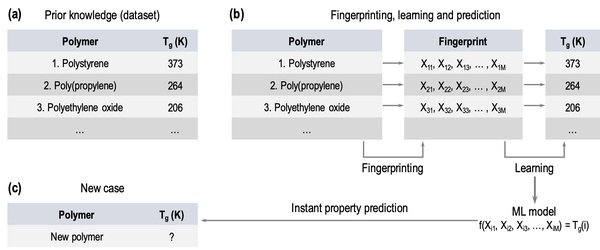
In this study, the authors test whether providing a larger dataset of glass transition temperatures (Tg) to train the machine-learning platform Polymer Genome would improve its accuracy. Polymer Genome is a machine learning based data-driven informatics platform for polymer property prediction and Tg is one property needed to design new polymers in silico. They found that training the model with their larger, curated dataset improved the algorithm's Tg, providing valuable improvements to this useful platform.

Read More...

Assessing machine learning model efficacy for brain tumor MRI classification: a multi-model approach

Dhingra et al. | Mar 14, 2026

Assessing machine learning model efficacy for brain tumor MRI classification: a multi-model approach
Image credit: Dhingra and Dhingra

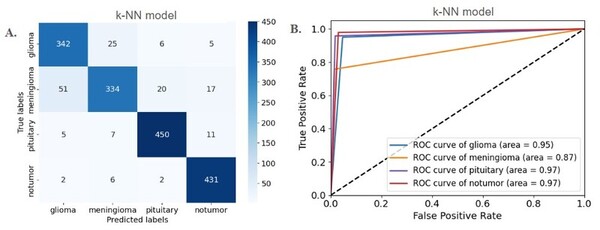
This manuscript explores the performance of five different machine learning models in classifying brain tumors from a dataset of MRI scans. The authors find that several of the models showed >90% accuracy. Thus, the authors suggest that machine learning models demonstrate potential for effective implementation in clinical settings, including as a diagnostic tool that can be used to complement the expertise of neuroradiologists.

Read More...