
Utilization of neural network to analyze Free Word Association to predict accurately age, gender, first language, and current country.
Read More...Investigating the connection between free word association and demographics
Utilization of neural network to analyze Free Word Association to predict accurately age, gender, first language, and current country.
Read More...Evaluating need for adversarial training data given algorithmic defense methods against adversarial attacks
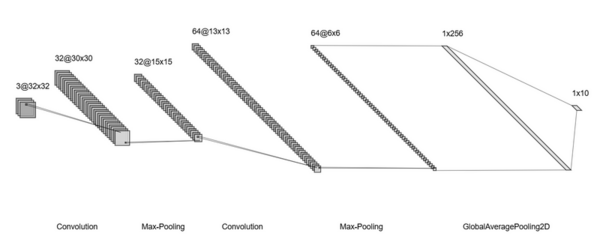
The purpose of this study was to determine the necessity of previous non-algorithmic attacks (Adversarial Training) in light of algorithmic defense methods (Gradient Masking and Defensive Distillation) against FGSM attacks. We found a significant increase in image classification accuracy from defense methods with the non-algorithmic defense method compared to ones without. By analyzing the significance with a McNemar test, we determined that the inclusion of non-algorithmic defense methods is still necessary in light of new algorithmic defense methods.
Read More...Weather-based power outage prediction in New York City: An ensemble machine learning approach

This study contributes to our understanding of how urban energy systems respond to climate variability and inform strategies for enhancing power grid resilience. The findings can help inform urban planners and infrastructure developers by identifying the factors that make regions within a power grid more vulnerable.
Read More...Minimizing distortion with additive manufacturing parts using Machine Learning
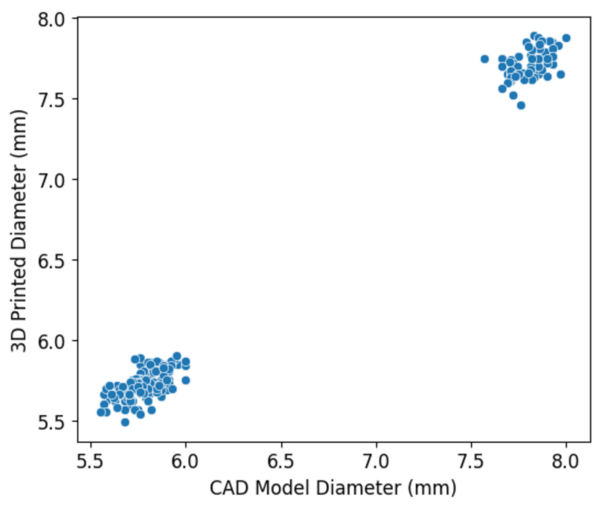
This study explores how to predict and minimize distortion in 3D printed parts, particularly when using affordable PLA filament. The researchers developed a model using a gradient boosting regressor trained on 3D printing data, aiming to predict the necessary CAD dimensions to counteract print distortion.
Read More...Assessing large language models for math tutoring effectiveness
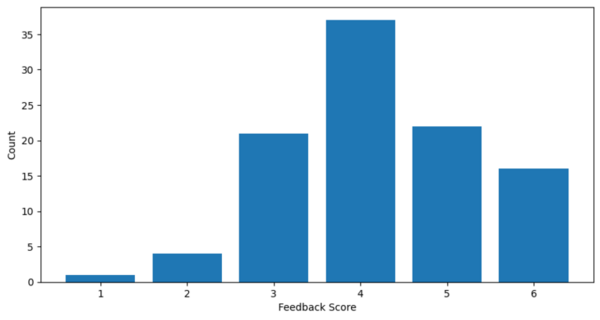
Authors examine the effectiveness of Large Language Models (LLMs) like BERT, MathBERT, and OpenAI GPT-3.5 in assisting middle school students with math word problems, particularly following the decline in math performance post-COVID-19.
Read More...Time-Efficient and Low-Cost Neural Network to detect plant disease on leaves and reduce food loss and waste
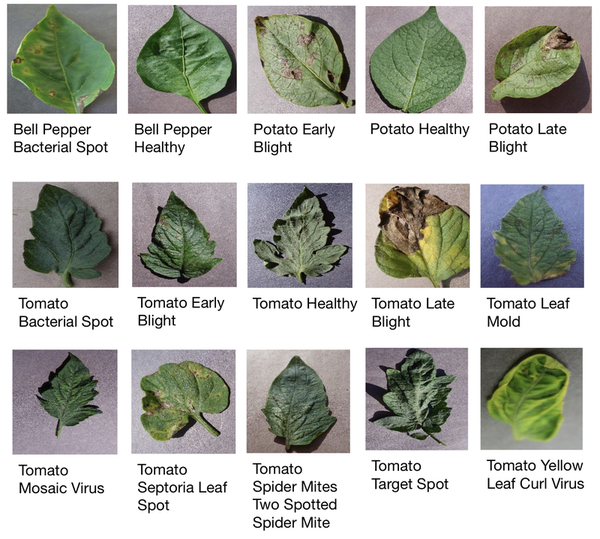
About 25% of the food grown never reaches consumers due to spoilage, and 11.5 billion pounds of produce from gardens are wasted every year. Current solutions involve farmers manually looking for and treating diseased crops. These methods of tending crops are neither time-efficient nor feasible. I used a convolutional neural network to identify signs of plant disease on leaves for garden owners and farmers.
Read More...Evaluating the impact of prompting styles on LLM accuracy for AIME math questions
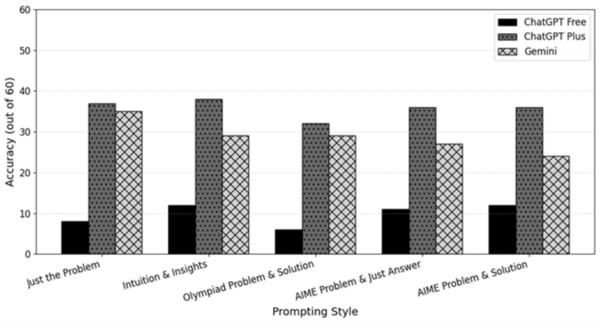
Large language models are increasingly used to solve math problems, but their ability to handle multi-step reasoning remains uncertain. In this study, students tested whether different prompting styles could improve LLM accuracy on challenging AIME math questions and found that detailed step-by-step solutions did not significantly outperform simpler prompts. These results suggest that improving LLM mathematical reasoning may require deeper model-level advances rather than changes in prompting style alone.
Read More...