Browse Articles

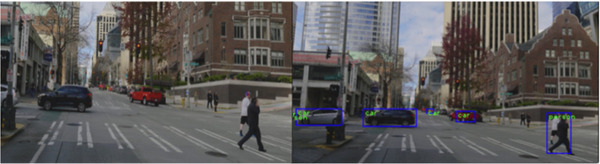
A novel deep learning model for visibility correction of environmental factors in autonomous vehicles

Dey et al. | Oct 31, 2022

A novel deep learning model for visibility correction of environmental factors in autonomous vehicles

Intelligent vehicles utilize a combination of video-enabled object detection and radar data to traverse safely through surrounding environments. However, since the most momentary missteps in these systems can cause devastating collisions, the margin of error in the software for these systems is small. In this paper, we hypothesized that a novel object detection system that improves detection accuracy and speed of detection during adverse weather conditions would outperform industry alternatives in an average comparison.

Read More...

Impact of gadodiamide (Omniscan) on a beef liver catalase ex vivo model

Hirsch et al. | Mar 10, 2023

Impact of gadodiamide (Omniscan) on a beef liver catalase <em>ex vivo</em> model
Image credit: Marcelo Leal

Here, seeking to better understand the effects of gadolinium-based contrast agents, dyes typically used for MRI scans, the authors evaluated the activity of catalase found in beef liver both with and without gadodiamide when exposed to hydrogen peroxide. They found that gadioamide did not significantly inhibit catalase's activity, attributing this lack of effects to the chelating agent found in gadodiamide.

Read More...

How visualization influences strength endurance

Moore et al. | Jul 06, 2022

How visualization influences strength endurance

Recognizing a potential link between mental focus and physical endurance, here, the authors considered the effects of mental visualization on strength endurance. By comparing the number of repetitions completed in sets where the lifter was aware of the weight to be lifted against sets where the lifter was kept unaware, they found that the lifter was able to maintain strength endurance when unable to accurately visualize the weight they lifted in this exploratory study.

Read More...

Vineyard vigilance: Harnessing deep learning for grapevine disease detection

Mandal et al. | Aug 21, 2024

Vineyard vigilance: Harnessing deep learning for grapevine disease detection

Globally, the cultivation of 77.8 million tons of grapes each year underscores their significance in both diets and agriculture. However, grapevines face mounting threats from diseases such as black rot, Esca, and leaf blight. Traditional detection methods often lag, leading to reduced yields and poor fruit quality. To address this, authors used machine learning, specifically deep learning with Convolutional Neural Networks (CNNs), to enhance disease detection.

Read More...