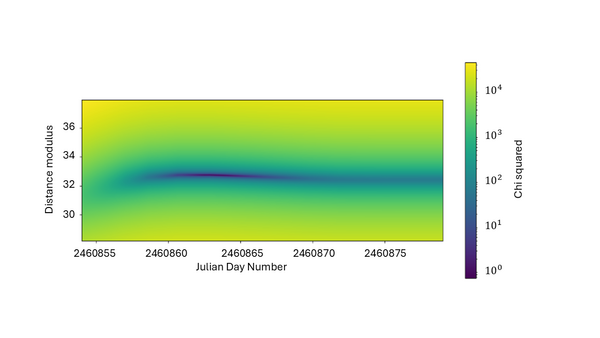
We observed supernova 2025ngs and created its light curve through aperture photometry. We were then able to determine that 2025ngs was a Type II-P supernova.
Read More...Photometry of the Type II supernova 2025ngs
We observed supernova 2025ngs and created its light curve through aperture photometry. We were then able to determine that 2025ngs was a Type II-P supernova.
Read More...Canopy complexity and plant morphology determine detectability in multi-perspective drone imagery
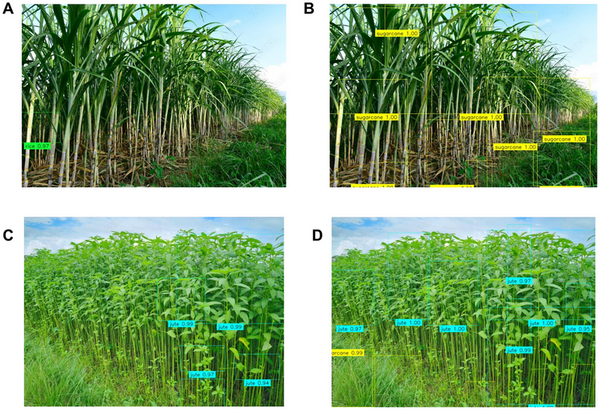
Multi-perspective drone imagery (adding oblique views to top-down shots) raised crop classification accuracy from 35.73% to 52.93% across five species. The improvement scaled with canopy complexity, from +4.2% for simple rice to +38.1% for structurally complex sugarcane.
Read More...Chlorpyrifos exposure in mice leads to altered expression of key neurodevelopmental proteins
How teaching style influences math learning: Comparing discovery and traditional instruction
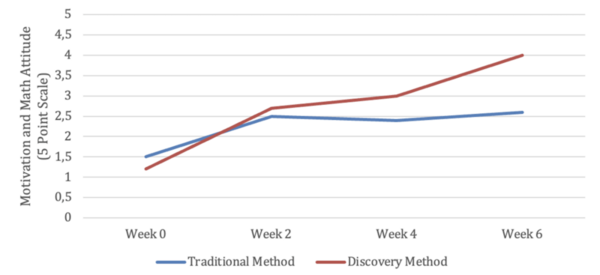
This study compares traditional and discovery-based instructional methods in online middle school mathematics education. Findings show that discovery-based learning significantly improves students’ academic performance and attitudes, highlighting the value of inquiry-driven instruction for enhancing both understanding and motivation.
Read More...In silico design of an epitope-based vaccine for Rocio virus using phage display and E. coli expression system
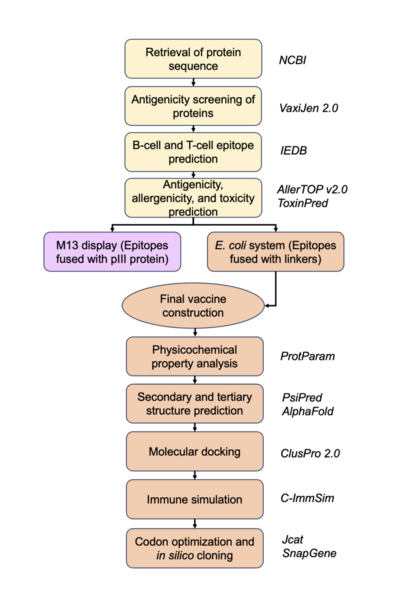
The explored the potential of an epitope-based vaccine for Rocio virus using computational methods and M13 bacteriophage technology. Researchers identified 30 promising B- and T-cell epitopes and designed vaccine candidates using both phage display and E. coli expression systems.
Read More...Performance comparison of indoor polyculture utilizing hydroponic and soil-based systems
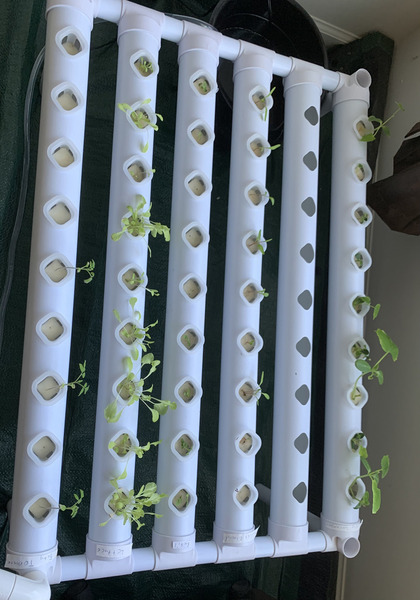
Hydroponics is often promoted as a highly efficient alternative to traditional soil farming, but its effectiveness in small indoor polyculture systems is not well understood. In this study, students compared plant growth and maturity across hydroponic and soil-based indoor polycultures and found that soil grown plants were generally taller and more mature than those grown hydroponically. These results suggest that soil-based methods may outperform hydroponics in certain household polyculture settings.
Read More...Testing the Impact of a Geometric Curvature Variable on the Accuracy of Econometric Forecasting Models
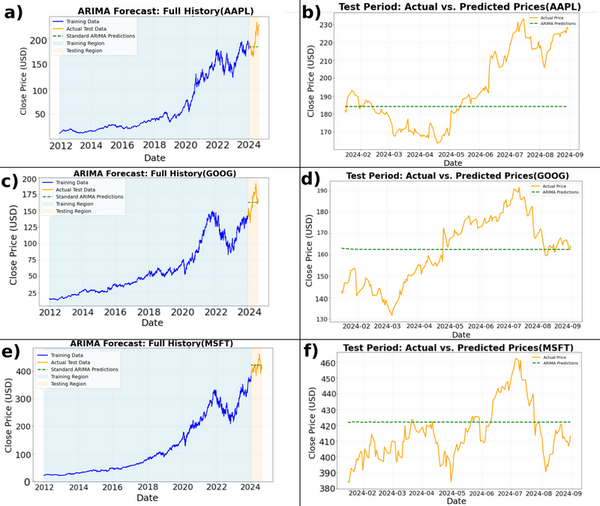
Classical financial forecasting models often fail to capture the complex, nonlinear dynamics of the stock market. This study demonstrates that incorporating a single variable to represent the 'geometric curvature' of a time series dramatically improves the accuracy of standard econometric forecasts. Our findings highlight that geometric properties are a significant predictive factor, opening new avenues for more powerful financial modeling.
Read More...A model for angle evolution in conical piles formed using the fixed funnel method
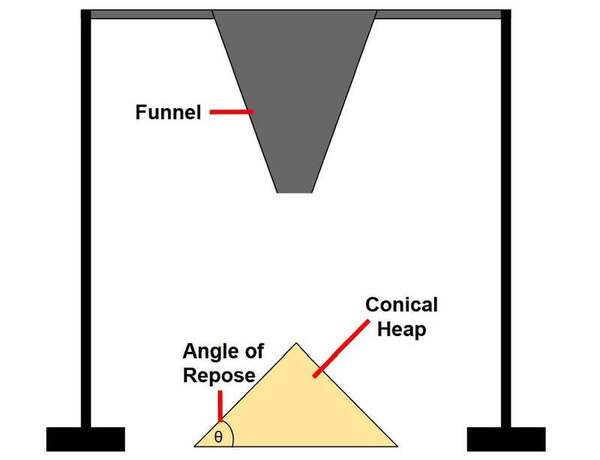
When granular materials are poured onto a surface, they form conical piles whose slopes increase before reaching a stable angle of repose. We found that this angle evolution follows a previously unrecognized two-phase exponential growth pattern that is conserved across granular materials with diverse particle properties. The parameters of this model correlate with particle friction and are influenced by deposition conditions, providing a quantitative framework for describing pile formation.
Read More...Early detection of student burnout using data science: a study of behavioral and psychological indicators

This study examined behavioral and psychological predictors of burnout among high school and university students in Pakistan using survey data and machine-learning models. Shorter sleep and greater mental fatigue—especially fatigue—were associated with higher burnout risk, while a Random Forest model successfully identified students at risk of burnout.
Read More...Effect of fuel density and temperature on helium-3 fusion reaction rates in stellar cores
.png)
This paper discusses how the conditions at the center of stars affects the nuclear reactions that happen inside these stars. We focused on the effect of temperature and density and found that these two properties interacted to create a greater effect when combined than when separate.
Read More...