Environmental contributors of asthma via explainable AI: Green spaces, climate, traffic & air quality
(1) Urbana High School, (2) University of Pennsylvania
https://doi.org/10.59720/25-031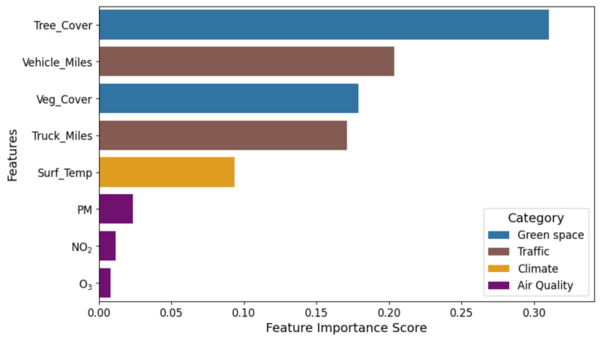
Asthma, a chronic respiratory disease affecting 28 million Americans, imposes a substantial burden on public health, with 986,453 emergency department visits reported for asthma in 2020. While prior research has examined the impact of green spaces, climate, traffic, and outdoor air quality (GCTA) on asthma prevalence, these factors have largely been studied separately. Despite their importance individually, their combined and interactive effects remain less understood. We hypothesized that the number of asthma-related emergency department visits can be predicted by multimodal factors such as GCTA. This study applied three machine learning algorithms—k-nearest neighbors (KNN), Extreme Gradient Boosting (XGBoost), and random forest regression (RFR)—to analyze environmental, health, and traffic data, optimizing model performance to achieve high prediction accuracy in understanding asthma prevalence. Using explainable AI, we demonstrated that GCTA interact in intricate ways, collectively shaping asthma prevalence. Our findings underscored the significance of GCTA as key contributors to asthma risk, with green space effects being the most significant and complex, as green spaces appeared to mitigate air pollution but also potentially increased allergen exposure. This study greatly advanced our understanding of the interplay of green cover, regional climate, and air pollution as it relates to urban health. These insights provided actionable guidance for urban planning by highlighting the need to increase green space coverage strategically, manage traffic-related emissions, and consider localized climate conditions—ultimately supporting more targeted interventions to mitigate respiratory disease burden in urban populations.
This article has been tagged with: