A 1D model of ultrasound waves for diagnosing of hepatomegaly and cirrhosis
(1) Heritage International Xperiential School, (2) Mahindra International School
https://doi.org/10.59720/23-147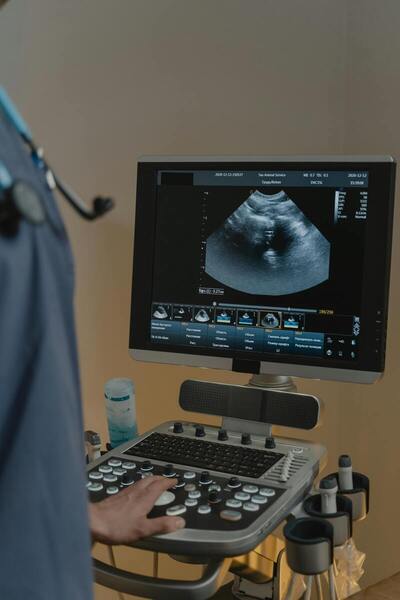
The liver is an integral part of the body and liver diseases are a prevalent issue worldwide. Ultrasound is one of the methods used to diagnose them initially. It transmits high-energy waves from one surface to the other and reflections between the surfaces are recorded. In this study, we present the application of ultrasound waves for the diagnosis of hepatomegaly and cirrhosis, under the assumption that the size of these tissues varies majorly in one dimension (thickness) and there are minor or negligible changes in other two dimensions (length and breadth). The model uses the ratio of intensities of the ultrasound waves inside and across the liver and simple one-dimensional (1D) diagram to mathematically analyze a normal, enlarged liver and cirrhotic liver. Since our method was not tested on an actual liver, a 1D model provided better clarity and simplicity for making the mathematical model. We aim to provide a non-invasive way of diagnosing hepatomegaly in adults. We hypothesized that under diseased conditions, the changes in the liver’s tissue structure will increase the loss of ultrasound. It will therefore show an inversely proportional graph between the intensity of the ultrasound and thickness of the liver for both hepatomegaly and cirrhosis. Results showed a change in the ratio of reflected intensities in cirrhosis and hepatomegaly vis-à-vis a normal liver. This is promising as non-invasive methods like mathematical models can be used to diagnose liver conditions. However, the current results were not statistically significant and therefore require further testing.
This article has been tagged with: