The efficacy of spent green tea leaves and coffee grounds on the growth of Ocimum basilicum
(1) Williamston High School Math and Science Academy
* These authors made equal contributions
https://doi.org/10.59720/24-173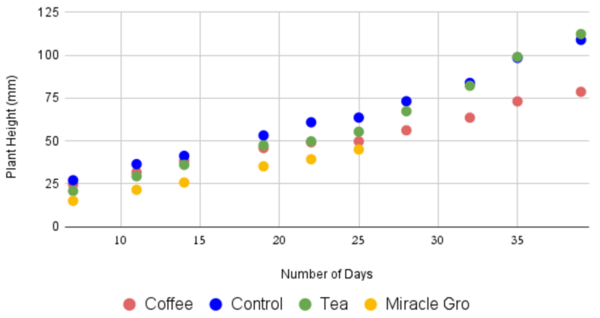
As increased waste production leads to concerns with recycling and waste management in society today, scientists are looking for methods to combat this, such as composting and organic fertilizers. We sought to determine the effectiveness of used green tea leaves and coffee grounds as a fertilizer substitute, as determined by the height, number of leaves, and fresh and dry weight of basil plants. In our experiment, dried green tea leaves, dried coffee grounds, synthetic fertilizer, and a control group with nothing added were mixed into the soil of 20 basil plants. We hypothesized that both tea leaves and synthetic fertilizer would promote the growth of height and mass compared to the control, but coffee would be similar to the control. We found that the application of coffee grounds significantly lessened the growth of the basil plants. According to our results, there was no significant difference between adding tea leaves and adding nothing, while adding coffee grounds is detrimental to basil plant growth and produces significantly worse results than the control plants in height and fresh weight. These results only supported some of our hypotheses, however, they show that the commonly added fertilizer of coffee grounds may not be as effective as many may suggest.