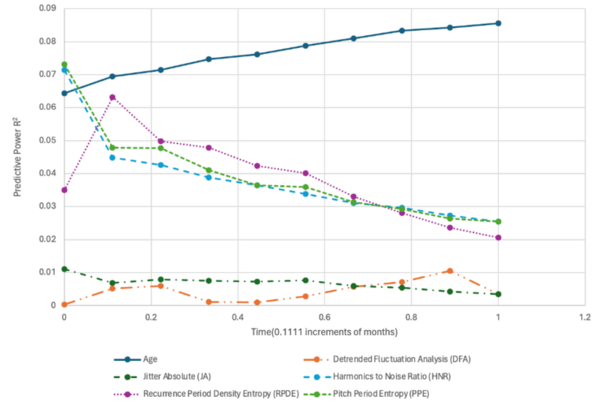
The authors looked at the ability to use audio clips to analyze the progression of Parkinson's disease.
Read More...Using advanced machine learning and voice analysis features for Parkinson’s disease progression prediction
The authors looked at the ability to use audio clips to analyze the progression of Parkinson's disease.
Read More...Protein kinases in phagocytosis (phagocytotic kinome): A promising biomarker set in cancer therapeutics
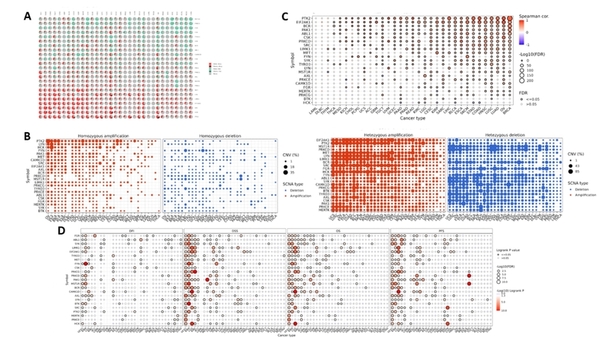
This study analyzes genetic alterations and expression patterns of protein kinases involved in phagocytosis across multiple cancers using TCGA data.
Read More...DNA-SEnet: A convolutional neural network for classifying DNA-asthma associations

In this study, the authors developed a model named DNA Sequence Embedding Network (DNA-SEnet) to classify DNA-asthma associations using their genomic patterns.
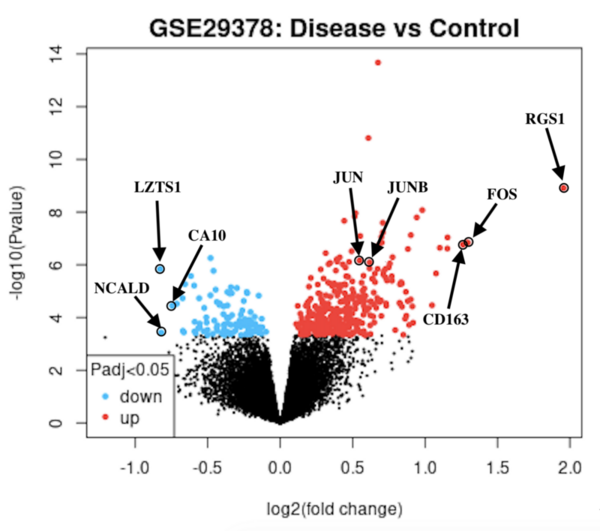
Read More...Upregulation of the AP-1 complex as a potential biomarker for Alzheimer’s disease (AD)
Using the COmplex PAthway SImulator, Stage Analysis, and Chemical Kinetics to Develop a Novel Solution to Lower Tau Concentrations in Alzheimer’s Disease
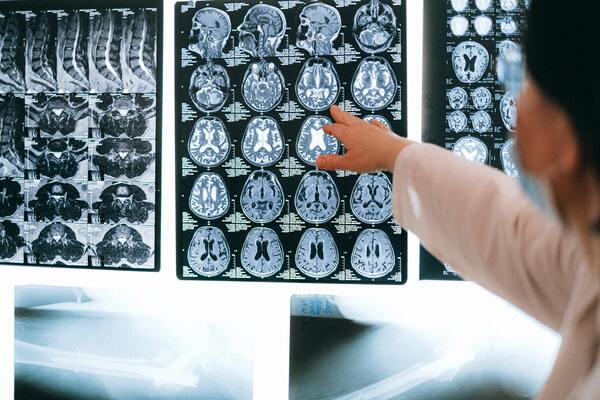
In this study, the authors ask whether a Tau immunotherapy treatment, Hsp70 protein treatment, or dual treatment approach of both the Tau imunotherapy treatment and Hsp70 protein treatment leads to a greater reduction in Tau protein concentration in Alzheimer's disease. Overall, they conclude that the effectiveness of the treatment ultimately relies on the stage of Alzheimer’s.
Read More...Development of a Novel Treatment Strategy to Treat Parkinsonian Neurodegeneration by Targeting Both Lewy Body Aggregation and Dopaminergic Neuronal Degradation in a Drosophila melanogaster Model
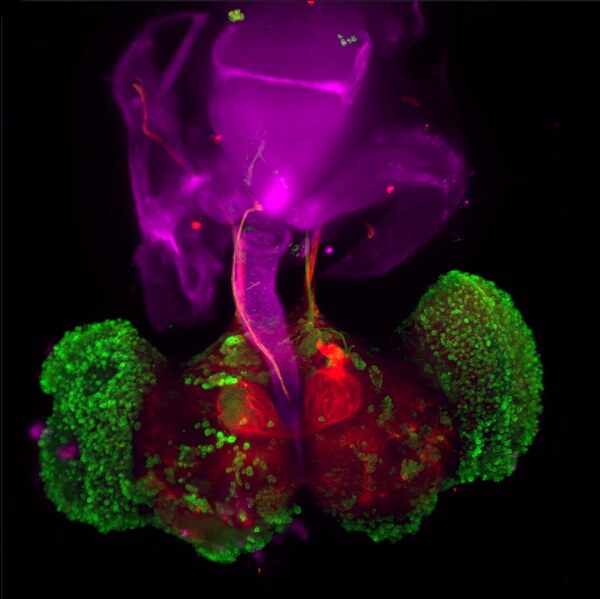
In this article the authors address the complex and life quality-diminishing neurodegenerative disease known as Parkinson's. Although genetic and/or environmental factors contribute to the etiology of the disease, the diagnostic symptoms are the same. By genetically modifying fruit flies to exhibit symptoms of Parkinson's disease, they investigate whether drugs that inhibit mitochondrial calcium uptake or activate the lysosomal degradation of proteins could improve the symptoms of Parkinson's these flies exhibit. The authors report the most promising outcome to be that when both types of drugs were used together. Their data provides encouraging evidence to support further investigation of the utility of such drugs in the treatment of human Parkinson's patients.
Read More...Investigating the inhibition of catabolic enzymes for implications in cardiovascular diseases and diabetes
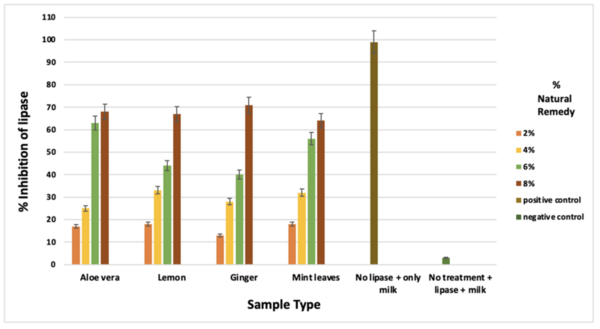
Enzymes that metabolize carbohydrates and lipids play a key role in our health, including global health challenges like cardiovascular diseases and diabetes. To learn more about these important enzymes, Gandhi and Gandhi test whether various natural substances (ginger, Aloe vera, lemon, and mint leaves) affect the activity of α-amylase and lipase enzymes.
Read More...Examining the correlation between Massa Medicata Fermentata and Crohn’s disease: Implications for treatment and patient safety
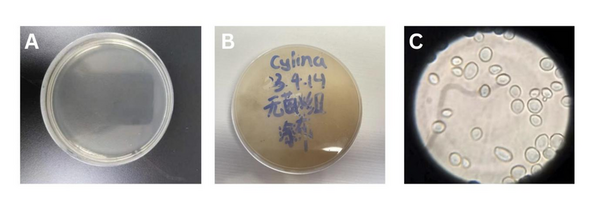
Crohn’s disease is a chronic inflammatory bowel condition with symptoms like abdominal pain, fatigue, diarrhea, and malnutrition. Though there's no cure, various treatments help manage it. This study explored the potential impact of Massa Medicata Fermentata (MMF), a fermented Chinese herbal medicine containing Saccharomyces cerevisiae, on Crohn’s disease.
Read More...Contrasting role of ASCC3 and ALKBH3 in determining genomic alterations in Glioblastoma Multiforme
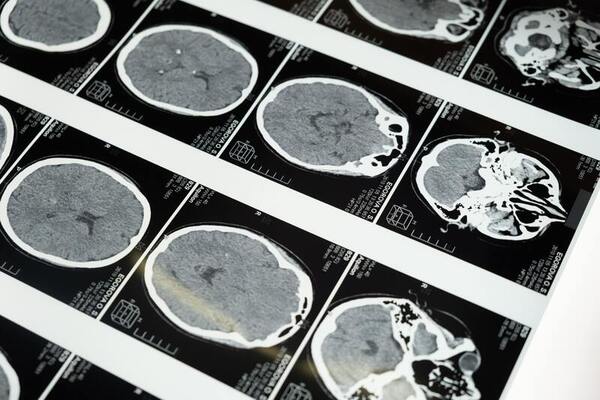
Glioblastoma Multiforme (GBM) is the most malignant brain tumor with the highest fraction of genome alterations (FGA), manifesting poor disease-free status (DFS) and overall survival (OS). We explored The Cancer Genome Atlas (TCGA) and cBioportal public dataset- Firehose legacy GBM to study DNA repair genes Activating Signal Cointegrator 1 Complex Subunit 3 (ASCC3) and Alpha-Ketoglutarate-Dependent Dioxygenase AlkB Homolog 3 (ALKBH3). To test our hypothesis that these genes have correlations with FGA and can better determine prognosis and survival, we sorted the dataset to arrive at 254 patients. Analyzing using RStudio, both ASCC3 and ALKBH3 demonstrated hypomethylation in 82.3% and 61.8% of patients, respectively. Interestingly, low mRNA expression was observed in both these genes. We further conducted correlation tests between both methylation and mRNA expression of these genes with FGA. ASCC3 was found to be negatively correlated, while ALKBH3 was found to be positively correlated, potentially indicating contrasting dysregulation of these two genes. Prognostic analysis showed the following: ASCC3 hypomethylation is significant with DFS and high ASCC3 mRNA expression to be significant with OS, demonstrating ASCC3’s potential as disease prediction marker.
Read More...The Effects of Altered Microbiome on Caenorhabditis elegans Egg Laying Behavior

Since the discovery that thousands of different bacteria colonize our gut, many of which are important for human wellbeing, understanding the significance of balancing the different species on the human body has been intensely researched. Untangling the complexity of the gut microbiome and establishing the effect of the various strains on human health is a challenge in many circumstances, and the need for simpler systems to improve our basic understanding of microbe-host interactions seems necessary. C. elegans are a well-established laboratory animal that feed on bacteria and can thus serve as a less complex system for studying microbe-host interactions. Here the authors investigate how the choice of bacterial diet affects worm fertility. The same approach could be applied to many different outcomes, and facilitate our understanding of how the microbes colonizing our guts affect various bodily functions.
Read More...