Browse Articles

The Effects of Antioxidants on the Climbing Abilities of Drosophila melanogaster Exposed to Dental Resin

Prashanth et al. | Jan 17, 2019

The Effects of Antioxidants on the Climbing Abilities of <em>Drosophila melanogaster</em> Exposed to Dental Resin

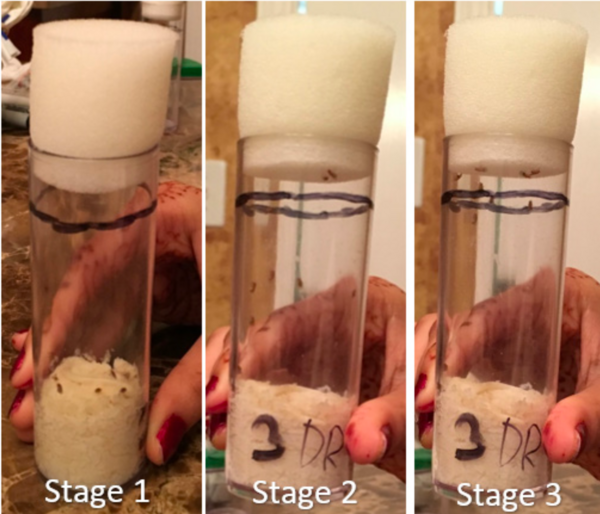
Dental resins can be a source of reactive oxygen species (ROS) which in unruly amounts can be toxic to cellular and overall health. In this report, the authors test whether the consumption of antioxidant rich foods like avocado and asparagus can protect against the effect of dental resin-derived ROS. However, rather than testing humans, they use fruit flies and their climbing abilities as an experimental readout.

Read More...

QuitPuff: A Simple Method Using Saliva to Assess the Risk of Oral Pre-Cancerous Lesions and Oral Squamous Cell Carcinoma in Chronic Smokers

Shamsher et al. | Mar 27, 2019

QuitPuff: A Simple Method Using Saliva to Assess the Risk of Oral Pre-Cancerous Lesions and Oral Squamous Cell Carcinoma in Chronic Smokers

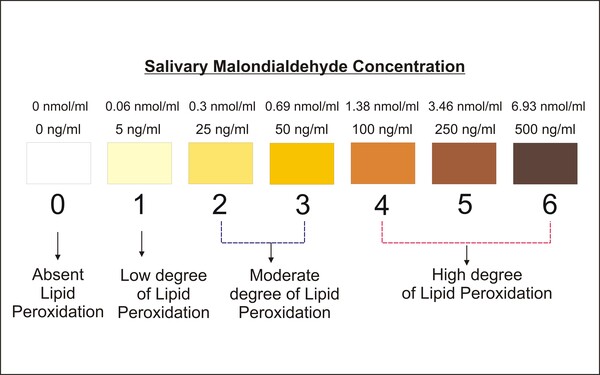
Smoking generates free radicals and reactive oxygen species which induce cell damage and lipid peroxidation. This is linked to the development of oral cancer in chronic smokers. The authors of this study developed Quitpuff, simple colorimetric test to measure the extent of lipid peroxidation in saliva samples. This test detected salivary lipid peroxidation with 96% accuracy in test subjects and could serve as an inexpensive, non-invasive test for smokers to measure degree of salivary lipid peroxidation and potential risk of oral cancer.

Read More...

Assessing the Efficacy of NOX Enzyme Inhibitors as Potential Treatments for Ischemic Stroke in silico

Vinay et al. | Sep 18, 2020

Assessing the Efficacy of NOX Enzyme Inhibitors as Potential Treatments for Ischemic Stroke <i>in silico</i>

Ischemic stroke occurs when blood flow to the brain is interrupted, causing brain damage. This study investigated the effectiveness of different NOX inhibitors as treatments for ischemic stroke in silico. The results help corroborate previous in vivo and in vitro studies in an in silico format, and can be used towards developing drugs to treat ischemic stroke.

Read More...

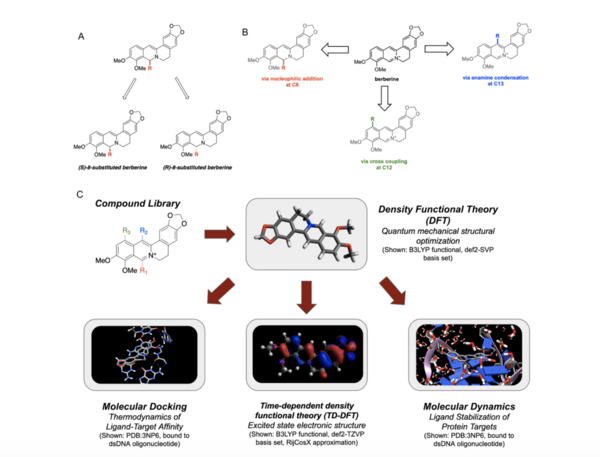
Computational Structure-Activity Relationship (SAR) of Berberine Analogs in Double-Stranded and G-Quadruplex DNA Binding Reveals Both Position and Target Dependence

Sun et al. | Dec 18, 2020

Computational Structure-Activity Relationship (SAR) of Berberine Analogs in Double-Stranded and G-Quadruplex DNA Binding Reveals Both Position and Target Dependence

Berberine, a natural product alkaloid, and its analogs have a wide range of medicinal properties, including antibacterial and anticancer effects. Here, the authors explored a library of alkyl or aryl berberine analogs to probe binding to double-stranded and G-quadruplex DNA. They determined that the nature of the substituent, the position of the substituent, and the nucleic acid target affect the free energy of binding of berberine analogs to DNA and G-quadruplex DNA, however berberine analogs did not result in net stabilization of G-quadruplex DNA.

Read More...

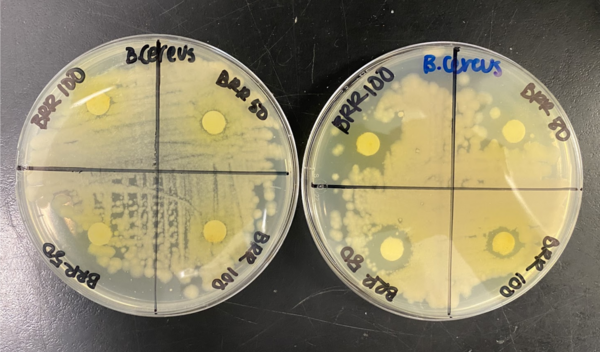
Strain-specific and photochemically-activated antimicrobial activity of berberine and two analogs

Sun et al. | Nov 17, 2020

Strain-specific and photochemically-activated antimicrobial activity of berberine and two analogs

In this study, the authors investigate the antimicrobial effects of berberine and berberine analogs. Berberine is extracted from plants and is a naturally occurring alkaloid, and is also excited photochemically. Using three different assays, the authors tested whether these compounds would inhibit bacterial growth. They found that these compounds were antibacterial and even more so when used with photoirradiation. This study has important antibacterial implications.

Read More...