
The authors looked at non-natural factors that influenced the spread rate of fire ants in multiple cities in China.
Read More...Predicting the spread speed of red imported fire ants under different temperature conditions in China
The authors looked at non-natural factors that influenced the spread rate of fire ants in multiple cities in China.
Read More...Predicting voting and union support in certification elections: Evidence from Starbucks workers, 2021-2024
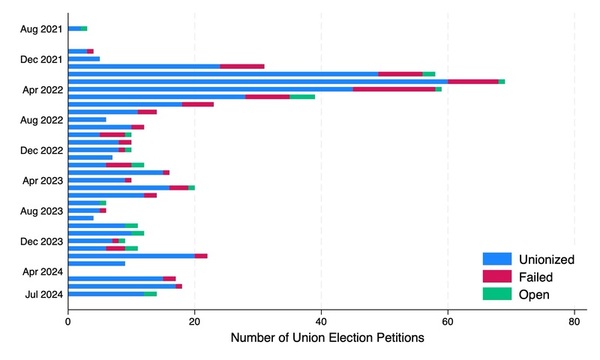
The authors looked at unionization petitions from Starbucks workers between August 2021 and July 2024 to determine what factors influence votes for or against unionization.
Read More...Predicting and explaining illicit financial flows in developing countries: A machine learning approach
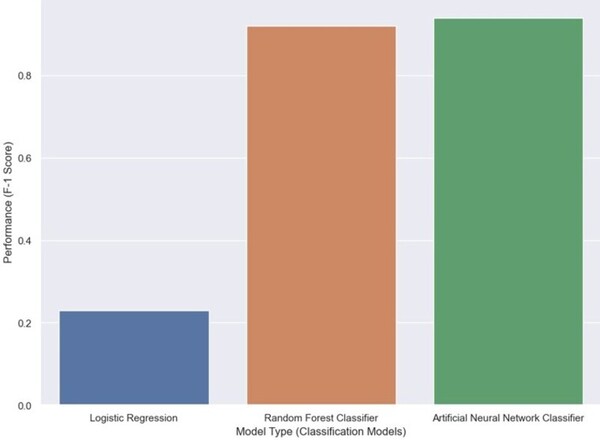
The authors looked at the ability of different machine learning algorithms to predict the level of financial corruption in different countries.
Read More...Stock price prediction: Long short-term memory vs. Autoformer and time series foundation model
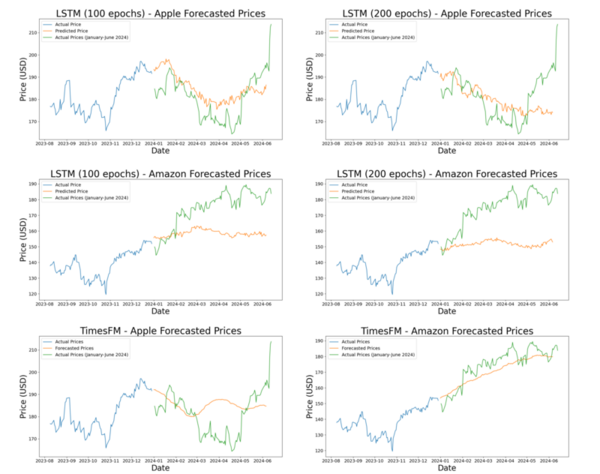
The authors looked the ability to predict future stock prices using various machine learning models.
Read More...Predicting smoking status based on RNA sequencing data
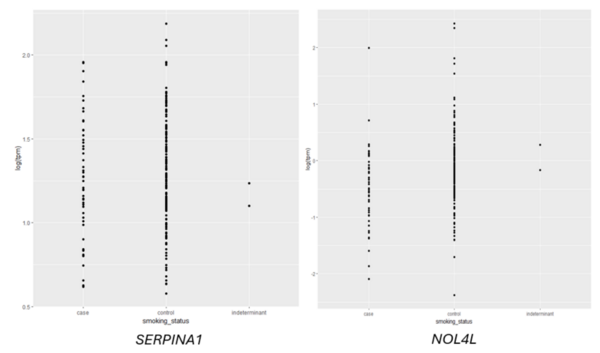
Given an association between nicotine addiction and gene expression, we hypothesized that expression of genes commonly associated with smoking status would have variable expression between smokers and non-smokers. To test whether gene expression varies between smokers and non-smokers, we analyzed two publicly-available datasets that profiled RNA gene expression from brain (nucleus accumbens) and lung tissue taken from patients identified as smokers or non-smokers. We discovered statistically significant differences in expression of dozens of genes between smokers and non-smokers. To test whether gene expression can be used to predict whether a patient is a smoker or non-smoker, we used gene expression as the training data for a logistic regression or random forest classification model. The random forest classifier trained on lung tissue data showed the most robust results, with area under curve (AUC) values consistently between 0.82 and 0.93. Both models trained on nucleus accumbens data had poorer performance, with AUC values consistently between 0.65 and 0.7 when using random forest. These results suggest gene expression can be used to predict smoking status using traditional machine learning models. Additionally, based on our random forest model, we proposed KCNJ3 and TXLNGY as two candidate markers of smoking status. These findings, coupled with other genes identified in this study, present promising avenues for advancing applications related to the genetic foundation of smoking-related characteristics.
Read More...Prediction of diabetes using supervised classification
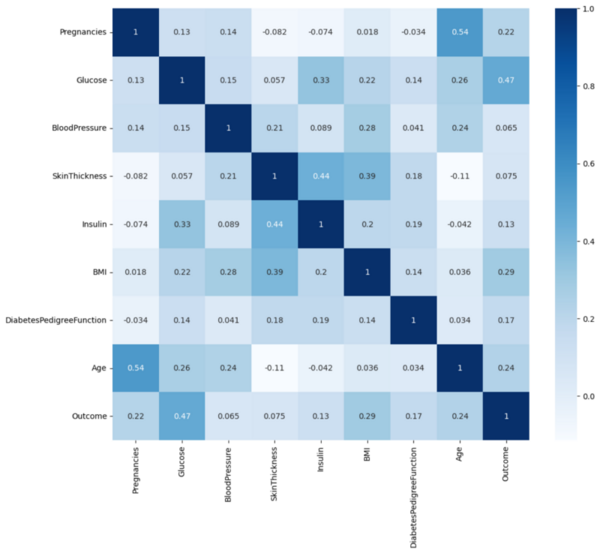
The authors develop and test a machine learning algorithm for predicting diabetes diagnoses.
Read More...Predicting college retention rates from Google Street View images of campuses
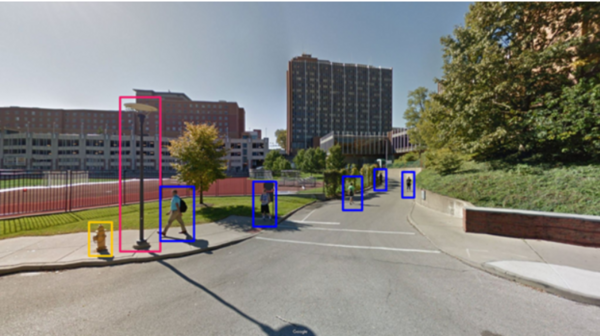
Every year, around 40% of undergraduate students in the United States discontinue their studies, resulting in a loss of valuable education for students and a loss of money for colleges. Even so, colleges across the nation struggle to discover the underlying causes of these high dropout rates. In this paper, the authors discuss the use of machine learning to find correlations between the built environment factors and the retention rates of colleges. They hypothesized that one way for colleges to improve their retention rates could be to improve the physical characteristics of their campus to be more pleasing. The authors used image classification techniques to look at images of colleges and correlate certain features like colors, cars, and people to higher or lower retention rates. With three possible options of high, medium, and low retention rates, the probability that their models reached the right conclusion if they simply chose randomly was 33%. After finding that this 33%, or 0.33 mark, always fell outside of the 99% confidence intervals built around their models’ accuracies, the authors concluded that their machine learning techniques can be used to find correlations between certain environmental factors and retention rates.
Read More...Predicting the factors involved in orthopedic patient hospital stay

Long hospital stays can be stressful for the patient for many reasons. We hypothesized that age would be the greatest predictor of hospital stay among patients who underwent orthopedic surgery. Through our models, we found that severity of illness was indeed the highest factor that contributed to determining patient length of stay. The other two factors that followed were the facility that the patient was staying in and the type of procedure that they underwent.
Read More...Prediction of preclinical Aβ deposit in Alzheimer’s disease mice using EEG and machine learning
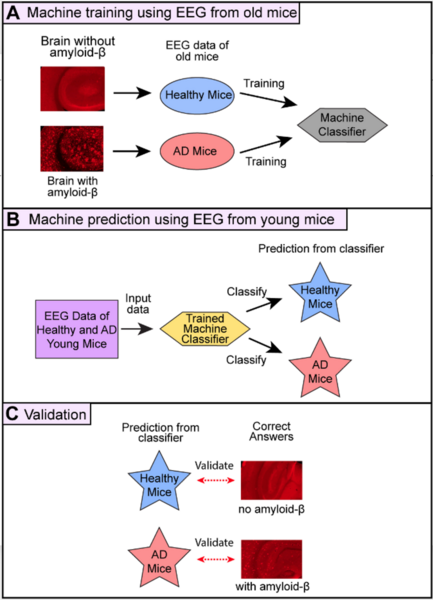
Alzheimer’s disease (AD) is a common disease affecting 6 million people in the U.S., but no cure exists. To create therapy for AD, it is critical to detect amyloid-β protein in the brain at the early stage of AD because the accumulation of amyloid-β over 20 years is believed to cause memory impairment. However, it is difficult to examine amyloid-β in patients’ brains. In this study, we hypothesized that we could accurately predict the presence of amyloid-β using EEG data and machine learning.
Read More...Predicting the Instance of Breast Cancer within Patients using a Convolutional Neural Network
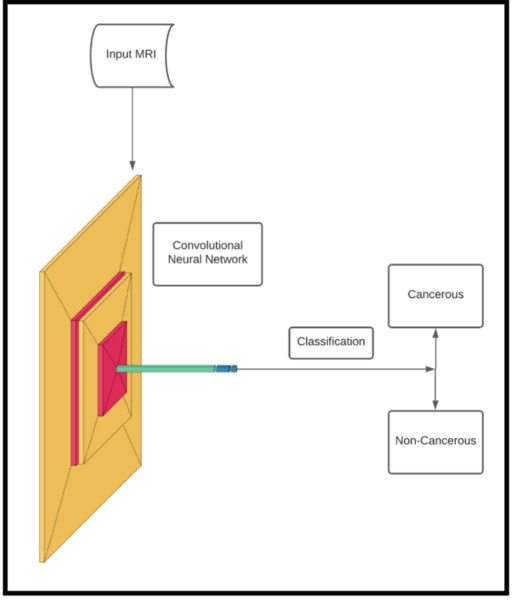
Using a convolution neural network, these authors show machine learning can clinically diagnose breast cancer with high accuracy.
Read More...