Predicting voting and union support in certification elections: Evidence from Starbucks workers, 2021-2024
(1) Stuyvesant High School, (2) Rutgers University
https://doi.org/10.59720/24-272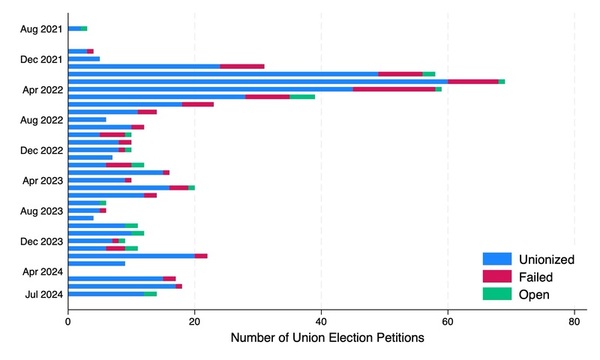
Labor unions offer a formal channel for workers to collectively voice concerns and negotiate for better wages, benefits, and working conditions with their employers. There has been a rise in worker-led grassroots union campaigns in recent years, with Starbucks workers drawing considerable attention from the public and policymakers. Unionization efforts at Starbucks stores represent an important yet under-explored area of social science research, because the service sector is historically characterized by low unionization rates. To examine factors driving worker participation in voting and support for unions in certification elections, we constructed a unique dataset of 571 unionization petitions filed by Starbucks workers with the National Labor Relations Board (NLRB) between August 2021 and July 2024. We hypothesized that union election success was less likely in larger units, with higher voter turnout, and when elections were delayed, but more likely if there were previous successes. Regression results suggested that larger bargaining units with more eligible voters and higher turnout rates decreased union support and reduced the likelihood of union victories. Additionally, delays between filing petitions and holding elections negatively impacted union support. Finally, prior union victories within a state had a positive association with future unionization efforts, suggesting a “success breeds success” dynamic. The practical implications of these findings were also discussed. Despite successful unionization efforts at Starbucks, workers still faced significant challenges, including delays in contract negotiations and legal opposition from employers. Sustained efforts are necessary to overcome corporate resistance and improve wages and working conditions.