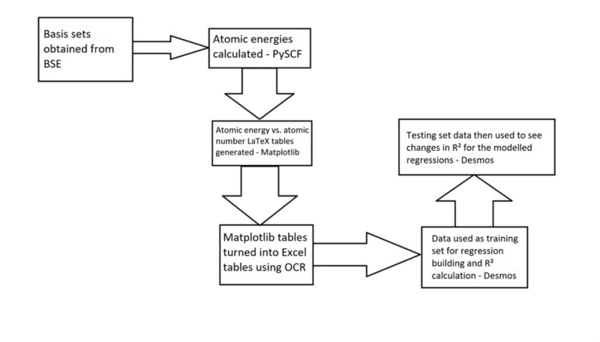
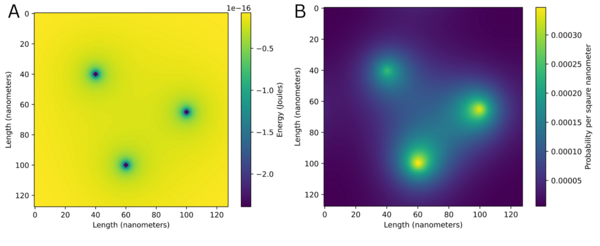
The energy of an atom is extremely useful in nuclear physics and reaction mechanism pathway determination but is challenging to compute. This work aimed to synthesize regression models for Pople Gaussian expansions of Slater-type Orbitals (STO-nG) atomic energy vs. atomic number scatter plots to allow for easy approximation of atomic energies without using computational chemistry methods. The data indicated that of the regressions, sinusoidal regressions most aptly modeled the scatter plots.
Plant diseases can cause up to 50% crop yield loss for the popular tomato plant. A mobile device-based method to identify diseases from photos of symptomatic leaves via computer vision can be more effective due to its convenience and accessibility. To enable a practical mobile solution, a “shallow” convolutional neural networks (CNNs) with few layers, and thus low computational requirement but with high accuracy similar to the deep CNNs is needed. In this work, we explored if such a model was possible.
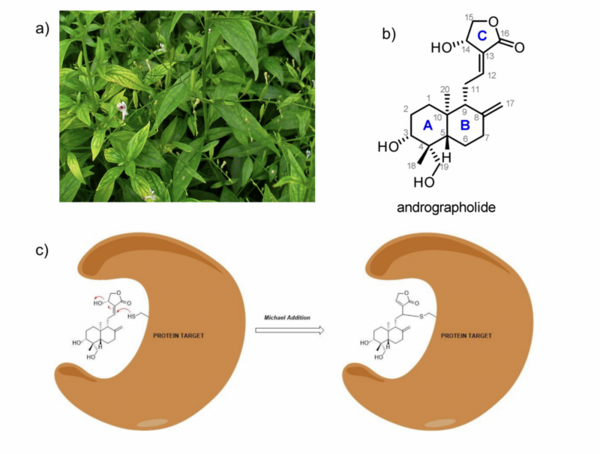
Here, based on the identification of androgapholide as a potential therapeutic treatment against cancer, Alzheimer's disease, diabetes, and multiple sclerosis, due to its ability to inhibit a signaling pathway in immune system function, the authors sought ways to optimize the natural product human systems by manipulating its chemical structure. Through the semisynthesis of a natural product along with computational studies, the authors developed an understanding of the kinetic mechanisms of andrographolide and semisynthetic analogs in the context of Michael additions.
In this study, with consideration for the increasing participation of high school students in indoor rowing, the authors analyzed World Indoor Rowing Championship data. Statistical analysis revealed two key features that can determine the performance of a rower as well as increasing competitiveness in nearly all categories considered. They conclude by offering a 2000-meter ergometer time distribution that can help junior rowers assess their current performance relative to the world competition.
In this study the author undertakes a careful characterization of a special type of chemical reaction, called an oscillating Belousov-Zhabotinsky (or B-Z) reaction, which has a number of existing applications in biomedical engineering as well as the potential to be useful in future developments in other fields of science and engineering. Specifically, she uses experimental measurements in combination with computational analysis to investigate whether the reaction is cohesive – that is, whether the oscillations between chemical states will remain consistent or change over time as the reaction progresses. Her results indicate that the reaction is not cohesive, providing an important foundation for the development of future technologies using B-Z reactions.
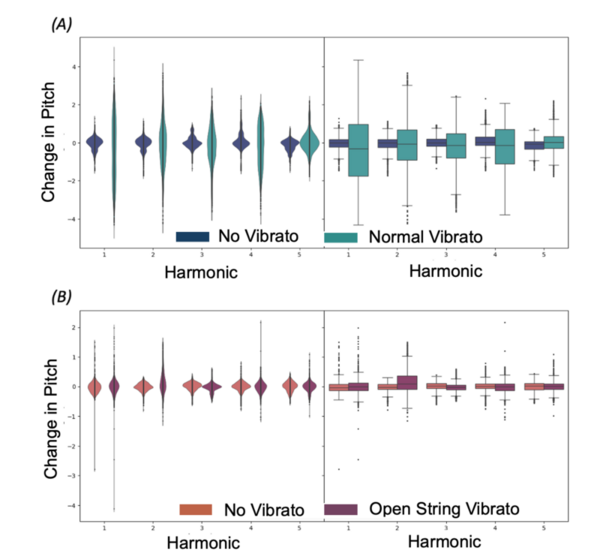
Vibrato, defined as a rapid and subtle oscillation in pitch, is a technique that is commonly used by musicians to add expression and colour to notes. However, on stringed instruments, there are certain notes (open string notes) on which it is impossible to perform the technique. Without vibrato, they can sound angular and unpleasant, especially when juxtaposed against other notes played with vibrato. String players therefore use an alternative to achieve the same vibrato effect on the open string — a technique referred to as “open string vibrato”. While the technique is widely used, it is unknown how much of a physical effect it has on the sound waves produced, if any at all. The purpose of this study is to analyse open string vibrato using a statistical approach to provide evidence to characterize the physical effect of the technique, and then compare it to normal vibrato. We hypothesised that it would have a noticeable and measurable effect on the sound waves produced because of the technique’s widespread usage. To test this, notes, with and without either open string vibrato or normal vibrato, were recorded on the violin. We analyzed the audio recordings using a computational and statistical approach. The results of the study partially agreed with our hypothesis: while the technique has an observable physical effect on the sound waves, the effect is weaker than expected. We concluded that open string vibrato does work, but has quite a subtle effect, and thus should only be used when there is no other option.
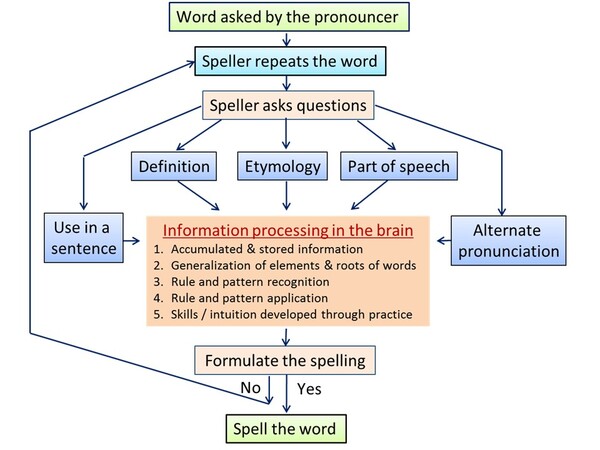
This article investigates the study methodologies, learning strategies, and motives of spelling bee participants. The authors identify several important educational implications of this work.
Human immunodeficiency virus (HIV), which affects tens of millions of individuals worldwide, can lead to acquired immunodeficiency syndrome (AIDS). While there is currently no cure for HIV, the development of small molecule antiretroviral agents has greatly improved the prognosis of infected individuals, especially in developed countries. Here, the authors employ homology modeling and molecular docking towards the identification of novel rilpivirine analogs that retain high binding affinity to clinically relevant rilpivirine-resistant mutations of the HIV reverse transcriptase enzyme.
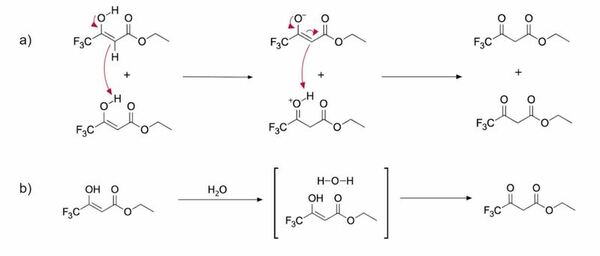
In this study, the authors determined whether tautomerization dynamics in protic and aprotic solvents displayed differences in reaction rates and in the proportion of the keto and enol tautomers present.



.jpg)