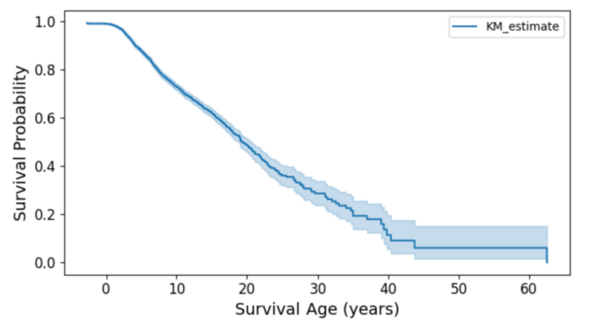
Obsessive-compulsive disorder (OCD) can cause significant impairment, and studies indicate that delays in diagnosis and treatment lead to worse outcomes. This study aimed to assess whether these delays have improved over the past three decades and to identify their causes.
Machine translation remains a challenging area in artificial intelligence, with neural machine translation (NMT) making significant strides over the past decade but still facing hurdles, particularly in translation quality due to the reliance on expensive bilingual training data. This study explores whether large language models (LLMs), like GPT-4, can be effectively adapted for translation tasks and outperform traditional NMT systems.
Droughts kill over 45,000 people yearly and affect the livelihoods of 55 million others worldwide, with climate change likely to worsen these effects. However, unlike other natural disasters (hurricanes, etc.), there is no early detection system that can predict droughts far enough in advance to be useful. Bora, Caulkins, and Joycutty tackle this issue by creating a drought prediction model.
The challenge of accurately identifying shark species is crucial for biodiversity monitoring but is often hindered by time-consuming and labor-intensive manual methods. To address this, SharkNet, a CNN model based on AlexNet, achieved 93% accuracy in classifying shark species using a limited dataset of 1,400 images across 14 species. SharkNet offers a more efficient and reliable solution for marine biologists and conservationists in species identification and environmental monitoring.
The advent of quantum computing will pose a substantial threat to the security of classical cryptographic methods, which could become vulnerable to quantum-based attacks. In response to this impending challenge, the field of post-quantum cryptography has emerged, aiming to develop algorithms that can withstand the computational power of quantum computers. This study addressed the pressing concern of classical cryptographic methods becoming vulnerable to quantum-based attacks due to the rise of quantum computing. The emergence of post-quantum cryptography has led to the development of new resistant algorithms. Our research focused on four quantum-resistant algorithms endorsed by America’s National Institute of Standards and Technology (NIST) in 2022: CRYSTALS-Kyber, CRYSTALS-Dilithium, FALCON, and SPHINCS+. This study evaluated the security, performance, and comparative attributes of the four algorithms, considering factors such as key size, encryption/decryption speed, and complexity. Comparative analyses against each other and existing quantum-resistant algorithms provided insights into the strengths and weaknesses of each program. This research explored potential applications and future directions in the realm of quantum-resistant cryptography. Our findings concluded that the NIST algorithms were substantially more effective and efficient compared to classical cryptographic algorithms. Ultimately, this work underscored the need to adapt cryptographic techniques in the face of advancing quantum computing capabilities, offering valuable insights for researchers and practitioners in the field. Implementing NIST-endorsed quantum-resistant algorithms substantially reduced the vulnerability of cryptographic systems to quantum-based attacks compared to classical cryptographic methods.
Black patients tend to have better health outcomes when cared for by Black physicians, yet Black doctors make up only 5% of U.S. physicians, despite Black people comprising 14% of the population. This analysis of data from Florida medical schools showed a higher enrollment of Black first-year students (13.5%) compared to the national average (9%), and a national increase from 6% in 2013 to 9% in 2021, aligning with the rise of social justice movements. Increasing Black medical student enrollment could reduce health disparities and improve outcomes for Black communities.
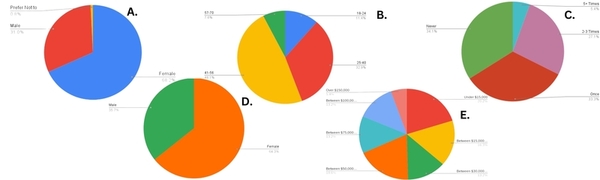
It can be challenging for the general public to understand data on medical risk. Weseley-Jones and Mordechai tackle this issue by conducting a survey to assess people's skill and comfort with understanding medical risk information in percentage and frequency formats.
Coronary artery disease, the leading cause of death worldwide, results from cholesterol build-up in coronary arteries, limiting blood and oxygen flow to the heart. This study investigated the use of gold and silver nanoparticles coated with aspirin and activated by near-infrared light to improve blood flow in a clogged artery model. The nanoparticles increased simulated blood flow rates, demonstrating potential as a less invasive and more targeted treatment for cardiovascular disease.
Jazz music is a unique American art form that has spread around the world. Iyer and Iyer study this spread through a computational sociology project examining how jazz popularity is correlated with postmaterialism (an ideology that values self-expression) and political activity.
In cognitive psychology, typed responses are used to assess thinking skills and creativity, but research on factors influencing typing speed is limited. This study examined how language familiarity affects typing speed, hypothesizing that familiarity with a language would correlate with faster typing. Participants typed faster in English than Latin, with those unfamiliar with Latin showing a larger discrepancy between the two languages, though Latin education level did not significantly impact typing speed, highlighting the role of language familiarity in typing performance.