Browse Articles

Suppress that algae: Mitigating the effects of harmful algal blooms through preemptive detection & suppression

Natarajan et al. | Jul 17, 2023

Suppress that algae: Mitigating the effects of harmful algal blooms through preemptive detection & suppression
Image credit: Sharanya Natarajan

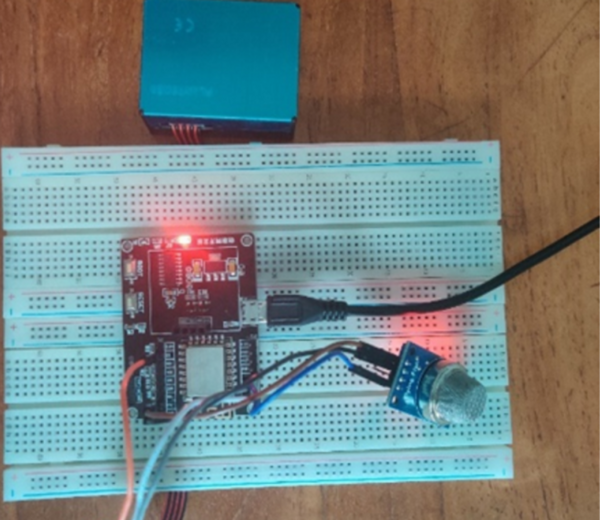
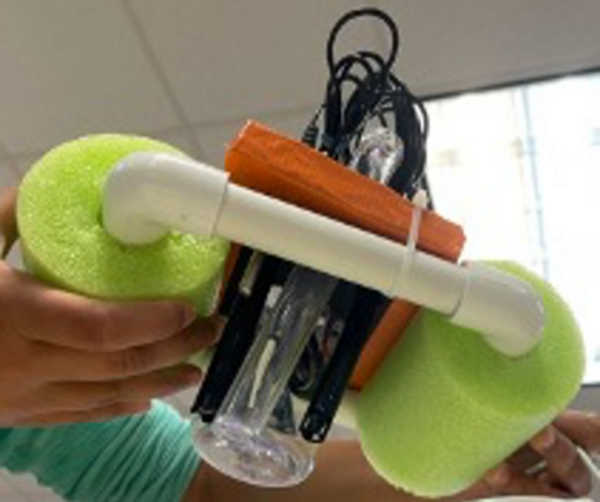
A bottleneck in deleting algal blooms is that current data section is manual and is reactionary to an existing algal bloom. These authors made a custom-designed Seek and Destroy Algal Mitigation System (SDAMS) that detects harmful algal blooms at earlier time points with astonishing accuracy, and can instantaneously suppress the pre-bloom algal population.

Read More...

The relationship between macroinvertebrates, water quality, and the health of Stevens Creek

Li et al. | Aug 18, 2021

The relationship between macroinvertebrates, water quality, and the health of Stevens Creek

Stevens Creek, which flows through Santa Clara County in California, provides a crucial habitat for federally designated threatened steelhead trout, with a portion of the trout’s diet being dependent on the presence and abundance of macroinvertebrates that inhabit the creek. In this article, the authors investigate how the water chemistry within the creek was associated with the abundance and diversity of macroinvertebrates, and subsequently the creek’s health. They conduct qualitative analysis of macroinvertebrates and water quality to obtain a general understanding of the health of Stevens Creek.

Read More...

Testing HCN1 channel dysregulation in the prefrontal cortex using a novel piezoelectric silk neuromodulator

Mathew et al. | May 05, 2021

Testing HCN1 channel dysregulation in the prefrontal cortex using a novel piezoelectric silk neuromodulator

Although no comprehensive characterization of schizophrenia exists, there is a general consensus that patients have electrical dysfunction in the prefrontal cortex. The authors designed a novel piezoelectric silk-based implant and optimized electrical output through the addition of conductive materials zinc oxide (ZnO) and aluminum nitride (AlN). With further research and compatibility studies, this implant could rectify electrical misfiring in the infralimbic prefrontal cortex.

Read More...

Differences in Reliability and Predictability of Harvested Energy from Battery-less Intermittently Powered Systems

Sampath et al. | Apr 29, 2020

Differences in Reliability and Predictability of Harvested Energy from Battery-less Intermittently Powered Systems

Solar and radio frequency harvesters serve as a viable alternative energy source to batteries in many cases where the battery cannot be easily replaced. Using specifically designed circuit models, the authors quantify the reliability of different harvested energy sources to identify the most practical and efficient forms of renewable energy.

Read More...

The Effect of Varying Training on Neural Network Weights and Visualizations

Fountain et al. | Dec 04, 2019

The Effect of Varying Training on Neural Network Weights and Visualizations

Neural networks are used throughout modern society to solve many problems commonly thought of as impossible for computers. Fountain and Rasmus designed a convolutional neural network and ran it with varying levels of training to see if consistent, accurate, and precise changes or patterns could be observed. They found that training introduced and strengthened patterns in the weights and visualizations, the patterns observed may not be consistent between all neural networks.

Read More...

Repulsion of Ants Using Non-Toxic Household Products

Ambati et al. | Sep 10, 2019

Repulsion of Ants Using Non-Toxic Household Products

Ant invasion causes damage exceeding $5 billion annually in North America. In this study, Ambati and Duvvuri aim to identify natural products with ant-repelling properties using a custom ring apparatus designed to quantify ant-repellence. They report that cinnamon and lemon were the most effective ant repellents of the tested products. These data suggest that compounds found in non-toxic household products, such as cinnamon oil and lemon juice, could be used in low-dose combinations as potent, effective, eco-friendly, and safe ant repellents.

Read More...

Using DNA Barcodes to Evaluate Ecosystem Health in the SWRCMS Reserve

Horton et al. | Sep 27, 2018

Using DNA Barcodes to Evaluate Ecosystem Health in the SWRCMS Reserve

Although the United States maintains millions of square kilometers of nature reserves to protect the biodiversity of the specimens living there, little is known about how confining these species within designated protected lands influences the genetic variation required for a healthy population. In this study, the authors sequenced genetic barcodes of insects from a recently established nature reserve, the Southwestern Riverside County Multi-Species Reserve (SWRCMSR), and a non-protected area, the Mt. San Jacinto College (MSJC) Menifee campus, to compare the genetic variation between the two populations. Their results demonstrated that the midge fly population from the SWRCMSR had fewer unique DNA barcode sequence changes than the MSJC population, indicating that the comparatively younger nature reserve's population had likely not yet established its own unique genetic drift changes.

Read More...

Peptidomimetics Targeting the Polo-box Domain of Polo-like Kinase 1

Jang et al. | Aug 19, 2016

Peptidomimetics Targeting the Polo-box Domain of Polo-like Kinase 1

Polo-like kinase 1 (Plk1) is a master regulator of mitosis, initiating key steps of cell cycle regulation, and its overexpression is associated with certain types of cancer. In this study, the authors carefully designed peptides that were able to bind to Plk1 at a location that is important for its proper localization and function. Future studies could further develop these peptides to selectively target Plk1 in cancer cells and induce mitotic arrest.

Read More...