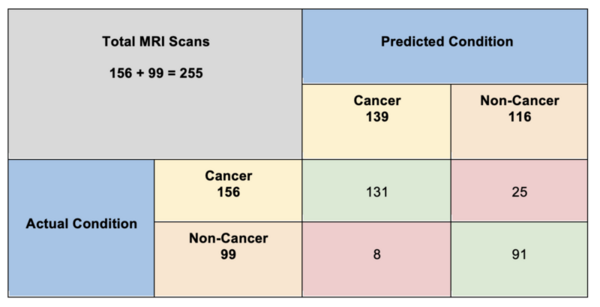
AI analysis of brain scans offers promise for helping doctors diagnose brain tumors. Haider and Drosis explore this field by developing machine learning models that classify brain scans as "cancer" or "non-cancer" diagnoses.
Read More...The utilization of Artificial Intelligence in enabling the early detection of brain tumors
AI analysis of brain scans offers promise for helping doctors diagnose brain tumors. Haider and Drosis explore this field by developing machine learning models that classify brain scans as "cancer" or "non-cancer" diagnoses.
Read More...Groundwater prediction using artificial intelligence: Case study for Texas aquifers
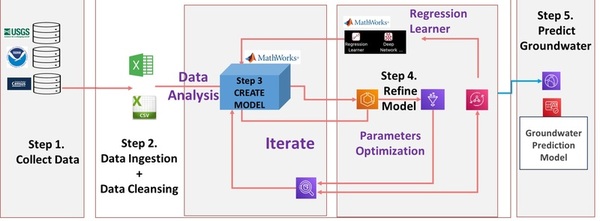
Here, in an effort to develop a model to predict future groundwater levels, the authors tested a tree-based automated artificial intelligence (AI) model against other methods. Through their analysis they found that groundwater levels in Texas aquifers are down significantly, and found that tree-based AI models most accurately predicted future levels.
Read More...Vineyard vigilance: Harnessing deep learning for grapevine disease detection
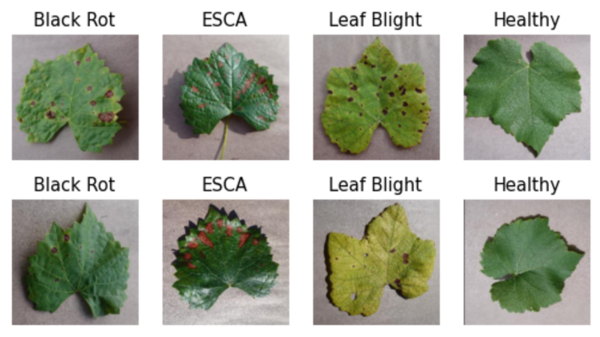
Globally, the cultivation of 77.8 million tons of grapes each year underscores their significance in both diets and agriculture. However, grapevines face mounting threats from diseases such as black rot, Esca, and leaf blight. Traditional detection methods often lag, leading to reduced yields and poor fruit quality. To address this, authors used machine learning, specifically deep learning with Convolutional Neural Networks (CNNs), to enhance disease detection.
Read More...A machine learning approach for abstraction and reasoning problems without large amounts of data
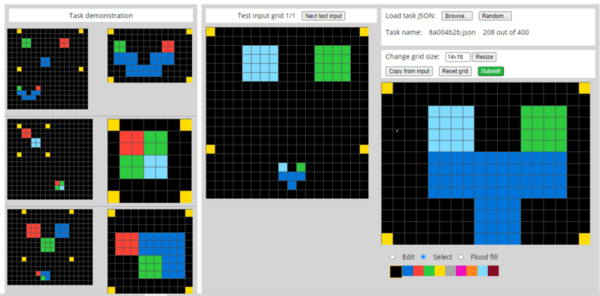
While remarkable in its ability to mirror human cognition, machine learning and its associated algorithms often require extensive data to prove effective in completing tasks. However, data is not always plentiful, with unpredictable events occurring throughout our daily lives that require flexibility by artificial intelligence utilized in technology such as personal assistants and self-driving vehicles. Driven by the need for AI to complete tasks without extensive training, the researchers in this article use fluid intelligence assessments to develop an algorithm capable of generalization and abstraction. By forgoing prioritization on skill-based training, this article demonstrates the potential of focusing on a more generalized cognitive ability for artificial intelligence, proving more flexible and thus human-like in solving unique tasks than skill-focused algorithms.
Read More...Solving a new NP-Complete problem that resembles image pattern recognition using deep learning
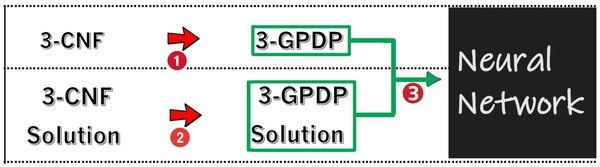
In this study, the authors tested the ability and accuracy of a neural net to identify patterns in complex number matrices.
Read More...Exploring the effects of diverse historical stock price data on the accuracy of stock price prediction models
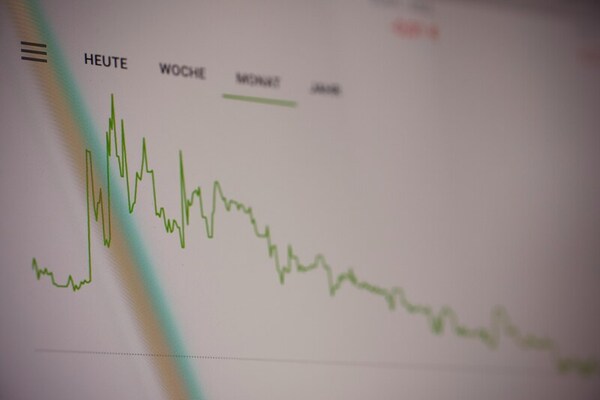
Algorithmic trading has been increasingly used by Americans. In this work, we tested whether including the opening, closing, and highest prices in three supervised learning models affected their performance. Indeed, we found that including all three prices decreased the error of the prediction significantly.
Read More...Levering machine learning to distinguish between optimal and suboptimal basketball shooting forms
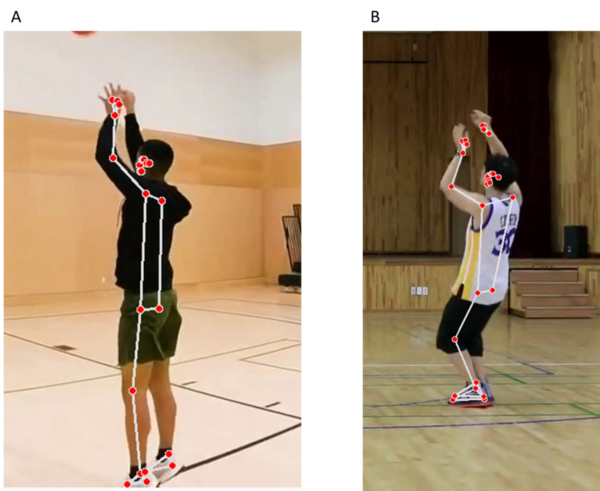
The authors looked at different ways to build computational resources that would analyze shooting form for basketball players.
Read More...Building a video classifier to improve the accuracy of depth-aware frame interpolation
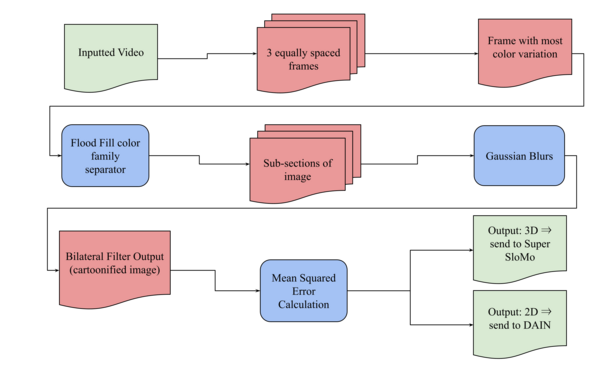
In this study, the authors share their work on improving the frame rate of videos to reduce data sent to users with both 2D and 3D footage. This work helps improve the experience for both types of footage!
Read More...Deep sequential models versus statistical models for web traffic forecasting
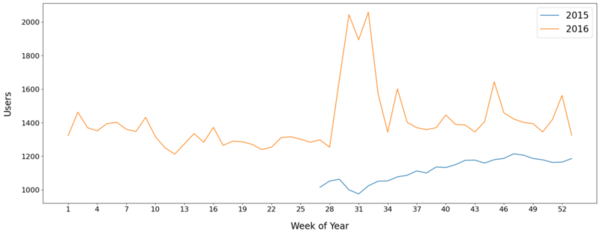
The authors looked at ways to provide better forecasting on website traffic. They found that deep learning models performed better than statistical models.
Read More...Identifying anxiety and burnout from students facial expressions and demographics using machine learning
The authors used machine learning to predict the presence of anxiety and burnout in students based on facial expressions and demographic information.
Read More...