We conducted this research as our start-up's research that addresses the problem of biogas production in cow-dense regions like India. We hypothesized that the thermophilic temperature (45-60oC) would increase biogas production. The production process is much faster and more abundant at temperatures around 55-60oC.
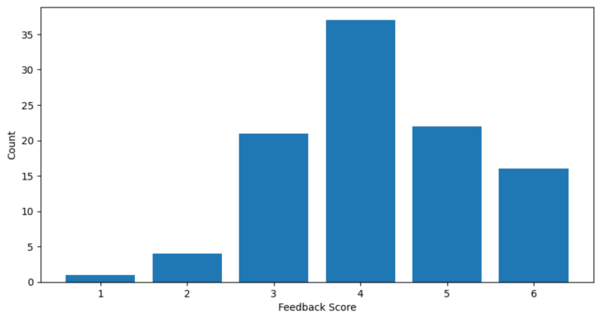
Here, seeking to identify the possible role of sports in helping teenagers navigate the troubles associated with societal changes during a pandemic, the authors surveyed 50 adolescents to collect Beck Depression Inventory scores. They found that 9 out of students with severe depressions did not do sports, while no significant relationship between depressive symptoms and either gender or place of exercise was observed.
Metal-organic frameworks (MOFs) are promising new nanomaterials for use in the fight against climate change that can efficiently capture and convert CO2 to other useful carbon products. This research used computational models to determine the reaction conditions under which MOFs can more efficiently capture and convert CO2. In a cost-efficient manner, this analysis tested the hypothesis that pressure and temperature affect the efficacy of carbon capture and conversion, and contribute to understanding the optimal conditions for MOF performance to improve the use of MOFs for controlling greenhouse CO2 emissions.
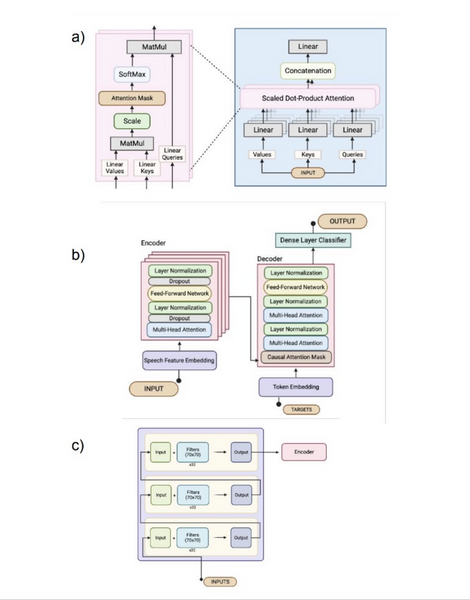
Neural machine translation (NMT) is a software that uses neural network techniques to translate text from one language to another. However, one of the most famous NMT models—Google Translate—failed to give an accurate English translation of a famous Korean nursery rhyme, "Airplane" (비행기). The authors fine-tuned a pre-trained model first with a dataset from the lyrics domain, and then with a smaller dataset containing the rhythmical properties, to teach the model to translate rhythmically accurate lyrics. This stacked fine-tuning method resulted in an NMT model that could maintain the rhythmical characteristics of lyrics during translation while single fine-tuned models failed to do so.
While serving as an immediate address for psychological safety and stability, psychological first aid (PFA) currently lacks the incorporation of triage. Without triage, patients cannot be prioritized in correspondence to condition severity that is often called for within emergency conditions. To disentangle the relevance of a potential triage system to PFA, the authors of this paper have developed a method to quantify resilience - a prominent predictor of the capability to recover from a disaster. With this resilience index, they have quantified resilience of differing age, race, and sex demographics to better inform the practice of PFA and potential demographic prioritization via a triage system.