Browse Articles

Risk assessment modeling for childhood stunting using automated machine learning and demographic analysis

Sirohi et al. | Sep 25, 2022

Risk assessment modeling for childhood stunting using automated machine learning and demographic analysis

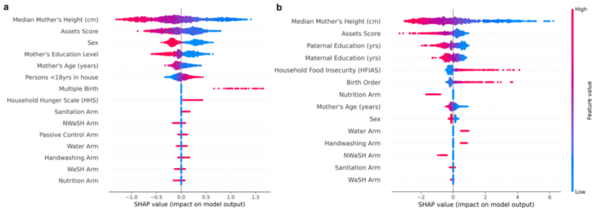
Over the last few decades, childhood stunting has persisted as a major global challenge. This study hypothesized that TPTO (Tree-based Pipeline Optimization Tool), an AutoML (automated machine learning) tool, would outperform all pre-existing machine learning models and reveal the positive impact of economic prosperity, strong familial traits, and resource attainability on reducing stunting risk. Feature correlation plots revealed that maternal height, wealth indicators, and parental education were universally important features for determining stunting outcomes approximately two years after birth. These results help inform future research by highlighting how demographic, familial, and socio-economic conditions influence stunting and providing medical professionals with a deployable risk assessment tool for predicting childhood stunting.

Read More...
Assessing machine learning model efficacy for brain tumor MRI classification: a multi-model approach

Dhingra et al. | Mar 14, 2026

Assessing machine learning model efficacy for brain tumor MRI classification: a multi-model approach
Image credit: Dhingra and Dhingra

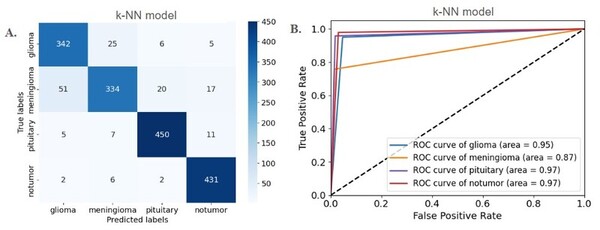
This manuscript explores the performance of five different machine learning models in classifying brain tumors from a dataset of MRI scans. The authors find that several of the models showed >90% accuracy. Thus, the authors suggest that machine learning models demonstrate potential for effective implementation in clinical settings, including as a diagnostic tool that can be used to complement the expertise of neuroradiologists.

Read More...

The most efficient position of magnets

Shin et al. | Mar 28, 2024

The most efficient position of magnets
Image credit: immo RENOVATION

Here, the authors investigated the most efficient way to position magnets to hold the most pieces of paper on the surface of a refrigerator. They used a regression model along with an artificial neural network to identify the most efficient positions of four magnets to be at the vertices of a rectangle.

Read More...

Osmotic characteristics of water retention structures of Bursera microphylla in relation to soil salinity

Groom et al. | Jul 12, 2023

Osmotic characteristics of water retention structures of <i>Bursera microphylla</i> in relation to soil salinity
Image credit: Lisa Fotios

This study hypothesized that sodium chloride was taken up through plant root structures to facilitate water transportation, and that sodium chloride accumulation was directly proportional to the soil salinity. Results showed that most cells within the “bulb” structures were isotonic at a concentration approximately twice as high as that of root tissue and ambient soil salinity, therefore supporting the presented hypothesis.

Read More...