Browse Articles

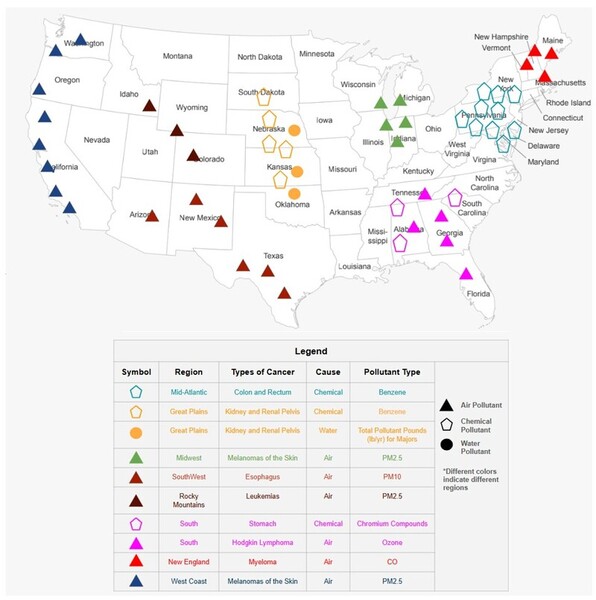
Understanding the correlation between various pollutants and cancer across geographical clusters in the U.S.

Naik et al. | Sep 12, 2026

Understanding the correlation between various pollutants and cancer across geographical clusters in the U.S.

Here the authors investigate the relationship between environmental pollutants and cancer incidence rates across various geographical clusters in the United States from 2018 to 2020. By calculating Pearson correlation coefficients and t-statistics on CDC and EPA data, they demonstrated a strong correlation between specific pollutants and various cancers, offering insights that could help explain regional disparities in cancer rates and aid in preventing premature deaths.

Read More...
Environmental, Social, and Governance (ESG) Standards and Financial Performance in Vietnam’s Media Sector

Nguyen et al. | Jul 29, 2026

Environmental, Social, and Governance (ESG) Standards and Financial Performance in Vietnam’s Media Sector
Image credit: Nguyen, Tran, Pham, and Nguyen

In this study, the authors examine the relationship between ESG (Environmental, Social, and Governance) factors on financial performance of Vietnamese media companies, as measured by ROA and ROE. They find that ESG is positively correlated with financial performance, as is sales growth. They also find that financial leverage is negatively correlated with ROA. Overall, this is a quality study, although the methods section requires more detail.

Read More...

Predicting baseball pitcher efficacy using physical pitch characteristics

Oberoi et al. | Jan 11, 2024

Predicting baseball pitcher efficacy using physical pitch characteristics
Image credit: Antoine Schibler

Here, the authors sought to develop a new metric to evaluate the efficacy of baseball pitchers using machine learning models. They found that the frequency of balls, was the most predictive feature for their walks/hits allowed per inning (WHIP) metric. While their machine learning models did not identify a defining trait, such as high velocity, spin rate, or types of pitches, they found that consistently pitching within the strike zone resulted in significantly lower WHIPs.

Read More...