The authors looked at the ability of different deep learning models to predict the presence of lung cancer from chest CT scans. They found that a pre-trained CNN model performed better than an autoencoder model.
Read More...How artificial intelligence deep learning models can be used to accurately determine lung cancers
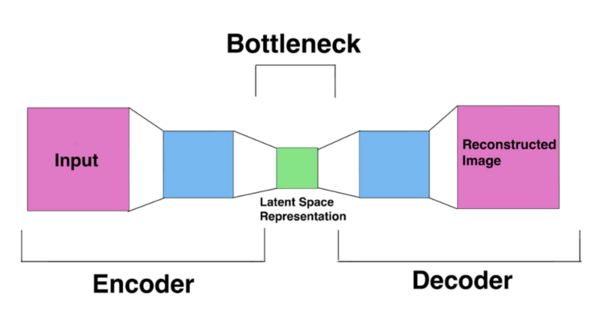
The authors looked at the ability of different deep learning models to predict the presence of lung cancer from chest CT scans. They found that a pre-trained CNN model performed better than an autoencoder model.
Read More...Levering machine learning to distinguish between optimal and suboptimal basketball shooting forms
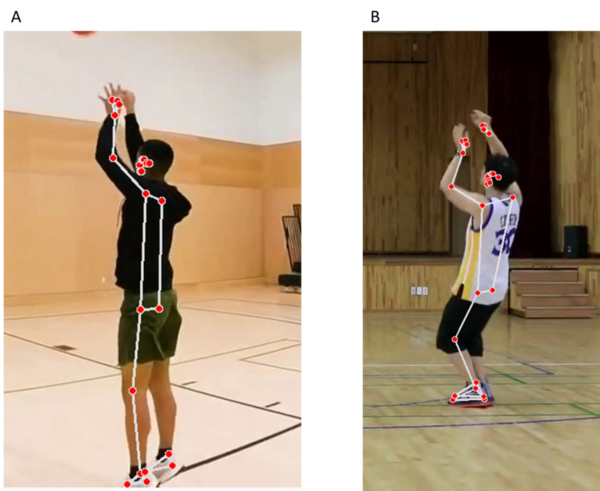
The authors looked at different ways to build computational resources that would analyze shooting form for basketball players.
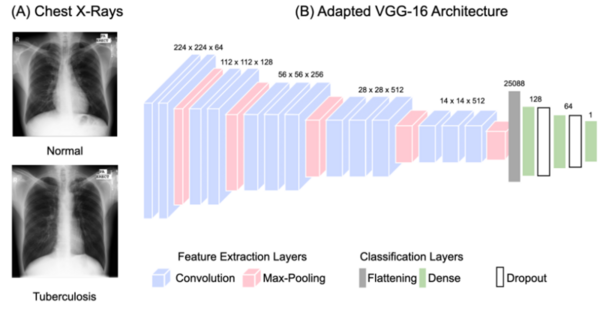
Read More...Effects of data amount and variation in deep learning-based tuberculosis diagnosis in chest X-ray scans
The authors developed and tested machine learning methods to diagnose tuberculosis from pulmonary X-ray scans.
Read More...A comparative analysis of machine learning approaches to predict brain tumors using MRI
The authors use machine learning on MRI images of brain tissue to predict tumor onset as an avenue for early detection of brain cancer.
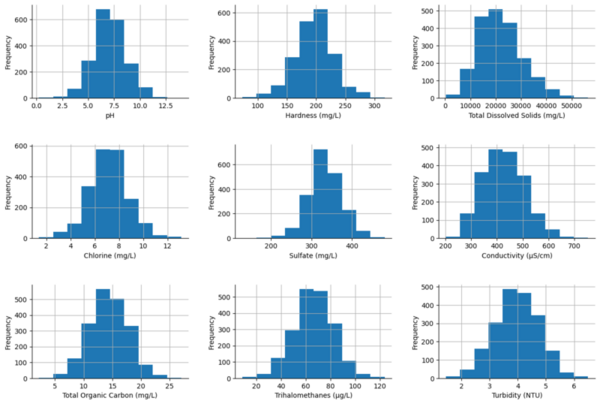
Read More...Comparative study of machine learning models for water potability prediction
The global issue of water quality has led to the use of machine learning models, like ANN and SVM, to predict water potability. However, these models can be complex and resource-intensive. This research aimed to find a simpler, more efficient model for water quality prediction.
Read More...SpottingDiffusion: Using transfer learning to detect Latent Diffusion Model-synthesized images
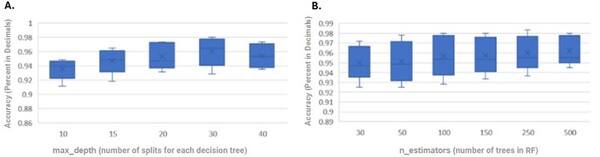
Machine learning predictions of additively manufactured alloy crack susceptibilities
Additive manufacturing (AM) is transforming the production of complex metal parts, but challenges like internal cracking can arise, particularly in critical sectors such as aerospace and automotive. Traditional methods to assess cracking susceptibility are costly and time-consuming, prompting the use of machine learning (ML) for more efficient predictions. This study developed a multi-model ML pipeline that predicts solidification cracking susceptibility (SCS) more accurately by considering secondary alloy properties alongside composition, with Random Forest models showing the best performance, highlighting a promising direction for future research into SCS quantification.
Read More...Machine learning for retinopathy prediction: Unveiling the importance of age and HbA1c with XGBoost
The purpose of our study was to examine the correlation of glycosylated hemoglobin (HbA1c), blood pressure (BP) readings, and lipid levels with retinopathy. Our main hypothesis was that poor glycemic control, as evident by high HbA1c levels, high blood pressure, and abnormal lipid levels, causes an increased risk of retinopathy. We identified the top two features that were most important to the model as age and HbA1c. This indicates that older patients with poor glycemic control are more likely to show presence of retinopathy.
Read More...Transfer Learning with Convolutional Neural Network-Based Models for Skin Cancer Classification
Skin cancer is a common and potentially deadly form of cancer. This study’s purpose was to develop an automated approach for early detection for skin cancer. We hypothesized that convolutional neural network-based models using transfer learning could accurately differentiate between benign and malignant moles using natural images of human skin.
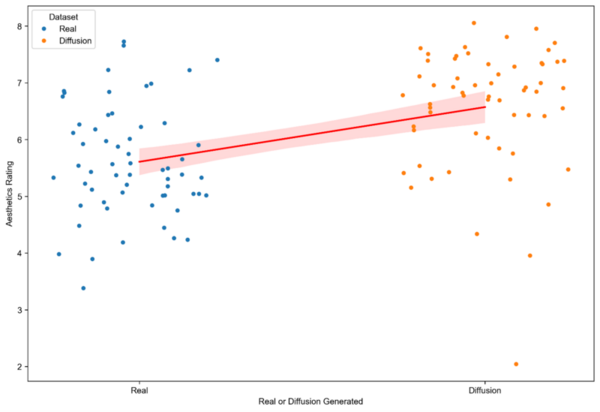
Read More...Evaluating the effectiveness of machine learning models for detecting AI-generated art
The authors investigate how well AI-detection machine learning models can detect real versus AI-generated art across different art styles.
Read More...