Browse Articles

The Development of a Highly Sensitive Home Diagnosis Kit for Group A Streptococcus Bacteria (GAS)

Mai et al. | Dec 05, 2018

The Development of a Highly Sensitive Home Diagnosis Kit for Group A Streptococcus Bacteria (GAS)

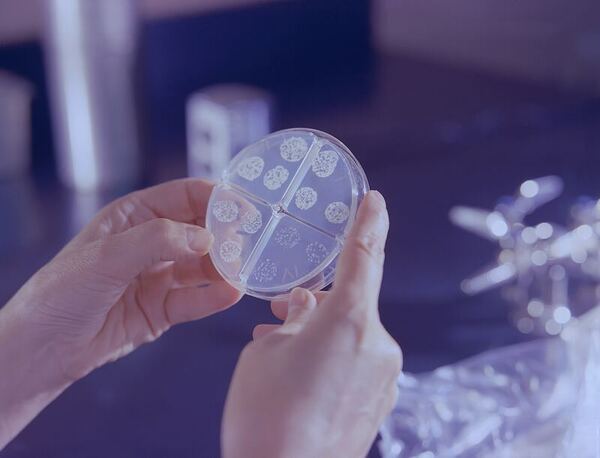
In this article, Mai et al. have developed a do-it-yourself kit for the detection of Strep A bacterial infections. While Strep A infections require antibiotic administration, viral infections, which can present with similar symptoms, often resolve on their own. The problem with delayed antibiotic treatment is an increasing risk of complications. Currently an accurate diagnosis requires that patients make the trip to the hospital where sensitive tests can be performed. The method described here, bundled into a commercially available kit, could help speed up the identification of such bacterial infections. When presented with symptoms of a sore throat and fever, you could just buy the kit at your local pharmacy, perform the simple yet highly accurate and sensitive test, and know whether an urgent trip to the doctor's for an antibiotic prescription is necessary. How convenient!

Read More...

Overcoming The Uncanny Valley Through Shared Stressful Experience with a Humanoid Robot

Bing et al. | Jun 12, 2018

Overcoming The Uncanny Valley Through Shared Stressful Experience with a Humanoid Robot

The "Uncanny Valley" is a phenomenon in which humans feel discomfort in the presence of objects that are almost, but not quite, human-like. In this study, the authors tested whether this phenomenon could be overcome by sharing a stressful experience with a humanoid robot. They found that human subjects more readily accepted a robot partner that they had previously shared a stressful experience with, suggesting a potential method for increasing the effectiveness of beneficial human-robot interactions by reducing the Uncanny Valley effect.

Read More...

The Cosmic Microwave Background: Galactic Foregrounds and Faraday Rotation

Connelly et al. | Nov 20, 2017

The Cosmic Microwave Background: Galactic Foregrounds and Faraday Rotation

The cosmic microwave background (CMB) is faint electromagnetic radiation left over from early stages in the formation of the universe. In order to analyze the CMB, scientists need to remove from electromagnetic data foreground radiation that contaminates CMB datasets. In this study, students utilize extensive updated datasets to analyze the correlation between CMB maps and Faraday RM and WMAP sky maps.

Read More...

The Development and Maximization of a Novel Photosynthetic Microbial Fuel Cell Using Rhodospirillum rubrum

Gomez et al. | Mar 02, 2014

The Development and Maximization of a Novel Photosynthetic Microbial Fuel Cell Using <em>Rhodospirillum rubrum</em>

Microbial fuel cells (MFCs) are bio-electrochemical systems that utilize bacteria and are promising forms of alternative energy. Similar to chemical fuel cells, MFCs employ both an anode (accepts electrons) and a cathode (donates electrons), but in these devices the live bacteria donate the electrons necessary for current. In this study, the authors assess the functionality of a photosynthetic MFC that utilizes a purple non-sulfur bacterium. The MFC prototype they constructed was found to function over a range of environmental conditions, suggesting its potential use in industrial models.

Read More...

Characterization and Phylogenetic Analysis of the Cytochrome B Gene (cytb) in Salvelinus fontinalis, Salmo trutta and Salvelinus fontinalis X Salmo trutta Within the Lake Champlain Basin

Palermo et al. | Jan 24, 2014

Characterization and Phylogenetic Analysis of the Cytochrome B Gene (<em>cytb</em>) in <em>Salvelinus fontinalis</em>,<em> Salmo trutta</em> and <em>Salvelinus fontinalis X Salmo trutta</em> Within the Lake Champlain Basin

Recent declines in the brook trout population of the Lake Champlain Basin have made the genetic screening of this and other trout species of utmost importance. In this study, the authors collected and analyzed 21 DNA samples from Lake Champlain Basin trout populations and performed a phylogenetic analysis on these samples using the cytochrome b gene. The findings presented in this study may influence future habitat decisions in this region.

Read More...

Spider Density Shows Weak Relationship with Vegetation Density

Ryon et al. | Jul 03, 2020

Spider Density Shows Weak Relationship with Vegetation Density

Evidence supports that spiders have many ecological benefits including insect control and predation in the food chain. In this study the authors investigate that whether the percent of vegetation coverage and spider density are correlated. They determine that despite the trend there is no statistically significant correlation.

Read More...

Modulation of VEGF and TGF beta in 5-FU induced inflammation in MCF-7 using an herbal formulation

Vinay Nair et al. | Jun 03, 2022

Modulation of VEGF and TGF beta in 5-FU induced inflammation in MCF-7 using an herbal formulation

Acquired drug resistance is an increasing challenge in treating cancer with chemotherapy. One mechanism
behind this resistance is the increased inflammation that supports the progression and development of
cancer that arises because of the drug’s presence. Integrative oncology is the field that focuses on including natural products alongside traditional therapy to create a treatment that focuses on holistic patient well-being.
In this study, the authors demonstrate that the use of an herbal formulation, consisting of turmeric and green tea, alongside a traditional chemotherapeutic drug, 5-fluorouracil (FU) significantly decreases the level of cytokines produced in breast cancer cells when compared to the levels produced when exposed solely to the chemo drug. The authors conclude that this combination of treatment, based on the principle of integrative oncology, shows potential for reducing the resistance against treatment conferred through increased inflammation. Consequently, this suggests a prospective way forward in improving the efficacy of cancer treatment.

Read More...

The role of CYP46A1 and its metabolic product, 24S-hydroxycholesterol, in Neuro 2A cell death

Ni et al. | May 11, 2021

The role of CYP46A1 and its metabolic product, 24S-hydroxycholesterol, in Neuro 2A cell death

Cholesterol is a major component of neuronal cell membrane and myelin sheath. In this study, the authors either transfected Neuro 2A cells with CYP46A1 cDNA or treated the cells with 24SHC. Cells expressing CYP46A1 had significantly less viability compared to the negative control. Up to 55% reduction in cell viability was also observed in 24S-HC-treated cells. This work supports that CYP46A1 and 24S-HC could directly trigger cell death. The direct involvement of 24S-HC in cell death provides further evidence that 24S-HC can be a promising biomarker for diagnosing brain damage severity.

Read More...