Browse Articles

Comparison of three large language models as middle school math tutoring assistants

Ramanathan et al. | May 02, 2024

Comparison of three large language models as middle school math tutoring assistants
Image credit: Thirdman

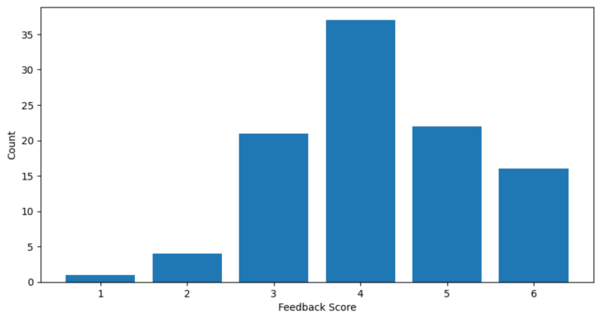
Middle school math forms the basis for advanced mathematical courses leading up to the university level. Large language models (LLMs) have the potential to power next-generation educational technologies, acting as digital tutors to students. The main objective of this study was to determine whether LLMs like ChatGPT, Bard, and Llama 2 can serve as reliable middle school math tutoring assistants on three tutoring tasks: hint generation, comprehensive solution, and exercise creation.

Read More...

Artificial intelligence assisted violin performance learning

Zhang et al. | Aug 30, 2023

Artificial intelligence assisted violin performance learning
Image credit: Philip Myrtorp

In this study the authors looked at the ability of artificial intelligence to detect tempo, rhythm, and intonation of a piece played on violin. Technology such as this would allow for students to practice and get feedback without the need of a teacher.

Read More...

Herbal formulation, HF1 diminishes tumorigenesis: a cytokine study between MCF-7 and BM-MSCs.

Guru et al. | Apr 11, 2022

Herbal formulation, HF1 diminishes tumorigenesis: a cytokine study between MCF-7 and BM-MSCs.

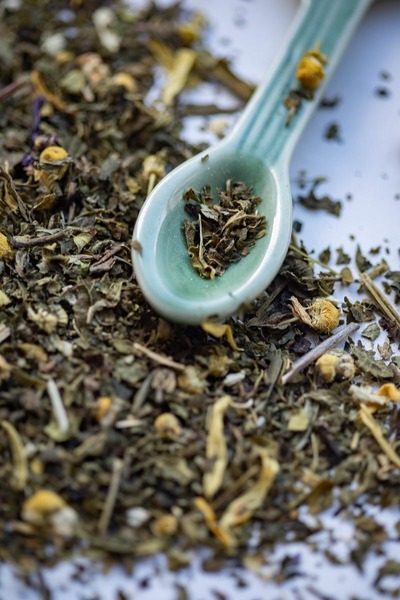
The authors use HF-1, an herbal formation, on bone marrow derived cells as well as breast cancer cells to assess HF-1's ability to prevent tumorigenesis. As metastasis requires coordination of multiple cells in the tumor microenvironment, their findings that HF-1 augments cytokine expression such as VEGF & TGF-B show that HF-1 has potential application to therapeutics.

Read More...

Assessing machine learning model efficacy for brain tumor MRI classification: a multi-model approach

Dhingra et al. | Mar 14, 2026

Assessing machine learning model efficacy for brain tumor MRI classification: a multi-model approach
Image credit: Dhingra and Dhingra

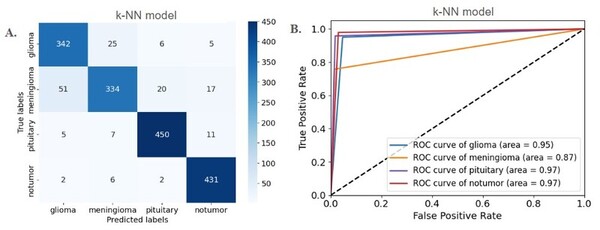
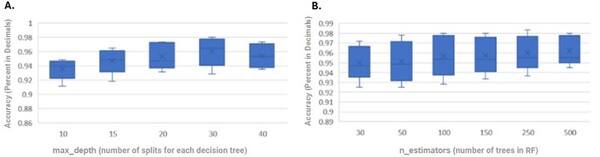
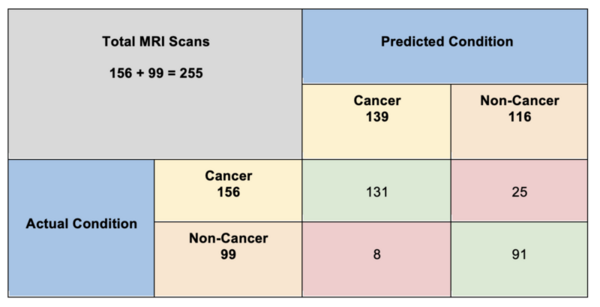
This manuscript explores the performance of five different machine learning models in classifying brain tumors from a dataset of MRI scans. The authors find that several of the models showed >90% accuracy. Thus, the authors suggest that machine learning models demonstrate potential for effective implementation in clinical settings, including as a diagnostic tool that can be used to complement the expertise of neuroradiologists.

Read More...

Significance of Tumor Growth Modeling in the Behavior of Homogeneous Cancer Cell Populations: Are Tumor Growth Models Applicable to Both Heterogeneous and Homogeneous Populations?

Reddy et al. | Jun 10, 2021

Significance of Tumor Growth Modeling in the Behavior of Homogeneous Cancer Cell Populations: Are Tumor Growth Models Applicable to Both Heterogeneous and Homogeneous Populations?

This study follows the process of single-cloning and the growth of a homogeneous cell population in a superficial environment over the course of six weeks with the end goal of showing which of five tumor growth models commonly used to predict heterogeneous cancer cell population growth (Exponential, Logistic, Gompertz, Linear, and Bertalanffy) would also best exemplify that of homogeneous cell populations.

Read More...

Comparing the Effects of Different Natural Products on Reducing Tumor Growth in a Drosophila Model

Ganesh et al. | May 31, 2020

Comparing the Effects of Different Natural Products on Reducing Tumor Growth in a <i>Drosophila</i> Model

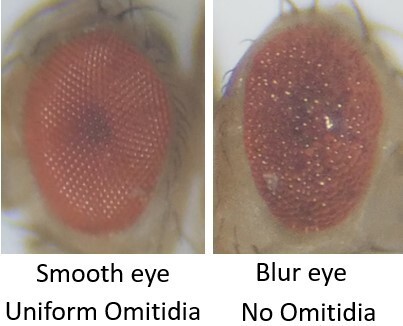
In this work, the authors compared the effects of common natural products, including sesame, cinnamon, garlic, moringa and turmeric on tumor growth in Drosophila eyes. The data showed that these natural products cannot be used to reduce tumor growth once it has completely formed. However, the data suggested that some natural products can reduce cancer cell growth when tumors are treated early.

Read More...