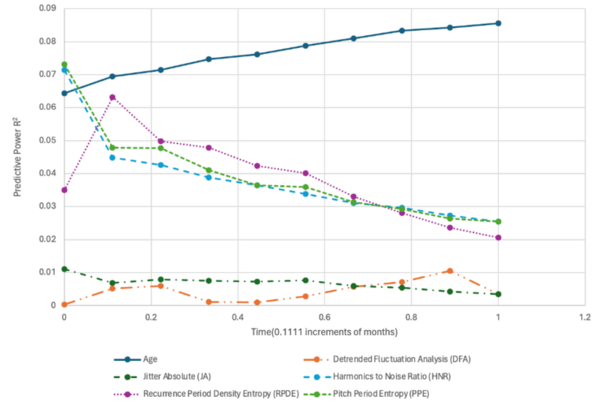
The authors looked at the ability to use audio clips to analyze the progression of Parkinson's disease.
Read More...Using advanced machine learning and voice analysis features for Parkinson’s disease progression prediction
The authors looked at the ability to use audio clips to analyze the progression of Parkinson's disease.
Read More...Sex differences in sleep disorders of Parkinson’s disease patients associated with a genetic risk variant
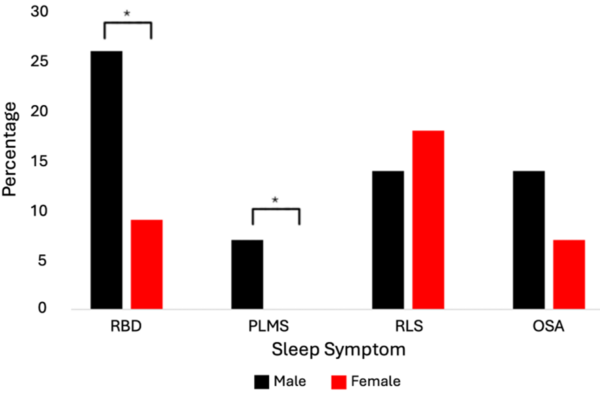
The authors use known Parkinson's disease-associated genetic variants to compare the prevalence of sleep dysfunction between males and females diagnosed with Parkinson's disease.
Read More...Modeling stearoyl-coenzyme A desaturase 1 inhibitors to ameliorate α-Syn cytotoxicity in Parkinson's disease
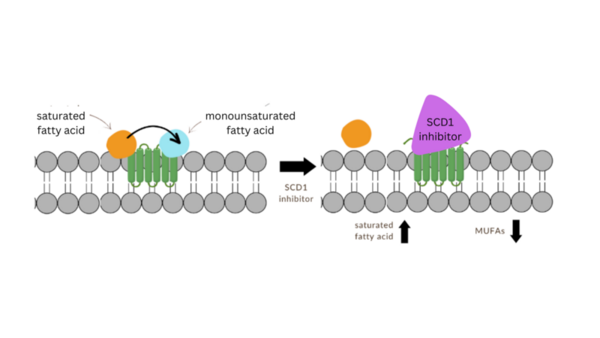
The authors use molecular modeling to test analogs of the stearoyl-coenzyme A desaturase 1 (SCD1) inhibitor MF-438 with implications for future development of Parkinson's disease therapeutics.
Read More...Machine Learning Algorithm Using Logistic Regression and an Artificial Neural Network (ANN) for Early Stage Detection of Parkinson’s Disease
Despite the prevalence of PD, diagnosing PD is expensive, requires specialized testing, and is often inaccurate. Moreover, diagnosis is often made late in the disease course when treatments are less effective. Using existing voice data from patients with PD and healthy controls, the authors created and trained two different algorithms: one using logistic regression and another employing an artificial neural network (ANN).
Read More...Effect of Natural Compounds Curcumin and Nicotinamide on α-synuclein Accumulation in a C. elegans Model of Parkinson’s Disease
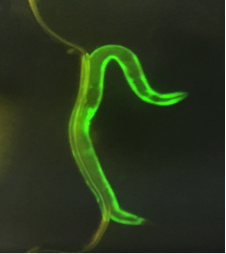
Parkinson's disease is a neurodegenerative disorder that affects over 10 million people worldwide. It is caused by destruction of dopamine-producing neurons, which results in severe motor and movement symptoms. In this study, the authors investigated the anti-Parkinsonian effects of two natural compounds curcumin and nicotinamide using C. elegans as a model organism.
Read More...Transcriptional Regulators are Upregulated in the Substantia Nigra of Parkinson’s Disease Patients
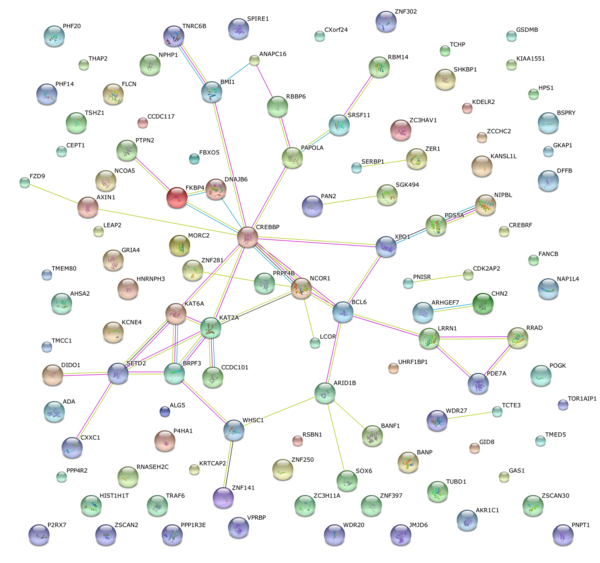
This article investigates differences in gene expression in the brains of patients with and without Parkinson's disease. The authors identify a crucial transcriptional regulator may be a relevant target for future therapeutic treatment for Parkinson's disease.
Read More...A HOG feature extraction and CNN approach to Parkinson’s spiral drawing diagnosis
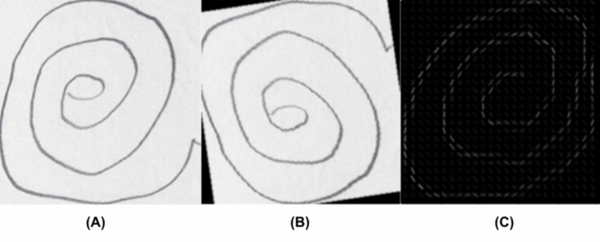
Parkinson’s disease (PD) is a prevalent neurodegenerative disorder in the U.S., second only to Alzheimer’s disease. Current diagnostic methods are often inefficient and dependent on clinical exams. This study explored using machine and deep learning to enhance PD diagnosis by analyzing spiral drawings affected by hand tremors, a common PD symptom.
Read More...Development of a Novel Treatment Strategy to Treat Parkinsonian Neurodegeneration by Targeting Both Lewy Body Aggregation and Dopaminergic Neuronal Degradation in a Drosophila melanogaster Model
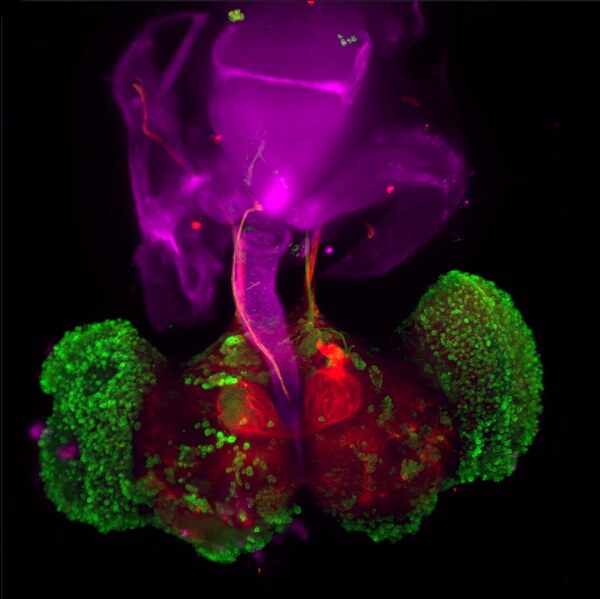
In this article the authors address the complex and life quality-diminishing neurodegenerative disease known as Parkinson's. Although genetic and/or environmental factors contribute to the etiology of the disease, the diagnostic symptoms are the same. By genetically modifying fruit flies to exhibit symptoms of Parkinson's disease, they investigate whether drugs that inhibit mitochondrial calcium uptake or activate the lysosomal degradation of proteins could improve the symptoms of Parkinson's these flies exhibit. The authors report the most promising outcome to be that when both types of drugs were used together. Their data provides encouraging evidence to support further investigation of the utility of such drugs in the treatment of human Parkinson's patients.
Read More...The Effect of Caffeine on the Regeneration of Brown Planaria (Dugesia tigrina)
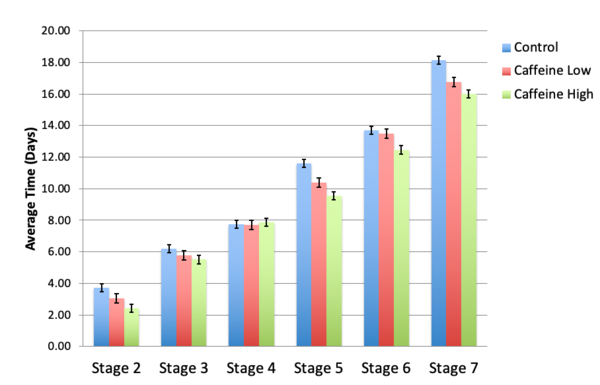
The degeneration of nerve cells in the brain can lead to pathologies such as Parkinson’s disease. It has been suggested that neurons in humans may regenerate. In this study, the effect of different doses of caffeine on regeneration was explored in the planeria model. Caffeine has been shown to enhance dopamine production, and dopamine is found in high concentrations in regenerating planeria tissues. Higher doses of caffeine accelerated planeria regeneration following decapitation, indicating a potential role for caffeine as a treatment to stimulate regeneration.
Read More...Initiating astrocyte to neuron transdifferentiation via miR-124a: implications in neurodegenerative disease
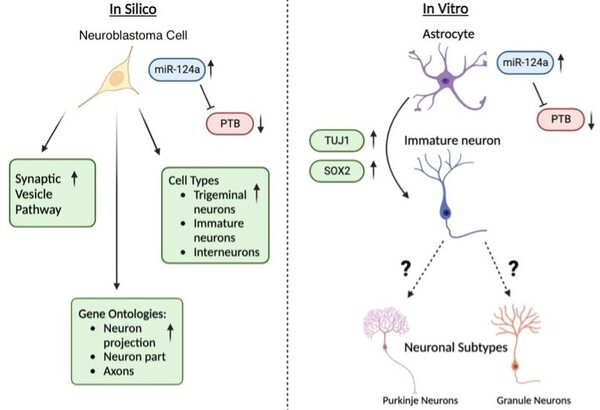
The authors looked at whether they could induce the formation of new neurons from astrocytes via the upregulation of a microRNA (miR-124a). They found that upregulation of miR-124a started transdifferentiation of neurons, but was not enough to lead to full conversion of astrocytes to neurons.
Read More...