Initiating astrocyte to neuron transdifferentiation via miR-124a: implications in neurodegenerative disease
(1) Bergen County Academies
https://doi.org/10.59720/24-266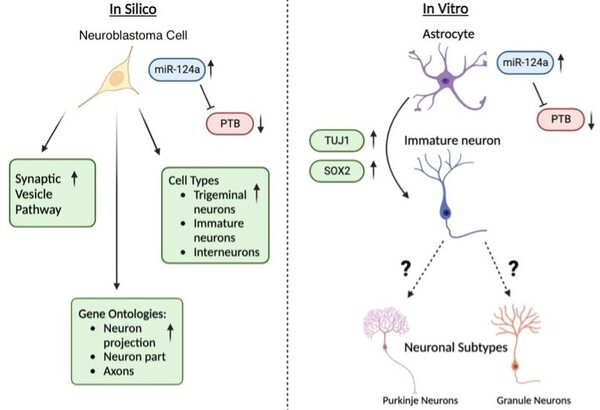
Neurodegenerative diseases, such as Parkinson's disease and Alzheimer's disease, affect the lives of more than 50 million individuals each year. Neurodegeneration is the progressive damage and loss of nerve cells (neurons) in the brain. Considering the vital role that neurons play and their inability to regenerate, there is a significant challenge for the treatment of these disorders. We investigated a potential mechanism to replenish lost neurons, with the aim of restoring some cognitive and motor functions, slowing disease progression, and improving quality of life for individuals affected by neurodegenerative disorders. We hypothesized that astrocyte to neuron transdifferentiation could be initiated by the upregulation of microRNA-124a (miR-124a), causing astrocytes to go down the lineage of the specific neuronal subtype present locally. Initial in silico findings suggested the role of miR-124a was significant in the downregulation of polypyrimidine tract binding protein 1 (PTBP1). Additional genome analysis showed that upregulation of miR-124a was associated with enriched gene ontologies of neuron projection, axons, and genes in the synaptic vesicle pathway. To investigate these findings in vitro, we utilized an astrocyte cell line derived from a mouse’s cerebellum (C8-D1A). After achieving a stable transfection of the cells to upregulate miR-124a, pan-neuronal markers beta tubulin III (TUJ1) and SRY-box transcription factor 2 (SOX2) showed a significant increase in expression. However, regional-specific neuronal markers were not present, suggesting that transdifferentiation began but had not progressed to full conversion. Overall, our study suggests miR-124a plays a role in initiating neuronal differentiation and should be further studied as a target in combating neurodegeneration.
This article has been tagged with: