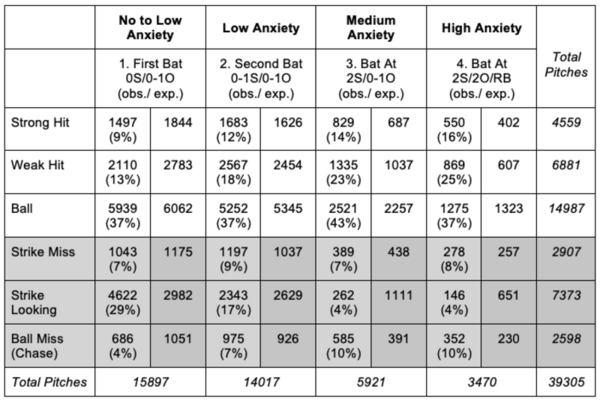
This study examined whether findings from laboratory studies of baseball cognition also apply during real games. Using 2024 MLB data from 30 players, researchers analyzed batting performance under different levels of feedback and anxiety.
This study analyzed patient demographics in the ophthalmology department at Indira Gandhi Medical College and Hospital (IGMCH) to assess relationships between age, sex, and eye conditions. While the overall sex distribution was equal, individual conditions varied, with cataracts and retinal disorders more common in males and conjunctival conditions slightly more prevalent in females, though none were statistically significant (p > 0.05) except for cataract patients aged 50–89 (p < 0.001). Understanding these trends can help medical facilities allocate resources more effectively for improved patient care.
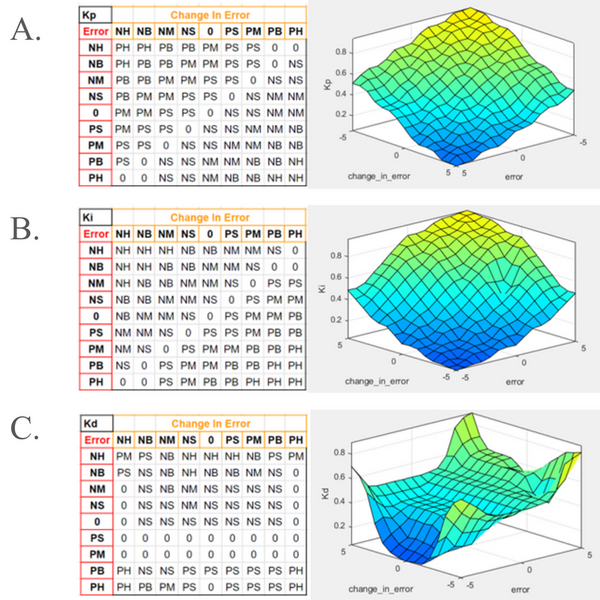
Wind turbines are a valuable source of renewable energy, but face challenges related to unpredictable wind speed. The turbine must be able to control its angle to catch enough wind to generate electricity, while avoiding excess wind that may damage the turbine. Zhou and Wang explore different types of smart turbine controllers to see which appears optimal for electricity generation.
In this study, we investigated how the complexity of a query can influence tool-use hallucinations in large language models that were tasked with setting an appointment. Using explainable AI (XAI) as a tool to test the hypothesis, we analyzed trends in hallucination rates by the type of query and saw results that when complexity and ambiguity of the query increased (such as asking for multiple days or unclear time ranges), the model was more likely to make errors due to misunderstanding time-related data from tool outputs. This shows that making large language models (LLMs) understand what seems logical to a human is still difficult, especially in complex tasks, and that knowing what causes these errors can help build more trustworthy AI systems.
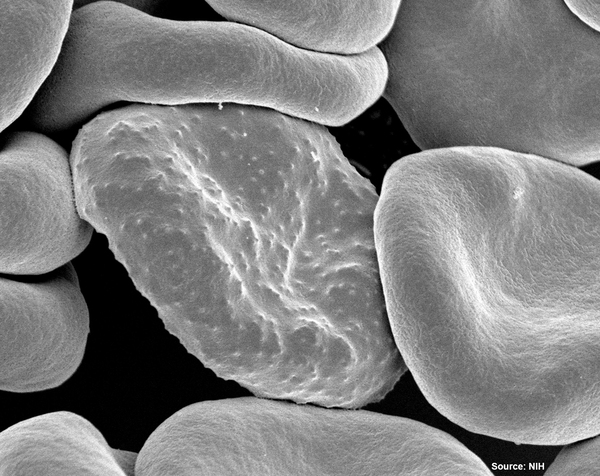
The diagnosis of malaria remains one of the major hurdles to eradicating the disease, especially among poorer populations. Here, the authors use machine learning to improve the accuracy of deep learning algorithms that automate the diagnosis of malaria using images of blood smears from patients, which could make diagnosis easier and faster for many.
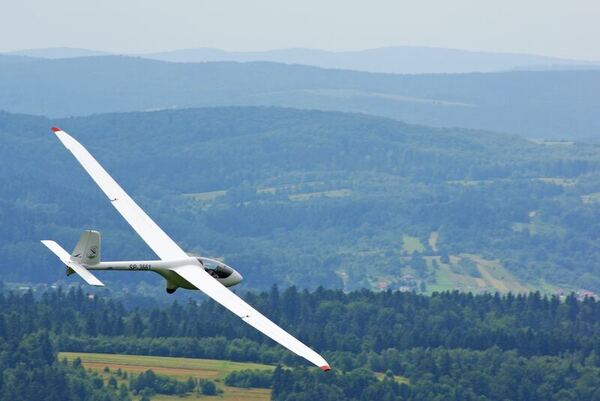
Here, the authors sought to identify a method to optimize the lift generated by an airfoil based solely on its shape. By beginning with a Bernoullian model to predict an optimized wing shape, the authors then tested their model against other possible shapes by constructing them from Styrofoam and testing them in a small wind tunnel. Contrary to their hypothesis, they found their expected optimal airfoil shape did not result in the greatest lift generation. They attributed this to a variety of confounding variables and concluded that their results pointed to a correlation between airfoil shape and lift generation.
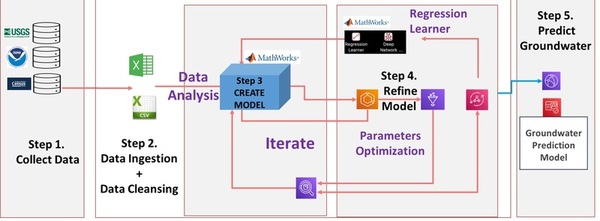
Here, in an effort to develop a model to predict future groundwater levels, the authors tested a tree-based automated artificial intelligence (AI) model against other methods. Through their analysis they found that groundwater levels in Texas aquifers are down significantly, and found that tree-based AI models most accurately predicted future levels.
Here, the authors used machine learning to analyze microscopic images of hair, quantifying various features to distinguish individuals, even within families where traditional DNA analysis is limited. The Discriminant Analysis (DA) model achieved the highest accuracy (88.89%) in identifying individuals, demonstrating its potential to improve the reliability of hair evidence in forensic investigations.
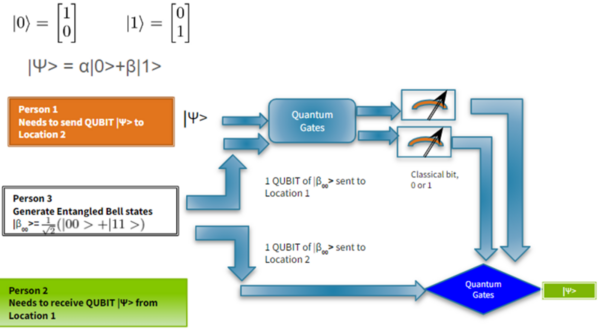
Quantum computers can perform computational tasks beyond the capability of classical computers, such as simulating quantum systems in materials science and chemistry. Quantum teleportation is the transfer of quantum information across distances, relying on entangled states generated by quantum computing. We sought to mitigate the error of quantum teleportation which was simulated on IBM cloud quantum computers.