The decision-making process of an MLB batter: effects of feedback stimuli and anxiety on batting performance
(1) Los Altos High School
https://doi.org/10.59720/25-173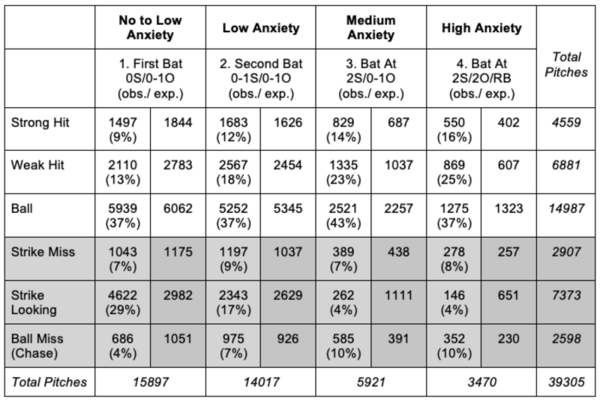
Baseball’s large pool of sports analytics has made it a popular subject for cognitive learning research. Prior experiments have been conducted on the performance of expert athletes by tracing their neural activity and decision-making processes. In baseball, research has been done in laboratory environments on batters’ cognitive skills by simulating pitch-by-pitch scenarios using videos and capturing the batters’ brain activity using an electroencephalogram (EEG) test. To test the external validity of laboratory findings, we intended to observe elite baseball players’ perceptual cognitive expertise during real games using public data on Major League Baseball (MLB) games from Statcast. We hypothesized that feedback stimuli and anxiety would significantly increase batting performance in MLB games, consistent with results recorded in laboratory settings. To examine the effects of professional batters’ superior perceptual and behavioral responses on competition performance, we randomly sampled 30 MLB players’ batting data from the 2024 season and observed differences in their performance between 3 different “feedback stimuli and anxiety” levels: low, medium, and high. The Chi-square tests of this analysis demonstrated improvement in the pitch recognition ability of MLB batters when there is higher error-related feedback, which is the information provided to a person notifying them that a mistake has been made. Higher error-related feedback is also associated with a medium to high level of stress. The findings of this paper contribute to a better understanding of sports anxiety and the potential value of this dataset in the area of cognitive science.
This article has been tagged with: