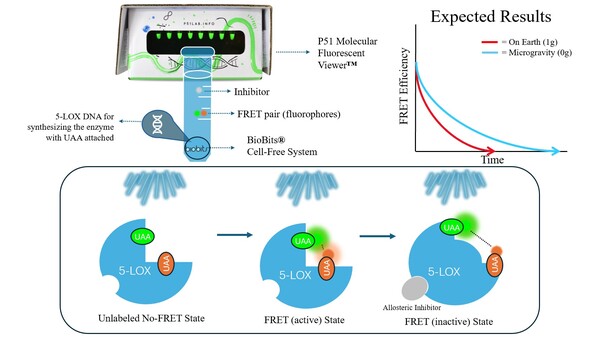
From bone loss to space anemia, biology presents one of the most formidable barriers to long-duration spaceflight. The annual
Genes in Space competition provides young scientists the opportunity to design space biology experiments – and in doing so empowers them to address these important biological challenges.
Each year, astronauts on the International Space Station (ISS) receive the experiment from the winning entry as a flight-ready payload and carry out the experiment on behalf of the students. Since its inception in 2015, the program has received proposals from over 10,000 students and has launched eleven winning projects. Each of these experiments has furthered our collective understanding of how life in space works and paved the way for new research.
The Journal of Emerging Investigators partners with Genes in Space to publish abstracts from the top finalists each year. Finalists' proposals are chosen for their innovative ideas, rigorous scientific approaches, and potential to change our understanding of space biology and inform future space missions. We encourage you to explore the abstracts below to learn more about space, biology, and the power of young scientists.