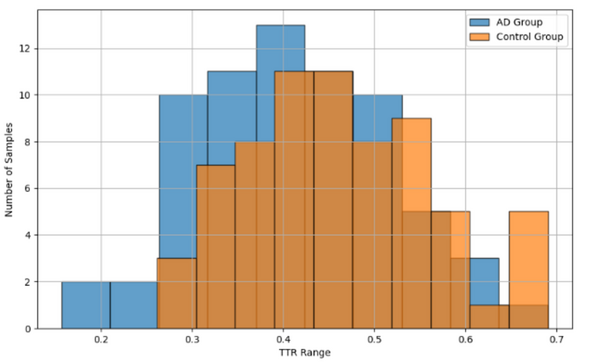
The authors looked at how vocabulary is impacted in Alzheimer's disease and whether it could be used a predictor of disease onset.
Read More...Decline in vocabulary richness in individuals with Alzheimer's disease
The authors looked at how vocabulary is impacted in Alzheimer's disease and whether it could be used a predictor of disease onset.
Read More...Stress-induced genetic memory inheritance and retention in Planarian biological model
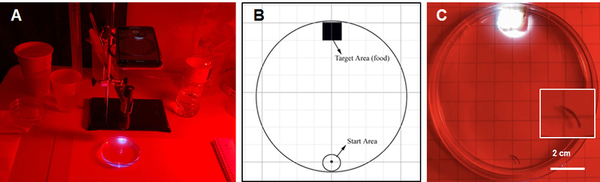
This study explored whether planaria, known for their regenerative abilities, can retain learned memories after regeneration and how stressors like alcohol affect memory.
Read More...Does language familiarity affect typing speed?

In cognitive psychology, typed responses are used to assess thinking skills and creativity, but research on factors influencing typing speed is limited. This study examined how language familiarity affects typing speed, hypothesizing that familiarity with a language would correlate with faster typing. Participants typed faster in English than Latin, with those unfamiliar with Latin showing a larger discrepancy between the two languages, though Latin education level did not significantly impact typing speed, highlighting the role of language familiarity in typing performance.
Read More...Assessing large language models for math tutoring effectiveness
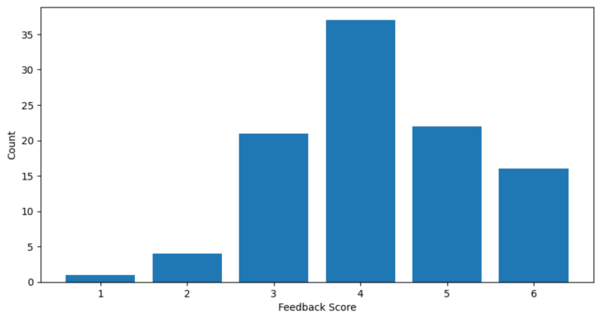
Authors examine the effectiveness of Large Language Models (LLMs) like BERT, MathBERT, and OpenAI GPT-3.5 in assisting middle school students with math word problems, particularly following the decline in math performance post-COVID-19.
Read More...A natural language processing approach to skill identification in the job market
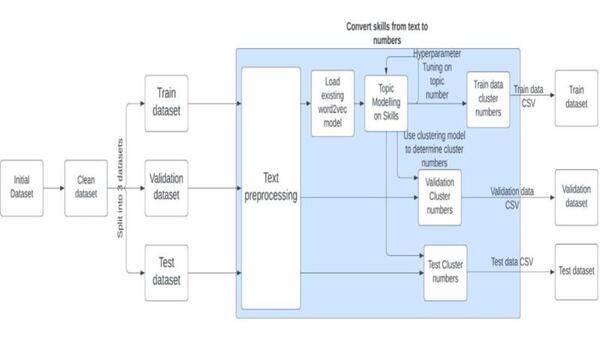
The authors looked at using machine learning to identify skills needed to apply for certain jobs, specifically looking at different techniques to parse apart the text. They found that Bidirectional Encoder Representation of Transforms (BERT) performed best.
Read More...Large Language Models are Good Translators
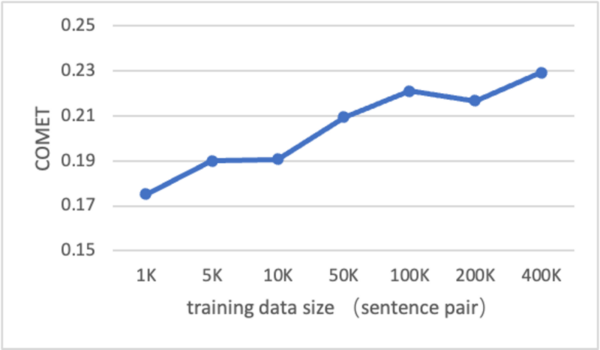
Machine translation remains a challenging area in artificial intelligence, with neural machine translation (NMT) making significant strides over the past decade but still facing hurdles, particularly in translation quality due to the reliance on expensive bilingual training data. This study explores whether large language models (LLMs), like GPT-4, can be effectively adapted for translation tasks and outperform traditional NMT systems.
Read More...Changes in Aromanian language use and the Aromanian ethnolinguistic group’s reaction to decline

The Aromanian language and culture is quickly declining towards extinction. In this new research article, Ganea and Lascu provide evidence that, although the use of the Aromanian language is less prevalent among younger individuals, participants overwhelming support the preservation of Aromanian language and culture.
Read More...Validating DTAPs with large language models: A novel approach to drug repurposing

Here, the authors investigated the integration of large language models (LLMs) with drug target affinity predictors (DTAPs) to improve drug repurposing, demonstrating a significant increase in prediction accuracy, particularly with GPT-4, for psychotropic drugs and the sigma-1 receptor. This novel approach offers to potentially accelerate and reduce the cost of drug discovery by efficiently identifying new therapeutic uses for existing drugs.
Read More...Comparison of three large language models as middle school math tutoring assistants

Middle school math forms the basis for advanced mathematical courses leading up to the university level. Large language models (LLMs) have the potential to power next-generation educational technologies, acting as digital tutors to students. The main objective of this study was to determine whether LLMs like ChatGPT, Bard, and Llama 2 can serve as reliable middle school math tutoring assistants on three tutoring tasks: hint generation, comprehensive solution, and exercise creation.
Read More...Uncovering the hidden trafficking trade with geographic data and natural language processing

The authors use machine learning to develop an evidence-based detection tool for identifying human trafficking.
Read More...