Stress-induced genetic memory inheritance and retention in Planarian biological model
(1) The Harker School
https://doi.org/10.59720/25-036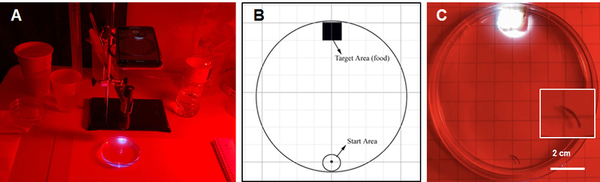
Memory transfer has been widely studied at the neuronal level, yet the possibility of memory persistence through regeneration or non-neural mechanisms remains less understood. This study aims to systematically investigate whether planaria, freshwater flatworms capable of regenerating their entire bodies within 14 days, can acquire and retain memory through training, whether such memory persists after central nervous system regeneration, and how exposure to stressors like alcohol affects memory retention. We established a reliable and reproducible system for measuring memory inheritance and retention using an associative memory task, with semi-automated video tracking to quantify retention in planaria, improving upon previous observational methods. We hypothesized that planaria could acquire and retain memory through training, that memory could be transferred genetically through regeneration, and that alcohol would transiently impair memory. Four experiments were conducted: 1) development of associative memory task for training planaria; 2) analysis of the correlation between training trials and memory retention; 3) examination of the effects of regeneration on memory; and 4) assessment of alcohol exposure on memory performance. We found that increasing the number of training trials led to progressive improvement in memory retention. The results also implied that the regenerated head and tail retained memory, with no significant difference observed between the head and tail segments. Trained intact planaria exposed to 0.1% (v/v) ethanol for 5 minutes showed temporary impairment of learning and memory; however, they regained normal memory within 24 hours. Collectively, these findings help to understand the memory persistence in a regenerating model and how environmental stressors modulate learned behavior.
This article has been tagged with: