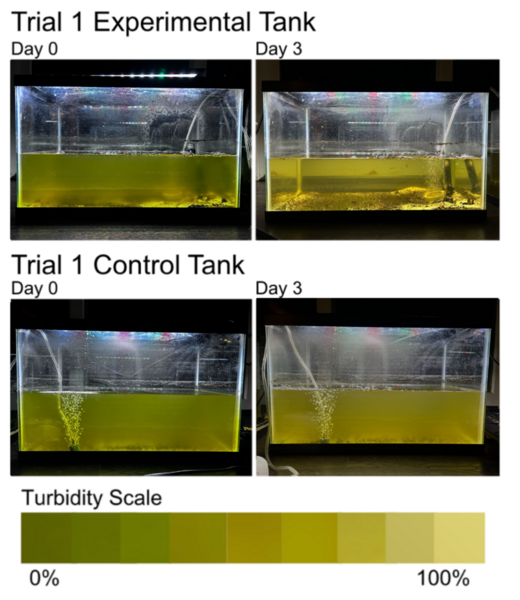
The authors studied the ability of freshwater clams to improve water quality.
Read More...Evaluating the filtration efficiency and water quality impact of Corbicula javanicus
A multi-dimensional analysis of NFL red zone efficiency

Here the authors investigated the relationship between offensive play-calling styles and scoring success within the NFL's red zone by analyzing play-by-play data and expected points metrics. Their findings suggest that a conservative approach to play design and execution is more strongly associated with maximizing efficiency and point-value gains than aggressive strategies.
Read More...Assessing the accuracy and efficiency of simplified gridded ion thruster simulations
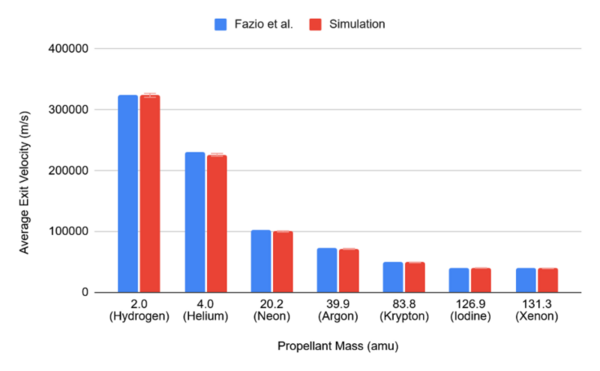
The authors used a particle-in-cell simulation to determine the effects on extensive and intensive metrics. They found that preliminary simulations could be run quickly with much lower particle counts before more technically demanding and comprehensive simulations are performed.
Read More...Analysis of the catalytic efficiency of spent coffee grounds and titanium dioxide using UV-Vis spectroscopy
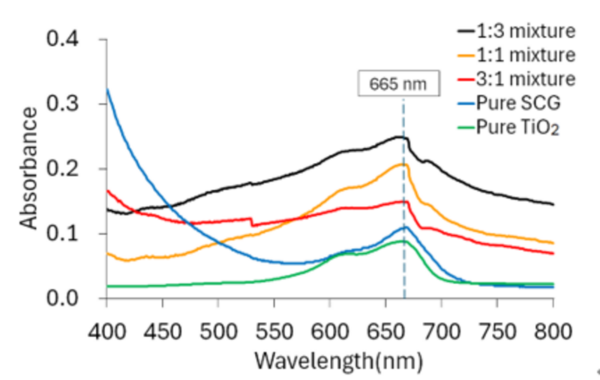
This paper looks at using spent coffee grounds as a partial substitute for titanium dioxide (TiO2) as a catalyst for chemical reactions. Using UV-Vis spectrophotometry, they found that adding the coffee grounds to TiO2 in a 3:1 ratio, there is still meaningful catalytic activity. This offers a cheaper solution than just using pure TiO2.
Read More...Enhancing the quantum efficiency of a silicon solar cell using one dimensional thin film interferometry

Here, recognizing the need to improve the efficiency of the conversion of solar energy to electrical energy, the authors used MATLAB to mathematically simulate a multi-layered thin film with an without an antireflective coating. They found that the use of alternating ZnO-SiO2 multilayers enhanced the transmission of light into the solar cell, increasing its efficiency and reducing the reflectivity of the Si-Air interface.
Read More...Measuring the efficiency of greenhouse gases to absorb heat

In the age of global warming, these authors studied which of the four major greenhouse gases (water vapor, carbon dioxide, and nitrous oxide) change the most with increased temperature.
Read More...Assessing grass water use efficiency through smartphone imaging and ImageJ analysis
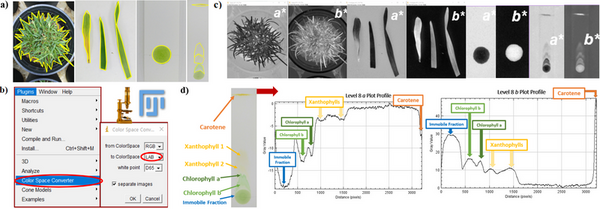
Overwatering and underwatering grass are widespread issues with environmental and financial consequences. This study developed an accessible method to assess grass water use efficiency (WUE) combining smartphone imaging with open access color unmixing analysis. The method can be applied in automated irrigation systems or apps, providing grass WUE assessment for regular consumer use.
Read More...Comparative singlet oxygen photosensitizer efficiency of berberine, rose bengal, and methylene blue by time course nuclear magnetic resonance (NMR) monitoring of a photochemical 4+2 cycloaddition endoperoxide formation

Berberine, a natural product alkaloid, has been shown to exert biological activity via in situ production of singlet oxygen when photo irradiated. Berberine utilizes singlet oxygen in its putative mechanism of action, wherein it forms an activated complex with DNA and photosensitizes triplet oxygen to singlet oxygen to specifically oxidize guanine residues, thereby halting cell replication and leading to cell death. This has potential application in photodynamic therapy, alongside other such compounds which also act as photosensitizers and produce singlet oxygen in situ. The quantification of singlet oxygen in various photosensitizers, including berberine, is essential for determining their photosensitizer efficiencies. We postulated that the singlet oxygen produced by photoirradiation of berberine would be superior in terms of singlet oxygen production to the aforementioned photosensitizers when irradiated with UV light, but inferior under visible light conditions, due to its strong absorbance of UV wavelengths.
Read More...Correlating inlet gas composition to conversion efficiency in plasma-assisted landfill gas reforming
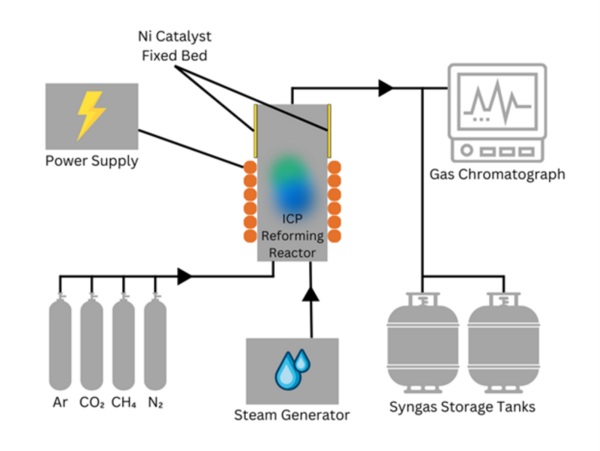
The escalating crisis of climate change, driven by the accumulation of greenhouse gases from human activities, demands urgent and innovative solutions to curb rising global temperatures. Plasma-based methane (CH4) and carbon dioxide (CO2) reforming offers a promising pathway for carbon capture and the sustainable production of hydrogen fuel and syngas components. To advance this technology, particularly in terms of energy efficiency and selectivity, it is essential to enhance the conversion efficiencies of CO2 and CH4.
Read More...The Dependence of CO2 Removal Efficiency on its Injection Speed into Water
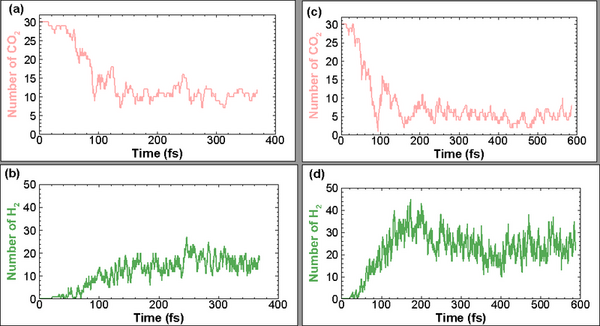
Recent research confirms that climate change, driven by CO2 emissions from burning fossil fuels, poses a significant threat to humanity. In response, authors explore methods to remove CO2 from the atmosphere, including breaking its molecular bonds through high-speed collisions.
Read More...