Browse Articles

A land use regression model to predict emissions from oil and gas production using machine learning

Cao et al. | Mar 24, 2023

A land use regression model to predict emissions from oil and gas production using machine learning

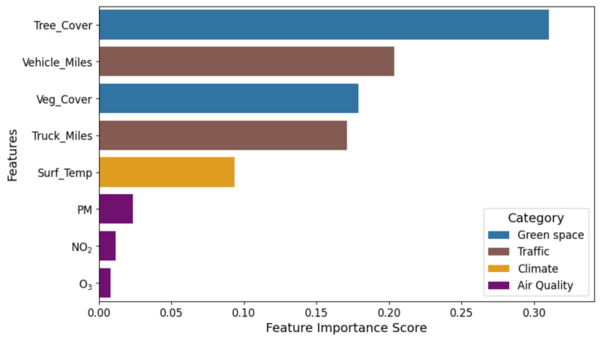
Emissions from oil and natural gas (O&G) wells such as nitrogen dioxide (NO2), volatile organic compounds (VOCs), and ozone (O3) can severely impact the health of communities located near wells. In this study, we used O&G activity and wind-carried emissions to quantify the extent to which O&G wells affect the air quality of nearby communities, revealing that NO2, NOx, and NO are correlated to O&G activity. We then developed a novel land use regression (LUR) model using machine learning based on O&G prevalence to predict emissions.

Read More...

A new therapy against MDR bacteria by in silico virtual screening of Pseudomonas aeruginosa LpxC inhibitors

Liu et al. | Apr 27, 2022

A new therapy against MDR bacteria by <em>in silico</em> virtual screening of <em>Pseudomonas aeruginosa</em> LpxC inhibitors

Here, seeking to address the growing threat of multidrug-resistant bacteria (MDR). the authors used in silico virtual screening to target MDR Pseudomonas aeruginosa. They considered a key protein in its biosynthesis and virtually screened 20,000 candidates and 30 derivatives of brequinar. In the end, they identified a possible candidate with the highest degree of potential to inhibit the pathogen's lipid A synthesis.

Read More...

The Clinical Accuracy of Non-Invasive Glucose Monitoring for ex vivo Artificial Pancreas

Levy et al. | Jul 10, 2016

The Clinical Accuracy of Non-Invasive Glucose Monitoring for <i>ex vivo</i> Artificial Pancreas

Diabetes is a serious worldwide epidemic that affects a growing portion of the population. While the most common method for testing blood glucose levels involves finger pricking, it is painful and inconvenient for patients. The authors test a non-invasive method to measure glucose levels from diabetic patients, and investigate whether the method is clinically accurate and universally applicable.

Read More...