Browse Articles

Development of anti-cancer bionanoparticles isolated from corn for bone cancer treatment

Richardson et al. | Apr 20, 2023

Development of anti-cancer bionanoparticles isolated from corn for bone cancer treatment

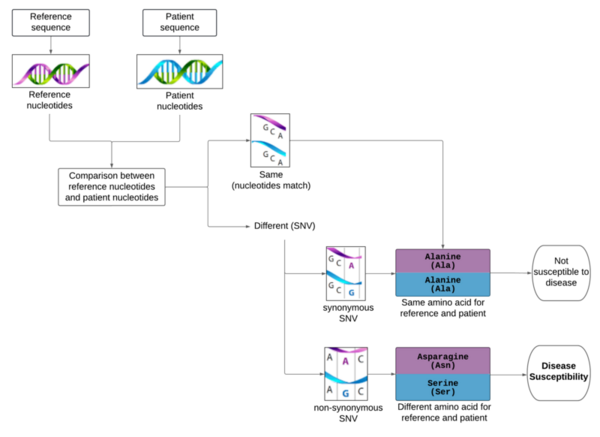
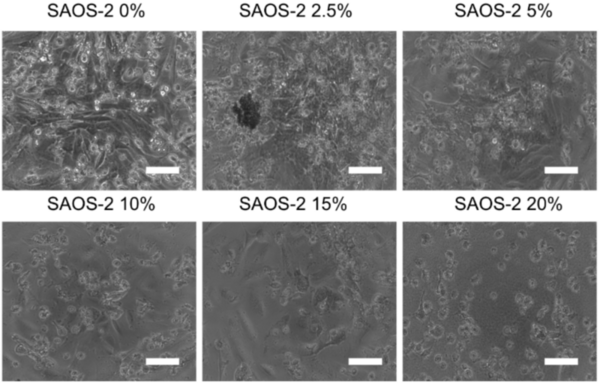
This study hypothesizes that nanoparticles derived from corn (cNPs)may have anti-proliferative effects on bone cancer and metastasized bone cancer. It finds that human osteosarcoma and human lung carcinoma metastasized to bone marrow cell viability decreased to 0% when treated with cNPs. Overall, these results indicate that cNPs have anti-proliferative effects on bone cancer cells and cancer cells that metastasize to the bone.

Read More...

Employee resignation study in Fairfax County

Zhang et al. | Mar 03, 2023

Employee resignation study in Fairfax County

In this study, the authors address potential reasons why employees may voluntarily resign. This is in response to the currently observed economic trend The Great Resignation. Through analysis of federal and local government data along with survey results from Fairfax County, they concluded that adding additional benefits will help companies retain talented empolyees.

Read More...

Machine learning-based enzyme engineering of PETase for improved efficiency in plastic degradation

Gupta et al. | Jan 31, 2023

 Machine learning-based enzyme engineering of PETase for improved efficiency in plastic degradation
Image credit: Markus Spiske

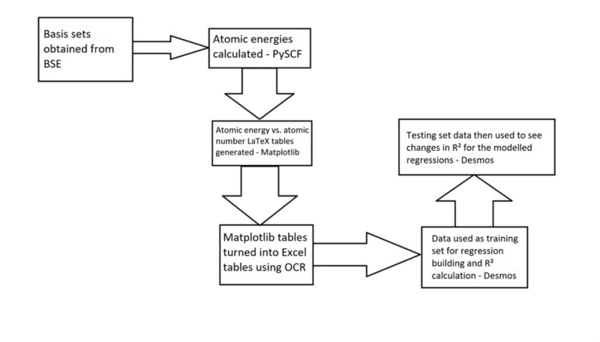
Here, recognizing the recognizing the growing threat of non-biodegradable plastic waste, the authors investigated the ability to use a modified enzyme identified in bacteria to decompose polyethylene terephthalate (PET). They used simulations to screen and identify an optimized enzyme based on machine learning models. Ultimately, they identified a potential mutant PETases capable of decomposing PET with improved thermal stability.

Read More...

Heat impact to food’s shelf life - An example of milk

Xu et al. | Dec 13, 2022

Heat impact to food’s shelf life - An example of milk

Food spoilage happens when food is not kept in a good storage condition. Qualitatively estimating the shortened shelf life of food could reduce food waste. In this study, we tested the impact of heat on milk shelf life. Our results showed that an exposure at room temperature (25°C) for 3.2 hours will decrease the shelf life of milk by one day.

Read More...

siRNA-dependent KCNMB2 silencing inhibits lung cancer cell proliferation and promotes cell death

Jeong et al. | Nov 01, 2022

siRNA-dependent KCNMB2 silencing inhibits lung cancer cell proliferation and promotes cell death

Here, seeking to better understand the genetic associations underlying non-small cell lung cancer, the authors screened hundreds of genes, identifying that KCNMB2 upregulation was significantly correlated with poor prognoses in lung cancer patients. Based on this, they used small interfering RNA to decrease the expression of KCNMB2 in A549 lung cancer cells, finding decreased cell proliferation and increased lung cancer cell death. They suggest this could lead to a new potential target for lung cancer therapies.

Read More...

Identifying Neural Networks that Implement a Simple Spatial Concept

Zirvi et al. | Sep 13, 2022

Identifying Neural Networks that Implement a Simple Spatial Concept

Modern artificial neural networks have been remarkably successful in various applications, from speech recognition to computer vision. However, it remains less clear whether they can implement abstract concepts, which are essential to generalization and understanding. To address this problem, the authors investigated the above vs. below task, a simple concept-based task that honeybees can solve, using a conventional neural network. They found that networks achieved 100% test accuracy when a visual target was presented below a black bar, however only 50% test accuracy when a visual target was presented below a reference shape.

Read More...

A comparative study on the suitability of virtual labs for school chemistry experiments

Praveen et al. | Aug 22, 2022

A comparative study on the suitability of virtual labs for school chemistry experiments

Virtual labs have been gaining popularity over the last few years, especially during the worldwide lockdown due to the COVID-19 pandemic. In this study, the suitability of virtual labs for school chemistry experiments is addressed and their effectiveness is compared to traditional physical lab experiments by focusing on physical and human resources, convenience, cost, safety, and time involved as well as topic "matter".

Read More...