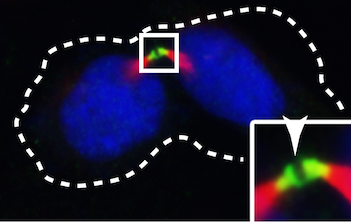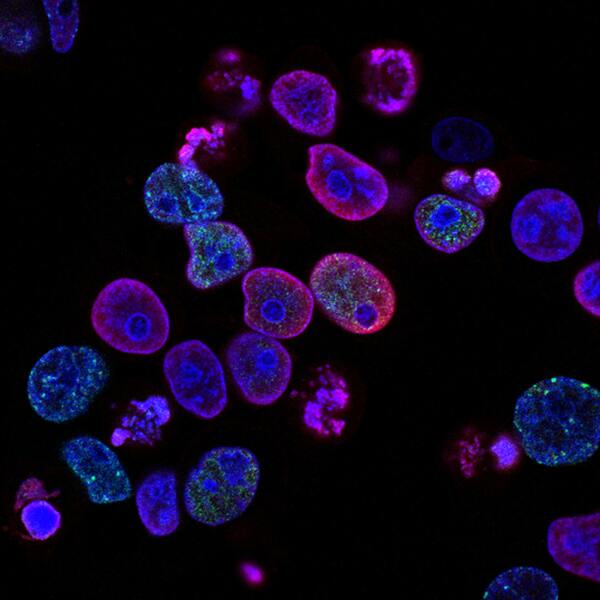
In order for cells to successfully multiply, a number of proteins are needed to correctly coordinate the replication and division process. In this study, students use fluorescence microscopy and molecular methods to study CCDC11, a protein critical in the formation of cilia. Interestingly, they uncover a new role for CCDC11, critical in the cell division across multiple human cell lines.
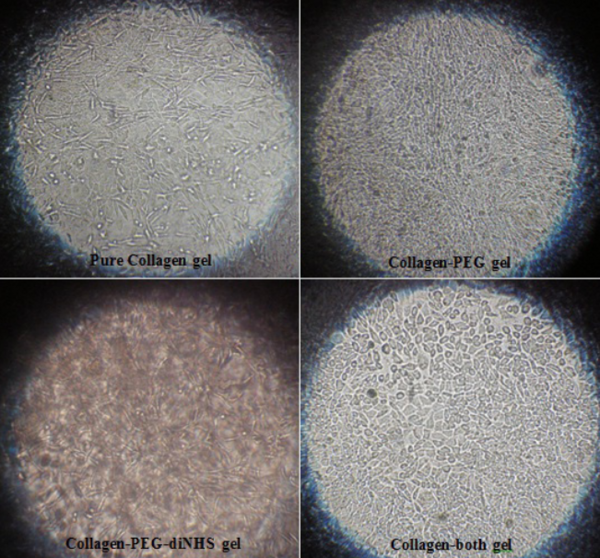
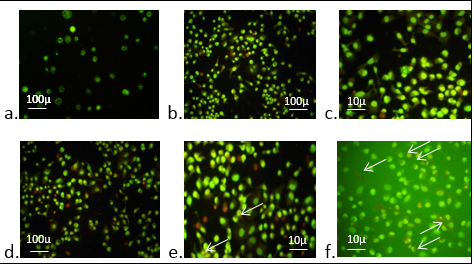
Environment affects the progression of life, especially at the cellular level. This study investigates multiple 3-dimensional growth environments, also known as scaffolds or hydrogels, and their effect on the growth of a type of cells called fibroblasts. These results suggest that a scaffold made of collagen and polyethylene glycol are favorable for cell growth. This research is useful for developing implantable devices to aid wound healing.
In this study, the authors investigate whether a new compound has anti-cancer properties. Using the crude extract from the Amaranthus spinosus plant, HeLa cancer cells were assessed for cell death. Findings reveal that the extract (AS20) has cytotoxic effects on HeLa cells. Their findings introduce a new compound to potentially pursue in the hunt for novel cancer treatments.
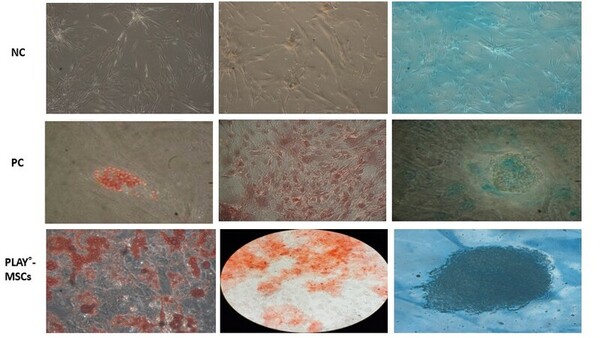
Here the authors performed a comparative analysis to investigate the viability of using PLAY® instead of fetal bovine serum (FBS) as a growth medium to culture cells with an enzyme-linked immunosorbent assay.
FBS is an important component in in vitro cell culture work, helping to provide needed nutrients to cells to grow. The authors look at the ability of an alternative to FBS to support cell growth in culture.
The authors use HF-1, an herbal formation, on bone marrow derived cells as well as breast cancer cells to assess HF-1's ability to prevent tumorigenesis. As metastasis requires coordination of multiple cells in the tumor microenvironment, their findings that HF-1 augments cytokine expression such as VEGF & TGF-B show that HF-1 has potential application to therapeutics.
Kashyap Jha et al. look at the formulation of MAT20, a crude extract of the moringa, amla, and tulsi leaves, as a potential complementary and alternative medicine. Using HeLa cells, they find MAT20 up-regulates expression of inflammation and cell cytotoxicity markers. Their data is important for understanding the anti-cancer and anti-inflammatory properties of MAT20.
Identifying treatments that can stimulate hair growth use could help those struggling with undesirable hair loss. Here, the authors show that Fibroblast Growth Factors can stimulate the division of cells isolated from the mouse hair follicle. Their results suggest that this family of growth factors might be helpful in stimulating hair growth in living animals as well.
Oligodendrocytes are specialized brain cells that can change to cells that produce myelin and protect nerves. This study investigates the capacity for different extracellular matrix cues to induce this effect in culture.
Berberine, a natural product alkaloid, has been shown to exert biological activity via in situ production of singlet oxygen when photo irradiated. Berberine utilizes singlet oxygen in its putative mechanism of action, wherein it forms an activated complex with DNA and photosensitizes triplet oxygen to singlet oxygen to specifically oxidize guanine residues, thereby halting cell replication and leading to cell death. This has potential application in photodynamic therapy, alongside other such compounds which also act as photosensitizers and produce singlet oxygen in situ. The quantification of singlet oxygen in various photosensitizers, including berberine, is essential for determining their photosensitizer efficiencies. We postulated that the singlet oxygen produced by photoirradiation of berberine would be superior in terms of singlet oxygen production to the aforementioned photosensitizers when irradiated with UV light, but inferior under visible light conditions, due to its strong absorbance of UV wavelengths.