Browse Articles

The Effects of Post-Consumer Waste Polystyrene on the Rate of Mealworm Consumption

Green et al. | Nov 29, 2018

The Effects of Post-Consumer Waste Polystyrene on the Rate of Mealworm Consumption

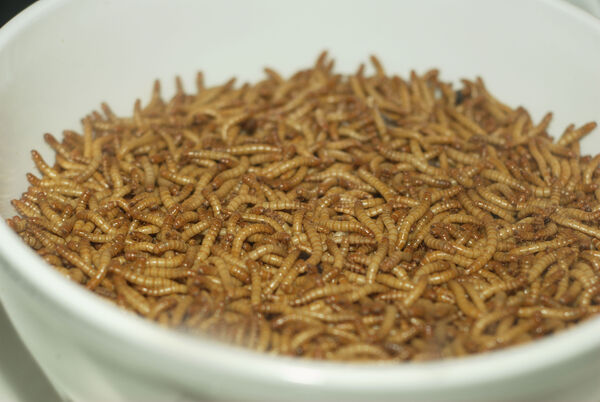
In a world where plastic waste accumulation is threatening both land and sea life, Green et al. investigate the ability of mealworms to breakdown polystyrene, a non-recyclable form of petrochemical-based polymer we use in our daily lives. They confirm that these organisms, can degrade various forms of polystyrene, even after it has been put to use in our daily lives. Although the efficiency of the degradation process still requires improvement, the good news is, the worms are tiny and themselves are biodegradable, so we can use plenty of them without worrying about space and how to get rid of them. This is very promising and certainly good news for the planet.

Read More...

Comparative Gamma Radiation Analysis by Geographic Region

Zadan et al. | Jul 20, 2015

Comparative Gamma Radiation Analysis by Geographic Region

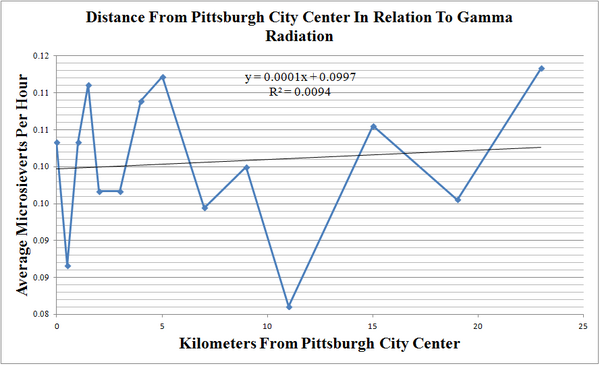
Gamma radiation can be produced by both natural and man-made sources and abnormally high exposure levels could lead to an increase in cell damage. In this study, gamma radiation was measured at different locations and any correlation with various geographic factors, such as distance from a city center, elevation and proximity to the nearest nuclear reactor, was determined.

Read More...

Using data science along with machine learning to determine the ARIMA model’s ability to adjust to irregularities in the dataset

Choudhary et al. | Jul 26, 2021

Using data science along with machine learning to determine the ARIMA model’s ability to adjust to irregularities in the dataset

Auto-Regressive Integrated Moving Average (ARIMA) models are known for their influence and application on time series data. This statistical analysis model uses time series data to depict future trends or values: a key contributor to crime mapping algorithms. However, the models may not function to their true potential when analyzing data with many different patterns. In order to determine the potential of ARIMA models, our research will test the model on irregularities in the data. Our team hypothesizes that the ARIMA model will be able to adapt to the different irregularities in the data that do not correspond to a certain trend or pattern. Using crime theft data and an ARIMA model, we determined the results of the ARIMA model’s forecast and how the accuracy differed on different days with irregularities in crime.

Read More...

Antibiotic Residues Detected in Commercial Cow’s Milk

Memili et al. | Mar 18, 2015

Antibiotic Residues Detected in Commercial Cow’s Milk

Antibiotics are oftentimes used to treat mastitis (infection of the mammary gland) in dairy cows. Regulations require that milk from these cows be discarded until the infection has cleared and antibiotic residues are no longer detectable in the cow's milk. These regulations are in place to protect consumers and to help prevent the rise of antibiotic resistant bacteria. In this study, the authors test milk samples from 10 milk suppliers in the Greensboro, NC to see if they contain detectable levels of antibiotic residues.

Read More...

Predicting baseball pitcher efficacy using physical pitch characteristics

Oberoi et al. | Jan 11, 2024

Predicting baseball pitcher efficacy using physical pitch characteristics
Image credit: Antoine Schibler

Here, the authors sought to develop a new metric to evaluate the efficacy of baseball pitchers using machine learning models. They found that the frequency of balls, was the most predictive feature for their walks/hits allowed per inning (WHIP) metric. While their machine learning models did not identify a defining trait, such as high velocity, spin rate, or types of pitches, they found that consistently pitching within the strike zone resulted in significantly lower WHIPs.

Read More...

Assigning Lightning Seasons to Different Regions in the United States

Hawkins et al. | Sep 07, 2020

Assigning Lightning Seasons to Different Regions in the United States

Climate change is predicted to increase the frequency of severe thunderstorm events in coming years. In this study, the authors hypothesized that (i) the majority of severe thunderstorm events will occur in the summer months in all states examined for all years analyzed, (ii) climate change will cause an unusual number of severe thunderstorm events in winter months in all states, (iii) thundersnow would be observed in Colorado, and (iv.) there would be no difference in the number of severe thunderstorm events between states in any given year examined. They classified lightning seasons in all states observed, with the most severe thunderstorm events occurring in May, June, July, and August. Colorado, New Jersey, Washington, and West Virginia were found to have severe thunderstorm events in the winter, which could be explained by increased winter storms due to climate change (1). Overall, they highlight the importance of quantifying when lightning seasons occur to avoid lightning-related injuries or death.

Read More...

Characterization of Drought Tolerance in Arabidopsis Mutant fry1-6

Kim et al. | Jan 07, 2019

Characterization of Drought Tolerance in Arabidopsis Mutant  fry1-6

In a world where water shortage is becoming an increasing concern, and where population increase seems inevitable, food shortage is an overwhelming concern for many. In this paper, the authors aim to characterize a drought-resistant strain of A. thaliana, investigating the cause for its water resistance. These and similar studies help us learn how plants could be engineered to improve their ability to flourish in a changing climate.

Read More...

Using Artificial Intelligence to Forecast Continuous Glucose Monitor(CGM) readings for Type One Diabetes

Jalla et al. | Aug 07, 2024

Using Artificial Intelligence to Forecast Continuous Glucose Monitor(CGM) readings for Type One Diabetes
Image credit: The authors

People with Type One diabetes often rely on Continuous Blood Glucose Monitors (CGMs) to track their blood glucose and manage their condition. Researchers are now working to help people with Type One diabetes more easily monitor their health by developing models that will future blood glucose levels based on CGM readings. Jalla and Ghanta tackle this issue by exploring the use of AI models to forecast blood glucose levels with CGM data.

Read More...