Browse Articles

Fractal dimensions of crumpled paper

Zhou et al. | Aug 10, 2023

Fractal dimensions of crumpled paper
Image credit: Richard Dykes

Here, beginning from an interest in fractals, infinitely complex shapes. The authors investigated the fractal object that results from crumpling a sheet of paper. They determined its fractal dimension using continuous Chi-squared analysis, thereby testing and validating their model against the more conventional least squares analysis.

Read More...

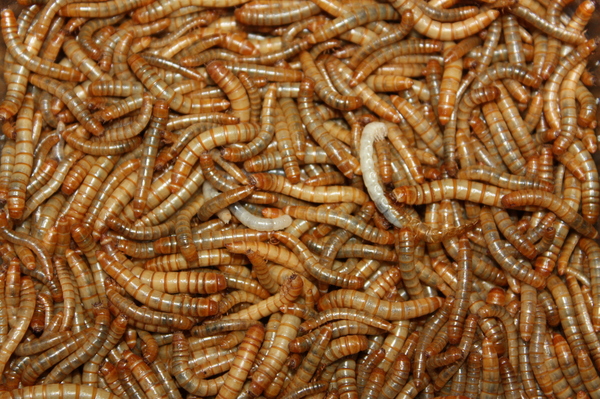
Two Wrongs Could Make a Right: Food Waste Compost Accelerated Polystyrene Consumption of Tenebrio molitor

Fu et al. | Jul 13, 2020

Two Wrongs Could Make a Right: Food Waste Compost Accelerated Polystyrene Consumption of <em>Tenebrio molitor</em>

Expanded polystyrene (EPS) is a plastic used to make food containers and packing materials that poses a threat to the environment. Mealworms can degrade EPS, but at a slow rate. Here, researchers assessed the impact of food waste compost and oats on the speed of EPS consumption by mealworms, superworms, and waxworms. A positive correlation was found between food waste compost supplementation and EPS consumption, especially by mealworms, indicating a potential industrial application.

Read More...

Banana-based Biofuels for Combating Climate Change: How the Composition of Enzyme Catalyzed Solutions Affects Biofuel Yield

Klein-Hessling Barrientos et al. | May 27, 2020

Banana-based Biofuels for Combating Climate Change: How the Composition of Enzyme Catalyzed Solutions Affects Biofuel Yield

The authors investigate whether amylase or yeast had a more prominent role in determining the bioethanol concentration and bioethanol yield of banana samples. They hypothesized that amylase would have the most significant impact on the bioethanol yield and concentration of the samples. They found that while yeast is an essential component for producing bioethanol, the proportion of amylase supplied through a joint amylase-yeast mixture has a more significant impact on the bioethanol yield. This study provides a greater understanding of the mechanisms and implications involved in enzyme-based biofuel production, specifically of those pertaining to amylase and yeast.

Read More...

Utilizing a Wastewater-Based Medium for Engineered Saccharomyces cerevisiae for the Biological Production of Fatty Alcohols and Carboxylic Acids to Replace Petrochemicals

Ramesh et al. | Oct 02, 2019

Utilizing a Wastewater-Based Medium for Engineered <em>Saccharomyces cerevisiae</em> for the Biological Production of Fatty Alcohols and Carboxylic Acids to Replace Petrochemicals

Saccharomyces cerevisiae yeast is used to produce bioethanol, an alternative to fossil fuels. In this study, authors take advantage of this well studied yeast by genetically engineering them to increase fatty acid biosynthesis and culturing in a cost-effective wastewater based medium; potentially providing a sustainable alternative to petrochemicals.

Read More...

Comparative Analysis of Vital Capacities of Athletes, Singers and Other Students of Age 13-14 Years: A Cross-Sectional Observational Study

Taneja et al. | Sep 30, 2019

Comparative Analysis of Vital Capacities of Athletes, Singers and Other Students of Age 13-14 Years: A Cross-Sectional Observational Study

Physical activity when performed regularly has beneficial effects on all systems of the body, including pulmonary functions. This study, conducted at Springdales School in Dhaula Kuan, New Delhi, aimed to determine the effect of sports and singing on the vital capacity (the maximum amount of air a person can expel from the lungs after a maximum inhalation), an important measure of pulmonary health.

Read More...