The authors survey adolescents about aspects of the COVID-19 pandemic to explore perspectives that may give rise to cognitive dissonance.
Read More...Investigating the impact of the COVID-19 pandemic on the cognitive dissonance of adolescents
The authors survey adolescents about aspects of the COVID-19 pandemic to explore perspectives that may give rise to cognitive dissonance.
Read More...Substance Abuse Transmission-Impact of Parental Exposure to Nicotine/Alcohol on Regenerated Planaria Offspring
The global mental health crisis has led to increased substance abuse among youth. Prescription drug abuse causes approximately 115 American deaths daily. Understanding intergenerational transmission of substance abuse is complex due to lengthy human studies and socioeconomic variables. Recent FDA guidelines mandate abuse liability testing for neuro-active drugs but overlook intergenerational transfer. Brown planaria, due to their nervous system development similarities with mammals, offer a novel model.
Read More...Determining the impact of caffeine on aggression in Betta splendens
The authors test the effect of caffeine on the behavior of the Siamese fighting fish Betta splendens.
Read More...Investigating the impact of electrocardiography biofeedback on POTS symptom management
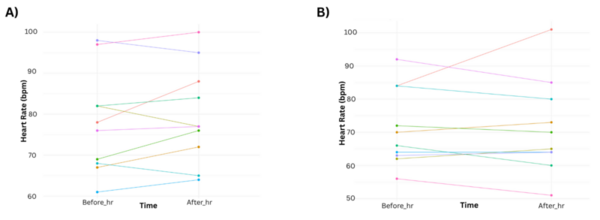
The authors test electrocardiography biofeedback as a treatment for individuals with Postural Orthostatic Tachycardia Syndrome.
Read More...Behavioral Longevity: The Impact of Smoking, Alcohol Consumption, and Obesity on Life Expectancy
In this article, the authors look into what is already known about the factor affecting longevity and determine the importance of behavioral factors including alcohol consumption, smoking, and obesity on longevity. The authors quantify data from over 150 countries and, interestingly, find that the impact each factor has on longevity is at least in part dependent on the country's economic development status. Overall, they conclude that an average person’s life expectancy can increase by more than 3 years if smoking and alcohol consumption is reduced by a half and weight is decreased by 10%.
Read More...Dispersing Agents Prevent Negative Impact of Oil on Uptake of Zinc by Duckweed (Lemna minor)
Duckweed plays an important role in its aquatic environment by removing pollutants, such as zinc, from the water. In this study, the authors demonstrate that uptake of zinc by duckweed is inhibited by the presence of oil in the water, but this effect can be reversed with the addition of a dispersing agent.
Read More...An accessible experiment to assess the impact of shapes of buildings and roofs on wind resistance
In this study, the authors determine which house model is most resistant to high winds by building smaller prototypes that could be tested with a handheld source of wind.
Read More...Heat impact to food’s shelf life - An example of milk
Food spoilage happens when food is not kept in a good storage condition. Qualitatively estimating the shortened shelf life of food could reduce food waste. In this study, we tested the impact of heat on milk shelf life. Our results showed that an exposure at room temperature (25°C) for 3.2 hours will decrease the shelf life of milk by one day.
Read More...COVID-19 pandemic impact on emotional aspects of high school students
In this study, the impact of shutting down schools on the emotional aspects of high school students was analyzed using survey responses.
Read More...A study of South Korean international school students: Impact of COVID-19 on anxiety and learning habits
In this study, the authors investigate the effects of the COVID-19 pandemic on South Korean international school students' anxiety, well being and their learning habits.
Read More...