Browse Articles

Comparative analysis of CO2 emissions of electric ride-hailing vehicles over conventional gasoline personal vehicles

Raman et al. | Jan 12, 2024

Comparative analysis of CO<sub>2</sub> emissions of electric ride-hailing vehicles over conventional gasoline personal vehicles
Image credit: Paul Hanaoka

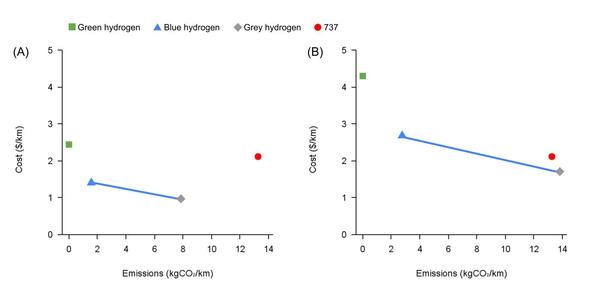
While some believe that ride-hailing services offer reduced CO2 emissions compared to individual driving, studies have found that driving without passengers on ride-hailing trips or "deadheading" prevents this. Here, with a mathematical model, the authors investigated if the use of electric vehicles as ride-hailing vehicles could offer reduced CO2 emissions. They found that the improved vehicle efficiency and cleaner generation could in fact lower emissions compared to the use of personal gas vehicles.

Read More...

Effects of Ocean Acidification on the Photosynthetic Ability of Chaetoceros gracilis in the Monterey Bay

Harvell et al. | Jan 16, 2020

Effects of Ocean Acidification on the Photosynthetic Ability of <i>Chaetoceros gracilis</i> in the Monterey Bay

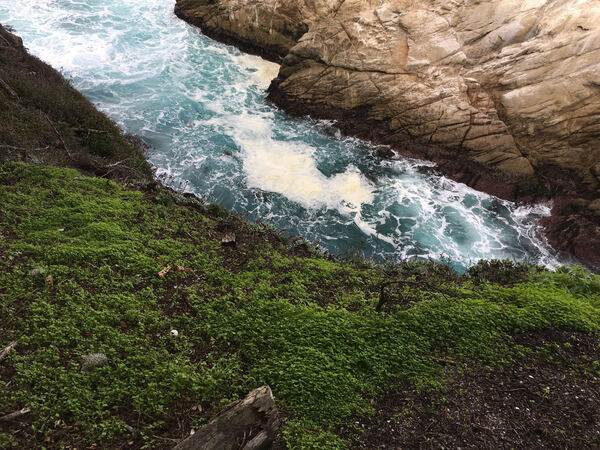
In this article, Harvell and Nicholson hypothesized that increased ocean acidity would decrease the photosynthetic ability of Chaetoceros gracilis, a diatom prolific in Monterey Bay, because of the usually corrosive effects of carbonic acid on both seashells and cells’ internal structures. They altered pH of algae environments and measured the photosynthetic ability of diatoms over four days by spectrophotometer. Overall, their findings indicate that C. gracilis may become more abundant in Monterey Bay as the pH of the ocean continues to drop, potentially contributing to harmful algal blooms.

Read More...

Methanotrophic bioremediation for the degradation of oceanic methane and chlorinated hydrocarbons

Lee et al. | Oct 08, 2021

Methanotrophic bioremediation for the degradation of oceanic methane and chlorinated hydrocarbons

Seeking an approach to address the increasing levels of methane and chlorinated hydrocarbons that threaten the environment, the authors worked to develop a novel, low-cost biotrickling filter for use as an ex situ method tailored to marine environments. By using methanotrophic bacteria in the filter, they observed methane degradation, suggesting the feasibility of chlorinated hydrocarbon degradation.

Read More...

Evaluating machine learning algorithms to classify forest tree species through satellite imagery

Gupta et al. | Mar 18, 2023

Evaluating machine learning algorithms to classify forest tree species through satellite imagery
Image credit: Sergei A

Here, seeking to identify an optimal method to classify tree species through remote sensing, the authors used a few machine learning algorithms to classify forest tree species through multispectral satellite imagery. They found the Random Forest algorithm to most accurately classify tree species, with the potential to improve model training and inference based on the inclusion of other tree properties.

Read More...