Enhanced soil fertility through seaweed-derived biochar: A comparative analysis with commercial fertilizers
(1) Vista Ridge High School, (2) QuantaHealth Research Institute
https://doi.org/10.59720/25-081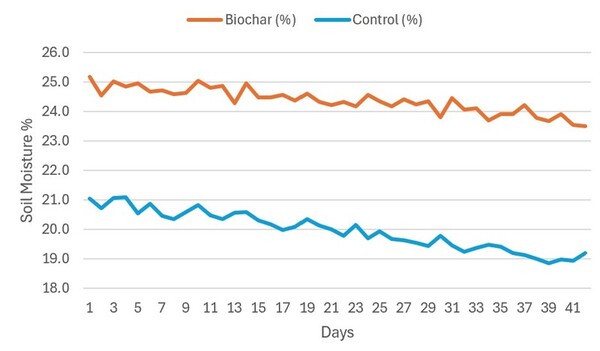
Decomposing seaweed waste in coastal regions releases toxic hydrogen sulfide gas, which poses environmental and health hazards. Researchers have demonstrated that biochar—a carbon-rich, porous material created through pyrolysis of organic biomass—serves as a sustainable soil amendment. In this study, we investigated seaweed-derived biochar as a dual-purpose solution for coastal waste management and soil enhancement. We transformed Gracilaria seaweed waste into biochar via pyrolysis and applied it to soil supporting spider plants (Chlorophytum comosum), with plant height, nutrient content, and water retention monitored over time. We compared two groups: spider plants grown with seaweed-derived biochar and a control group treated with commercially available fertilizer, both maintained under identical water, sunlight, and environmental conditions. The biochar-treated group consistently outperformed the control group across multiple parameters, exhibiting higher nutrient levels and visibly healthier plant development. The biochar-amended soil retained moisture significantly longer than the control soil, demonstrating markedly improved water retention capacity. Additionally, the greener leaf color in the biochar-treated plants indicated healthier development. These findings suggest that seaweed-derived biochar could serve as a foundation for future research into sustainable agriculture, particularly in regions facing soil degradation, limited fertilizer access, or water scarcity. Further studies may help translate this approach into scalable, low-cost solutions that support both crop productivity and carbon sequestration.
This article has been tagged with: