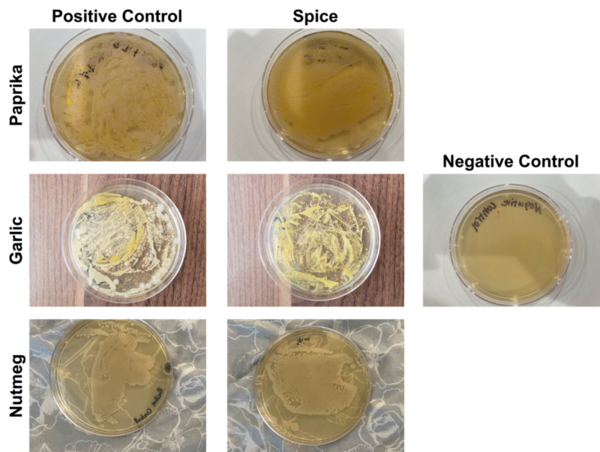
In this article the authors look at the ability of spices to reduce microbial load on a cutting surface by comparing growth of bacteria cultured before and after cleaning with various spice mixtures.
Read More...Testing antimicrobial properties of common household spices in a real-world scenario
In this article the authors look at the ability of spices to reduce microbial load on a cutting surface by comparing growth of bacteria cultured before and after cleaning with various spice mixtures.
Read More...Redesigning an Experiment to Determine the Coefficient of Friction
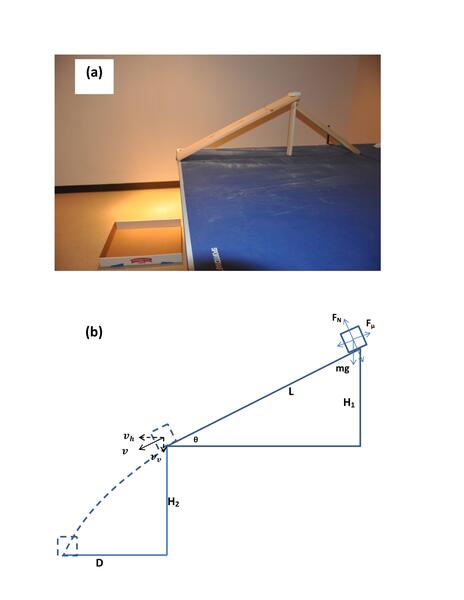
In a common high school experiment to measure friction coefficients, a weighted mass attached to a spring scale is dragged across a surface at a constant velocity. While the constant velocity is necessary for an accurate measurement, it can be difficult to maintain and this can lead to large errors. Here, the authors designed a new experiment to measure friction coefficients in the classroom using only static force and show that their method has a lower standard deviation than the traditional experiment.
Read More...Effect of pH Change on Exoskeletons of Selected Saltwater Organisms Which Rely on Calcium Fixation
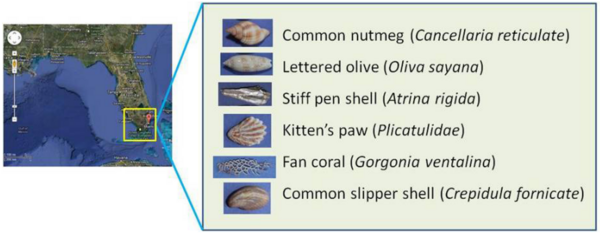
Rising atmospheric carbon dioxide levels are projected to lead to a 0.3- 0.4 unit decrease in ocean surface pH levels over the next century. In this study, the authors investigate the effect of pH change on the mass of calcified exoskeletons of common aquatic organisms found in South Florida coastal waters.
Read More...Investigating toxicity and antimicrobial properties of silver nanoparticles in Escherichia coli and Drosophila melanogaster
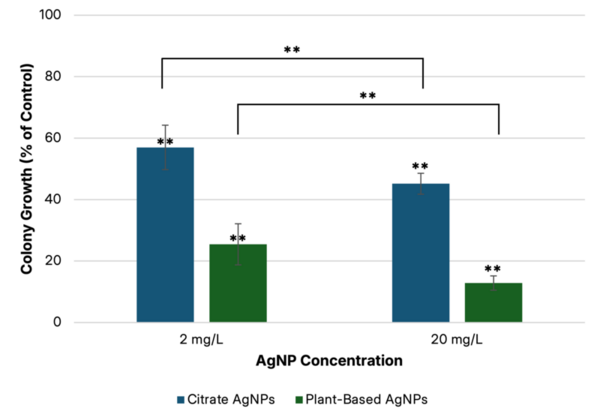
This paper looks at the antibacterial and toxic effects of silver nanoparticles (AgNPs) on Escherichia coli bacteria and Drosophila melanogaster fruit flies. They modified the AgNPs size, concentration, and surface coating to determine the effects on each of the organisms. For both organisms, increased AgNP concentration demonstrated increased toxicity but particle size and surface coating had opposing effects.
Read More...Crystallization kinetics of vanillin thin films
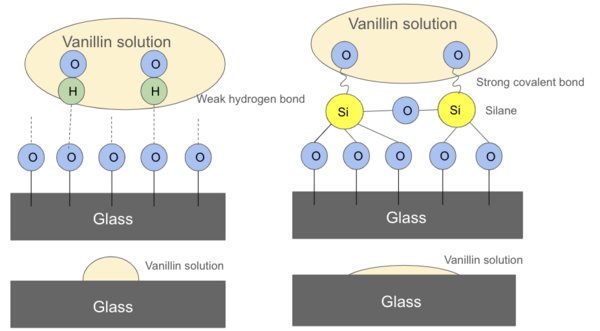
In this study, the authors investigate the crystallization kinetics of vanillin thin films from a solution or a melt, as well as how a silane coating on the glass surface affects these properties.
Read More...Nanotexturing as a method to reduce dust accumulation on solar panels
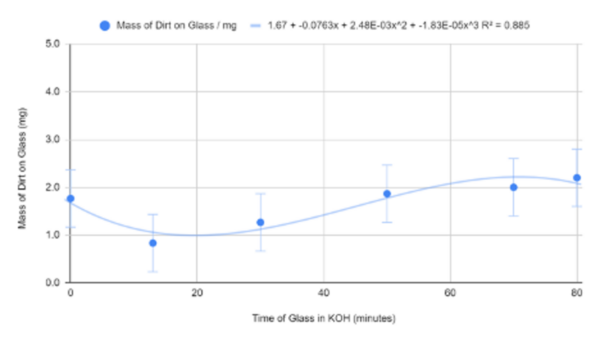
Dust accumulation on solar panels can reduce electricity output by 20–50%, posing a major challenge for solar energy collection. Instead of altering panel design, we explored a simpler approach by modifying surface energy through nanotexturing, predicting that hydrophobic surfaces would repel both water and dust. This study found that treating glass and silicone surfaces with potassium hydroxide (KOH) for 13 and 10 minutes, respectively, created optimal nanotextures (445 nm for glass, 205 nm for silicone), significantly reducing dirt accumulation and improving solar energy capture.
Read More...Converting SiO2 wafers to hydrophobic using chlorotrimethylsilane
Semiconductors are the center of the fourth industrial revolution as they are key components for all electronics. Exposed wafers made of silicon (Si), which can easily oxidize, convert to silicon dioxide (SiO2). The surface of SiO2 wafers consists of many Si-OH bonds, allowing them to easily bond with water, resulting in a “wet” or hydrophilic condition. We sought to determine a way to modify the surface of SiO2 wafers to become hydrophobic to ensure safe wet cleaning.
Read More...The most efficient position of magnets
Here, the authors investigated the most efficient way to position magnets to hold the most pieces of paper on the surface of a refrigerator. They used a regression model along with an artificial neural network to identify the most efficient positions of four magnets to be at the vertices of a rectangle.
Read More...Modelling effects of alkylamines on sea salt aerosols using the Extended Aerosols and Inorganics Model
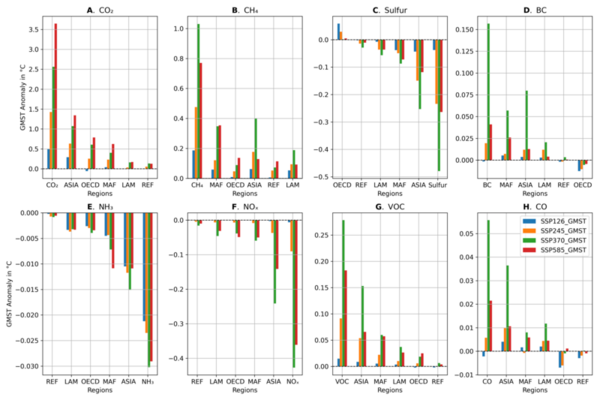
With monitoring of climate change and the evolving properties of the atmosphere more critical than ever, the authors of this study take sea salt aerosols into consideration. These sea salt aerosols, sourced from the bubbles found at the surface of the sea, serve as cloud condensation nuclei (CCN) and are effective for the formation of clouds, light scattering in the atmosphere, and cooling of the climate. With amines being involved in the process of CCN formation, the authors explore the effects of alkylamines on the properties of sea salt aerosols and their potential relevance to climate change.
Read More...Formation and sticking of air bubbles in water in d-block containers
Bubbles! In this study, the authors investigate the effects that different materials, temperature, and distance have on the formation of water bubbles on the surface of copper and steel. They calculated mathematical relations based on the outcomes to better understand whether interstitial hydrogen present in the d-block metals form hydrogen bonds with the water bubbles to account for the structural and mechanical stability.
Read More...