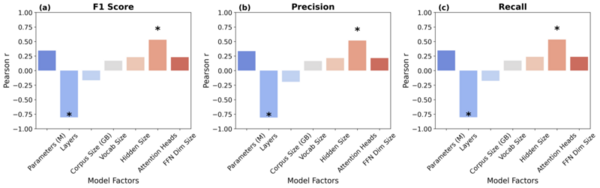
This study evaluates the potential of natural language processing (NLP) models in an emotion-driven bibliotherapy framework to improve mental health challenges.
Read More...Evaluating key factors in emotion detection models for AI-driven personalized bibliotherapy
This study evaluates the potential of natural language processing (NLP) models in an emotion-driven bibliotherapy framework to improve mental health challenges.
Read More...Exploring Political Discourse Among High School Journalists with Web Scraping and AI Technology
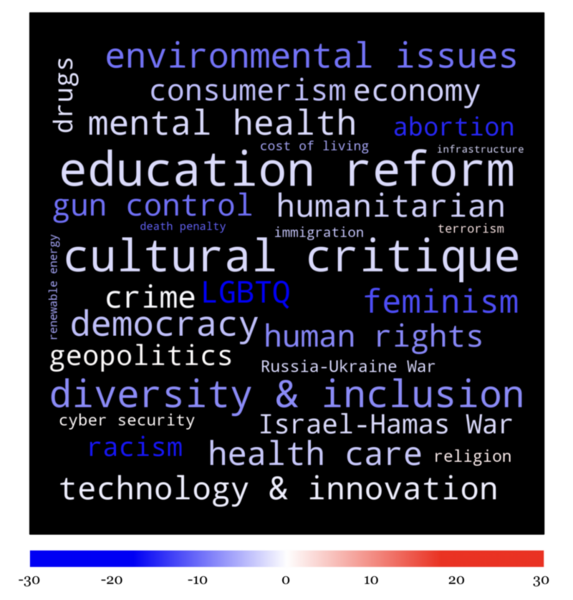
Here the authors provided greater coverage of adolescent stances by investigating the political perspectives and trends of high school journalists, utilizing web scraping methods and artificial intelligence (ChatGPT-4o) to analyze over 153,000 articles. They found that high school publications exhibit lower levels of political polarization compared to mainstream media and that journalists' views, while tending to lean moderately liberal, showed no significant correlation with local voting patterns.
Read More...The utilization of Artificial Intelligence in enabling the early detection of brain tumors
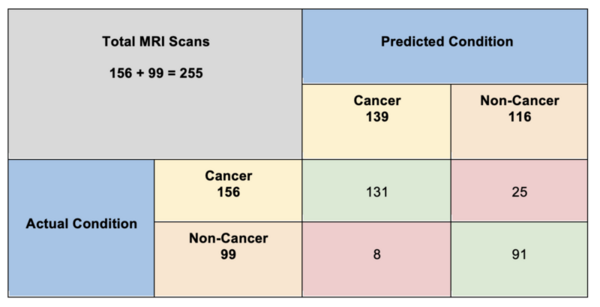
AI analysis of brain scans offers promise for helping doctors diagnose brain tumors. Haider and Drosis explore this field by developing machine learning models that classify brain scans as "cancer" or "non-cancer" diagnoses.
Read More...Trust in the use of artificial intelligence technology for treatment planning
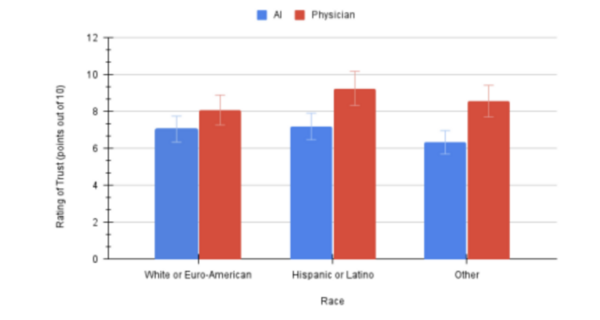
As AI becomes more integrated into healthcare, public trust in AI-developed treatment plans remains a concern, especially for emotionally charged health decisions. In a study of 81 community college students, AI-created treatment plans received lower trust ratings compared to physician-developed plans, supporting the hypothesis. The study found no significant differences in AI trust levels across demographic factors, suggesting overall skepticism toward AI-driven healthcare.
Read More...Lung region complexity affects Grad-CAM and Deep Taylor outcomes in pneumonia predictions

The authors studied the accuracy of two commonly used explainable AI techniques for detecting pneumonia in chest x-rays.
Read More...Mining social media posts: An alternative approach to understanding home health care workers’ experiences

This study developed an effective method for extracting valuable information from social media data and employed computer-assisted human coding alongside the AI-powered tool to analyze social media posts. The findings provide a deep understanding of the major challenges that home health care workers are experiencing and offer important implications regarding how to improve home healthcare workers' well-being, and provide suggestions on optimizing the home health care service experience.
Read More...Propagation of representation bias in machine learning

Using facial recognition as a use-case scenario, we attempt to identify sources of bias in a model developed using transfer learning. To achieve this task, we developed a model based on a pre-trained facial recognition model, and scrutinized the accuracy of the model’s image classification against factors such as age, gender, and race to observe whether or not the model performed better on some demographic groups than others. By identifying the bias and finding potential sources of bias, his work contributes a unique technical perspective from the view of a small scale developer to emerging discussions of accountability and transparency in AI.
Read More...Artificial intelligence face-tracking for a semi-virtual reality gaming experience

The authors studied the impact of AI face-tracking technology on the immersiveness of videogames as an alternative to virtual reality gaming.
Read More...SpottingDiffusion: Using transfer learning to detect Latent Diffusion Model-synthesized images
The availability of a poetry tutor prompts inexperienced writers to explore deeply emotional themes
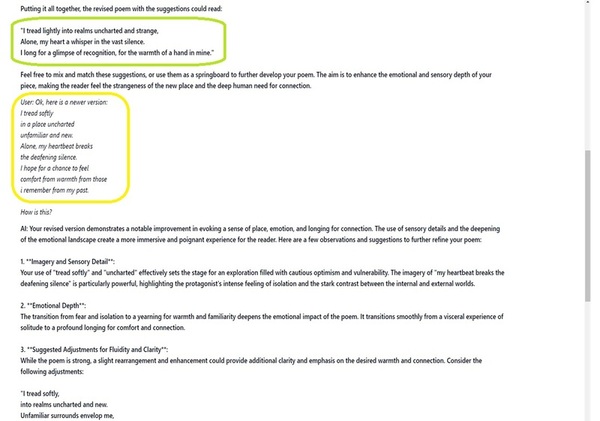
The study developed Loving Words, a free AI-powered poetry tutor designed to help writers improve their poetry and experience its therapeutic benefits. Two groups of participants wrote poems—one without assistance and one using Loving Words.
Read More...