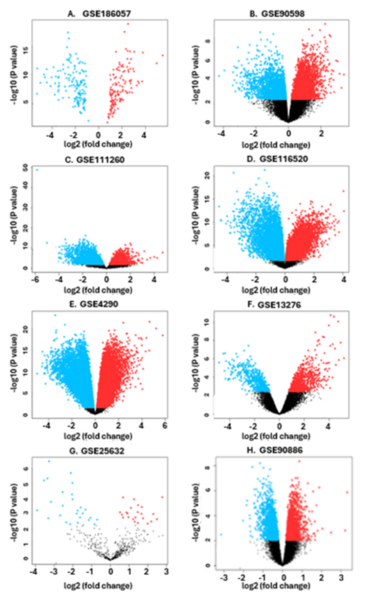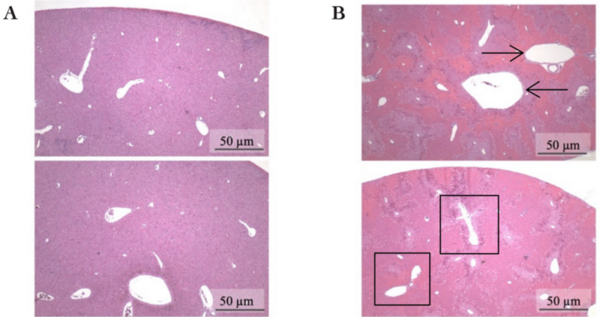
The authors looked at how acetaminophen may cause liver damage by looking at both serum level markers of liver damage as well as liver pathology.
Read More...Evaluation of hepatotoxicity from excessive acetaminophen: physiological and histological changes
The authors looked at how acetaminophen may cause liver damage by looking at both serum level markers of liver damage as well as liver pathology.
Read More...Leveraging transfer learning with convolutional neural networks for cardiovascular disease detection

This study shows the efficacy of leveraging transfer learning, specifically from residual networks, to detect CVDs and possible signs of CVDs. The findings indicate that leveraging transfer learning from residual networks alongside medical professionals is a highly promising approach for CVD detection and diagnosis, warranting further investigation.
Read More...Influence of induction heating on static recrystallization kinetics of AISI 4130 steel
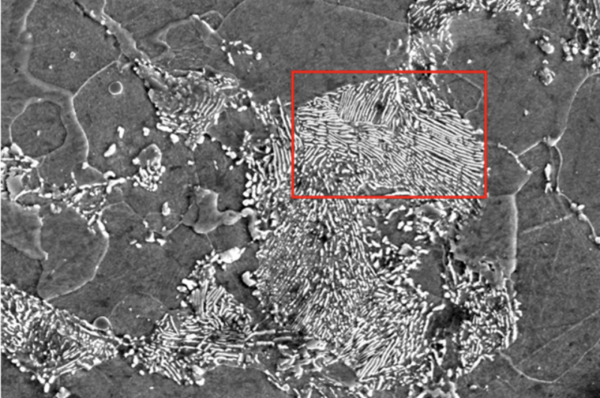
This article investigates whether induction heating can speed up static recrystallization in AISI 4130 steel compared with traditional radiant heating. It was found that induction-heated samples recrystallized faster, softened more quickly, and showed earlier microstructural changes like grain nucleation and pearlite spheroidization, suggesting induction heating could be a more efficient alternative for industrial metal heat treatments.
Read More...Using satellite surface temperature data to monitor urban heat island
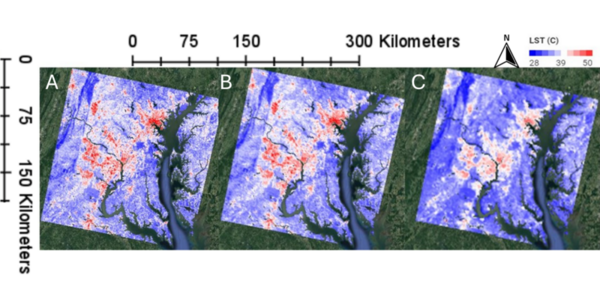
This manuscript investigates the urban heat island (UHI) effect by utilizing two satellite datasets: Landsat (high spatial resolution, lower temporal resolution) and MODIS (lower spatial resolution, high temporal resolution). The authors hypothesized that Landsat would provide better spatial detail, while MODIS would better capture temporal variations. Their analysis in the Washington D.C.–Baltimore region supports these hypotheses, demonstrating that Landsat offers finer spatial details, whereas MODIS provides more consistent seasonal patterns and better detects heatwave frequencies.
Read More...Population demographic patterns in PFAS-neurological health research
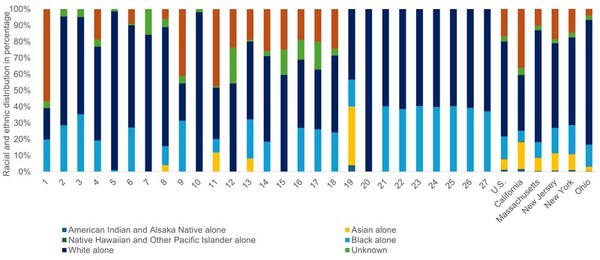
The authors analyzed racial and ethnic representation in studies on PFAS and neurological health outcomes.
Read More...The effects of dysregulated ion channels and vasoconstriction in glioblastoma multiforme
Mechanistic deconvolution of autoreduction in tetrazolium-based cell viability assays
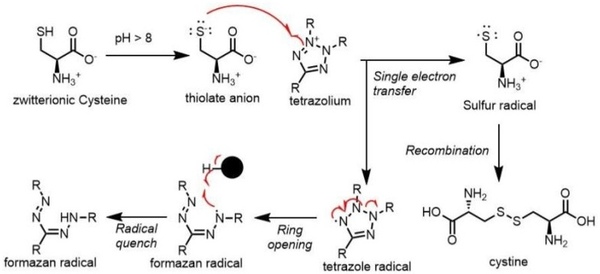
Optical reporters like tetrazolium dyes, exemplified by 5-diphenyl tetrazolium bromide (MTT), are effective tools for quantifying cellular responses under experimental conditions. These dyes assess cell viability by producing brightly-colored formazan dyes when reduced inside active cells. However, certain small molecules, including reducing agents like ascorbic acid, cysteine, and glutathione (GSH), can interfere with MTT assays, potentially compromising accuracy.
Read More...Synthetic auxin’s effect on root hair growth and peroxisomes in Arabidopsis thaliana
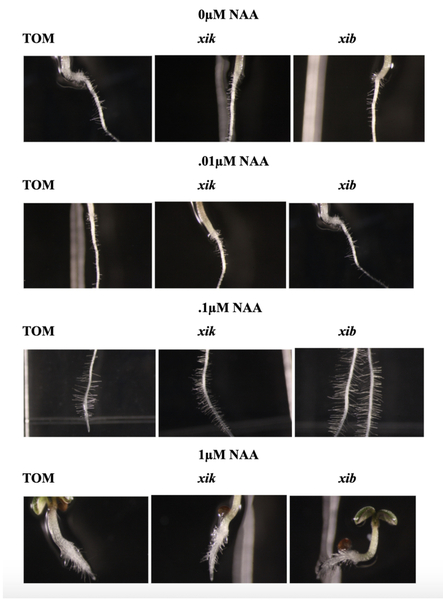
The authors looked at the ability of synthetic auxin to increase root hair growth in Arabidopsis thaliana. They found that 0.1 µM synthetic auxin significantly increased root hair length, but that 0.01 µM and 1 µM did not have any significant effect.
Read More...Simulating natural selection via autonomous agents: Environmental factors create unstable equilibria
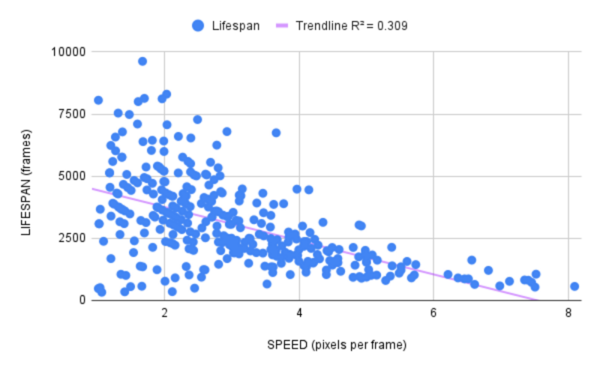
Natural selection shapes the evolution of all organisms, and one question of interest is whether natural selection will reach a "stopping point": a stable, ideal, value for any particular trait. Madhan and Kanagavel tackle this question by building a computer simulation of trait evolution in organisms.
Read More...Hybrid Quantum-Classical Generative Adversarial Network for synthesizing chemically feasible molecules
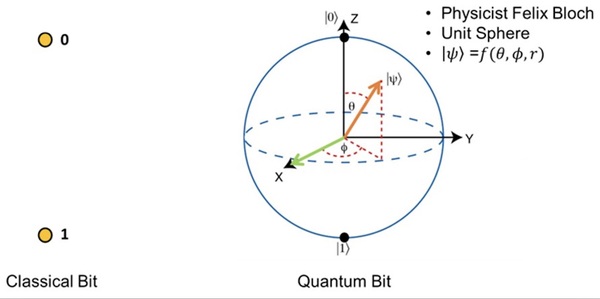
Current drug discovery processes can cost billions of dollars and usually take five to ten years. People have been researching and implementing various computational approaches to search for molecules and compounds from the chemical space, which can be on the order of 1060 molecules. One solution involves deep generative models, which are artificial intelligence models that learn from nonlinear data by modeling the probability distribution of chemical structures and creating similar data points from the trends it identifies. Aiming for faster runtime and greater robustness when analyzing high-dimensional data, we designed and implemented a Hybrid Quantum-Classical Generative Adversarial Network (QGAN) to synthesize molecules.
Read More...