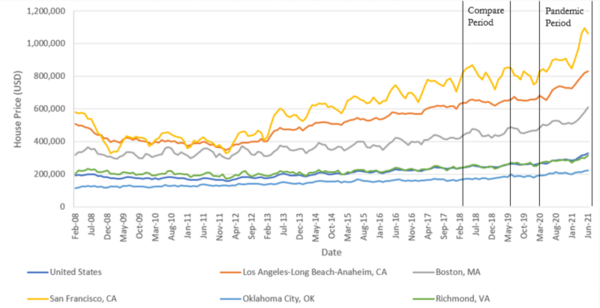
COVID-19 has impacted the way many people go about their daily lives, but what are the main factors driving the changes in the housing market, particular house prices?
Read More...The effect of COVID-19 on the USA house market
COVID-19 has impacted the way many people go about their daily lives, but what are the main factors driving the changes in the housing market, particular house prices?
Read More...Testing HCN1 channel dysregulation in the prefrontal cortex using a novel piezoelectric silk neuromodulator
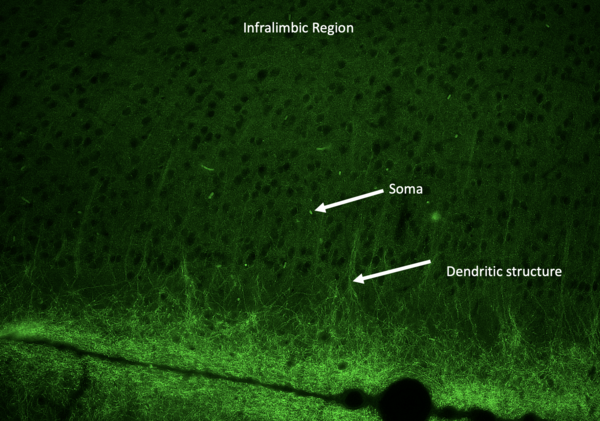
Although no comprehensive characterization of schizophrenia exists, there is a general consensus that patients have electrical dysfunction in the prefrontal cortex. The authors designed a novel piezoelectric silk-based implant and optimized electrical output through the addition of conductive materials zinc oxide (ZnO) and aluminum nitride (AlN). With further research and compatibility studies, this implant could rectify electrical misfiring in the infralimbic prefrontal cortex.
Read More...Predicting Orbital Resonance of 2867 Šteins Using the Yarkovsky Effect
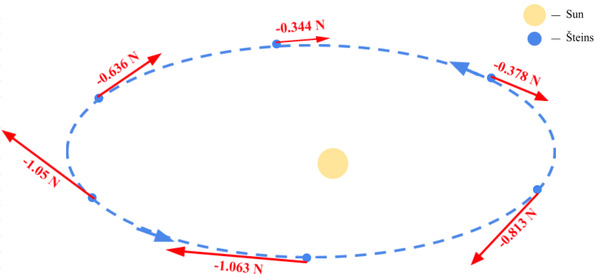
In this study, the impact of thermal effects on the orbit of an asteroid is investigated. This included determining if the asteroid's orbit would push into a region devoid of asteroids due to the gravitational pull of Jupiter.
Read More...Part of speech distributions for Grimm versus artificially generated fairy tales

Here, the authors wanted to explore mathematical paradoxes in which there are multiple contradictory interpretations or analyses for a problem. They used ChatGPT to generate a novel dataset of fairy tales. They found statistical differences between the artificially generated text and human produced text based on the distribution of parts of speech elements.
Read More...Regenerative Effects of Turmeric and Alpha-Lipoic Acid in Lumbriculus variegatus
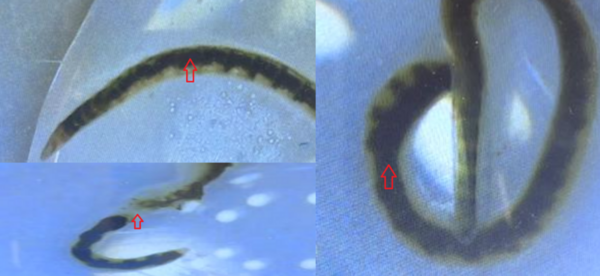
This study examines the effects of tumeric, and alph-lipoic acid on segment regeneration and cardiovascular pulse rate, using the California blackworm. Results can ultimately demonstrate potential natural compounds for tissue repair and their effect on physiological activity.
Read More...Advancing pediatric cancer predictions through generative artificial intelligence and machine learning
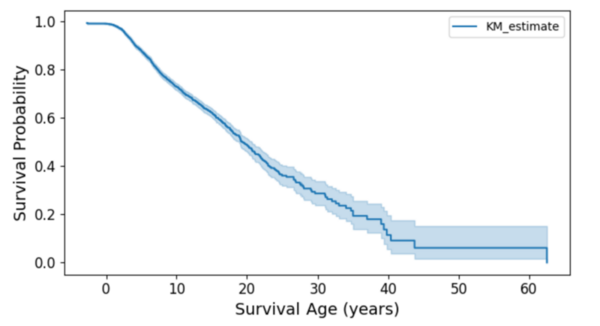
Pediatric cancers pose unique challenges due to their rarity and distinct biological factors, emphasizing the need for accurate survival prediction to guide treatment. This study integrated generative AI and machine learning, including synthetic data, to analyze 9,184 pediatric cancer patients, identifying age at diagnosis, cancer types, and anatomical sites as significant survival predictors. The findings highlight the potential of AI-driven approaches to improve survival prediction and inform personalized treatment strategies, with broader implications for innovative healthcare applications.
Read More...COVID-19 and air pollution in New York City

Did the COVID-19 pandemic and travel restrictions improve air quality? The authors investigate this question in New York City using existing pollution data and forecasting trends.
Read More...Machine Learning Algorithm Using Logistic Regression and an Artificial Neural Network (ANN) for Early Stage Detection of Parkinson’s Disease
Despite the prevalence of PD, diagnosing PD is expensive, requires specialized testing, and is often inaccurate. Moreover, diagnosis is often made late in the disease course when treatments are less effective. Using existing voice data from patients with PD and healthy controls, the authors created and trained two different algorithms: one using logistic regression and another employing an artificial neural network (ANN).
Read More...Using two-step machine learning to predict harmful algal bloom risk

Using machine learning to predict the risk of algae bloom
Read More...A comparative analysis of machine learning approaches to predict brain tumors using MRI
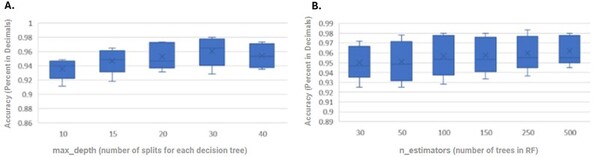
The authors use machine learning on MRI images of brain tissue to predict tumor onset as an avenue for early detection of brain cancer.
Read More...