Browse Articles

Applying centrality analysis on a protein interaction network to predict colorectal cancer driver genes

Saha et al. | Nov 18, 2023

Applying centrality analysis on a protein interaction network to predict colorectal cancer driver genes

In this article the authors created an interaction map of proteins involved in colorectal cancer to look for driver vs. non-driver genes. That is they wanted to see if they could determine what genes are more likely to drive the development and progression in colorectal cancer and which are present in altered states but not necessarily driving disease progression.

Read More...

Utilizing a novel T1rho method to detect spinal degeneration via magnetic resonance imaging

Wang et al. | Oct 04, 2023

Utilizing a novel T1rho method to detect spinal degeneration via magnetic resonance imaging

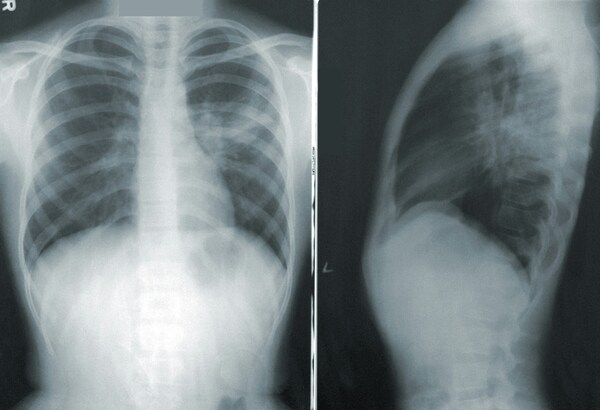
Spinal degeneration has been linked to critical conditions such as osteoarthritis in adults aged 40+; while this condition is considered to be irreversible, we took interest in magnetic resonance imaging (MRI) for early detection of the condition. Ultimately, our purpose was to determine the effectiveness of a relatively novel T1rho method in the early detection of spinal degeneration, and we hypothesized that the early to mild progression of spinal degeneration would affect T1rho values following an MRI scan.

Read More...

Model selection and optimization for poverty prediction on household data from Cambodia

Wong et al. | Sep 29, 2023

Model selection and optimization for poverty prediction on household data from Cambodia
Image credit: Paul Szewczyk

Here the authors sought to use three machine learning models to predict poverty levels in Cambodia based on available household data. They found teat multilayer perceptron outperformed the other models, with an accuracy of 87 %. They suggest that data-driven approaches such as these could be used more effectively target and alleviate poverty.

Read More...

The effect of activation function choice on the performance of convolutional neural networks

Wang et al. | Sep 15, 2023

The effect of activation function choice on the performance of convolutional neural networks
Image credit: Tara Winstead

With the advance of technology, artificial intelligence (AI) is now applied widely in society. In the study of AI, machine learning (ML) is a subfield in which a machine learns to be better at performing certain tasks through experience. This work focuses on the convolutional neural network (CNN), a framework of ML, applied to an image classification task. Specifically, we analyzed the performance of the CNN as the type of neural activation function changes.

Read More...

Estimation of cytokines in PHA-activated mononuclear cells isolated from human peripheral and cord blood

Subbiah et al. | Mar 09, 2022

Estimation of cytokines in PHA-activated mononuclear cells isolated from human peripheral and cord blood

In this study, the authors investigated the time-dependent cytokine secretion ability of phyto-hemagglutinin (PHA)-activated T cells derived from human peripheral (PB) and cord blood (CB). They hypothesized that the anti-inflammatory cytokine, IL-10, and pro-inflammatory cytokine, TNFα, levels would be higher in PHA-activated T cells obtained from PB as compared to the levels obtained from CB and would decrease over time. Upon PHA-activation, the IL-10 levels were relatively high while the TNFα levels decreased, making these findings applicable in therapeutic treatments e.g., rheumatoid arthritis, psoriasis, and organ transplantation.

Read More...

Genomic Signature Analysis for the Strategic Bioremediation of Polycyclic Aromatic Hydrocarbons in Mangrove Ecosystems in the Gulf of Tonkin

Dao et al. | Jun 27, 2021

Genomic Signature Analysis for the Strategic Bioremediation of Polycyclic Aromatic Hydrocarbons in Mangrove Ecosystems in the Gulf of Tonkin

Engineered bacteria that degrade oil are currently being considered as a safe option for the treatment of oil spills. For this approach to be successful, the bacteria must effectively express oil-degrading genes they uptake as part of an external genoming vehicle called a "plasmid". Using a computational approach, the authors investigate plasmid-bacterium compatibility to find pairs that ensure high levels of gene expression.

Read More...