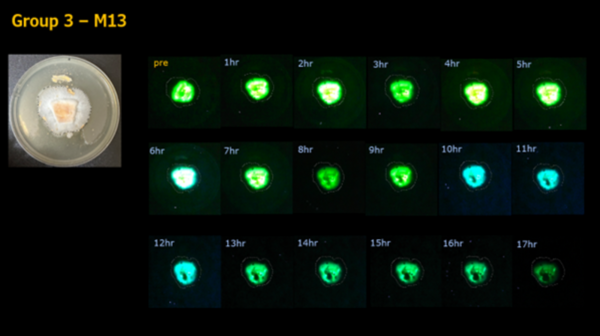
Here the authors investigate the potential of the bioluminescent fungus Panellus stipticus to serve as a sustainable bioindicator for environmental lead contamination. Their findings demonstrate that higher lead concentrations cause a measurable decrease in fungal bioluminescence intensity over time suggesting that the fungus could be an effective tool for detecting lead in an environment.
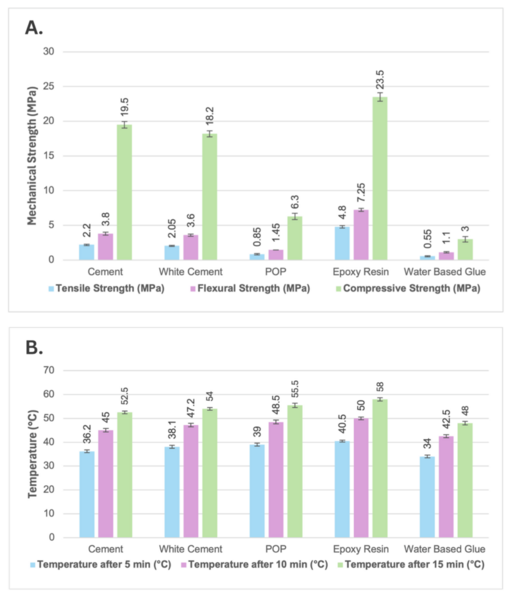
Textile waste from the fashion industry is a major environmental pollutant, but recycling waste into novel building material is a strategy to reduce the negative effects. This manuscript characterized five different binders that can be used to repurpose textile waste into bricks for construction purposes. Water-based glue, cement, white cement, plaster of Paris, and epoxy resin were mixed with shredded textile waste, and the mechanical characteristics and thermal insulation of each brick type were measured. Bricks with increased mechanical strength had the poorest thermal resistance, and the contrasting properties would suit different building purposes. This work provides a first step in generating recycled textile bricks for construction in a circular economy framework.
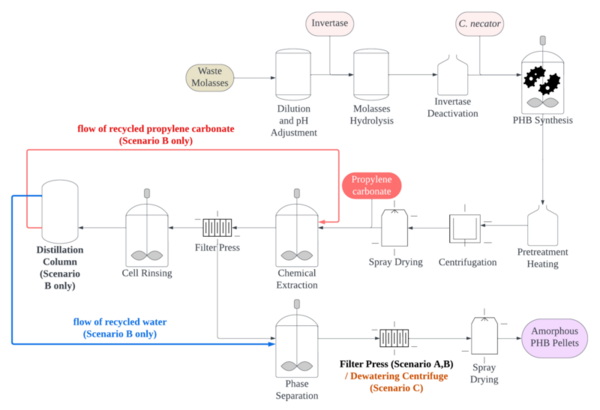
The authors looked at alternative production processes for PHB plastic in an effort to reduce environmental impact. They found that no alternative process was able to significantly decrease the environmental impact of PHB production, but that optimizing dewatering steps during production could lead to the largest improvement on environmental impact.
The authors looked at student behaviors around disposal of face masks. The goal of the study was to bring awareness to improper mask disposal and how the resulting litter contributes to overall environmental pollution.
Greenspaces (urban and wetland areas that contain vegetation) are beneficial to reducing pollution, while airplanes are a highly-polluting method of transportation. The authors examine the intersection of these two environmental factors by processing satellite images to reveal what percentage of flight paths go over greenspaces at major US airports.
Here recognizing the potential for pollution to impact the ecosystems of local waterways, the authors investigated the growth of tiger lilies, which are invasive to the Potomac River, in relation to the level of pollution. The authors report that increasing levels of pollution led to increased growth of the invasive species based on their study.
The Environmental Protection Agency (EPA) reports a significant number of heavy metal-contaminated sites across the United States. To address this public health concern, rhizoremediation using microbes has emerged as a promising solution. Here, a combination of soil microbes were inoculated in the rhizosphere in soil contaminated with 500 parts per million (ppm) of lead. Results showed rhizoremediation is an effective bioremediation strategy and may increase crop productivity by converting nonarable lands into arable lands.
There have been several issues concerning the water quality in Ulaanbaatar, Mongolia in the past few years. This study, we collected 28 samples from 6 districts of Ulaanbaatar to check if the water supply quality met the standards of the World Health Organization, the Environmental Protection Agency, and a Mongolian National Standard. Only three samples fully met all the requirements of the global standards. Samples in Zaisan showed higher hardness (>120 ppm) and alkalinity levels (20–200 ppm) over the other districts in the city. Overall, the results show that it is important to ensure a safe and accessible water supply in Ulaanbaatar to prevent future water quality issues.
Seeking an approach to address the increasing levels of methane and chlorinated hydrocarbons that threaten the environment, the authors worked to develop a novel, low-cost biotrickling filter for use as an ex situ method tailored to marine environments. By using methanotrophic bacteria in the filter, they observed methane degradation, suggesting the feasibility of chlorinated hydrocarbon degradation.
This study used hand-collected Greenhouse gas (GHG) emissions data from the Environmental Protection Agency (EPA) and aimed to understand the determinants and incentives of GHG emissions reduction. It explored how companies’ financials, Chief Executive Officer (CEO) compensation, and corporate governance affected GHG emissions. Results showed that companies reporting GHG emissions were wide-spread among the 48 industries represented by two-digit Standard Industrial Classification (SIC) codes.