Here, the authors sought to evaluate the efforts of fast fashion clothing companies towards sustainability, specifically in regards to the United Nations Sustainable Development Goals. The authors used natural language processing to investigate the sustainability reports of fast fashion companies focusing on terms established by the UN. They found that the most consistently addressed areas were related to sustainable consumption/production, with a focus on health and well-being emerging during the recent pandemic.
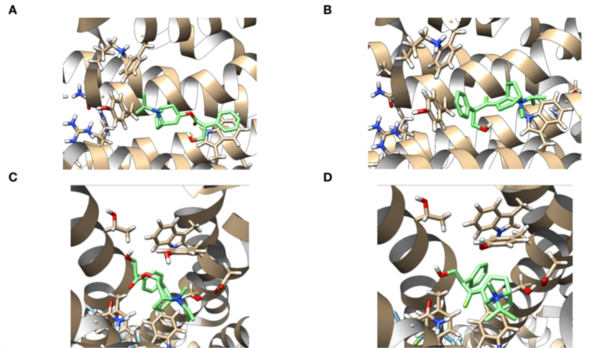
Anticholinergics are used in treating asthma, a chronic inflammation of the airways. These drugs block human M1 and M2 muscarinic acetylcholine receptors, inhibiting bronchoconstriction. However, studies have reported complications of anticholinergic usage, such as exacerbated eosinophil production and worsened urinary retention. Modification of known anticholinergics using bioisosteric replacements to increase efficacy could potentially minimize these complications. The present study focuses on identifying viable analogs of anticholinergics to improve binding energy to the receptors compared to current treatment options. Glycopyrrolate (G), ipratropium (IB), and tiotropium bromide (TB) were chosen as parent drugs of interest, due to the presence of common functional groups within the molecules, specifically esters and alcohols. Docking score analysis via AutoDock Vina was used to evaluate the binding energy between drug analogs and the muscarinic acetylcholine receptors. The final results suggest that G-A3, IB-A3, and TB-A1 are the most viable analogs, as binding energy was improved when compared to the parent drug. G-A4, IB-A4, IB-A5, TB-A3, and TB-A4 are also potential candidates, although there were slight regressions in binding energy to both muscarinic receptors for these analogs. By researching the effects of bioisosteric replacements of current anticholinergics, it is evident that there is a potential to provide asthmatics with more effective treatment options.
While serving as an immediate address for psychological safety and stability, psychological first aid (PFA) currently lacks the incorporation of triage. Without triage, patients cannot be prioritized in correspondence to condition severity that is often called for within emergency conditions. To disentangle the relevance of a potential triage system to PFA, the authors of this paper have developed a method to quantify resilience - a prominent predictor of the capability to recover from a disaster. With this resilience index, they have quantified resilience of differing age, race, and sex demographics to better inform the practice of PFA and potential demographic prioritization via a triage system.
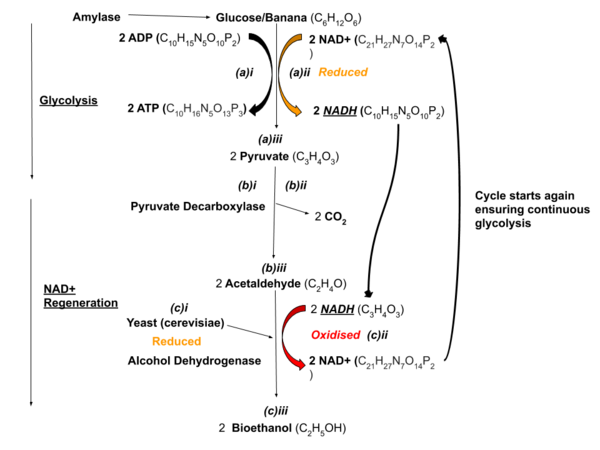
The authors investigate whether amylase or yeast had a more prominent role in determining the bioethanol concentration and bioethanol yield of banana samples. They hypothesized that amylase would have the most significant impact on the bioethanol yield and concentration of the samples. They found that while yeast is an essential component for producing bioethanol, the proportion of amylase supplied through a joint amylase-yeast mixture has a more significant impact on the bioethanol yield. This study provides a greater understanding of the mechanisms and implications involved in enzyme-based biofuel production, specifically of those pertaining to amylase and yeast.
One common age-related health problem is the loss of bone mineral density (BMD), which can lead to a variety of negative health outcomes, including increased risk of spinal fracture. In this study, the authors investigate risk factors that may be predictive of an individual's risk of spinal fracture. Their findings provide valuable information that clinicians can use in patient evaluations.
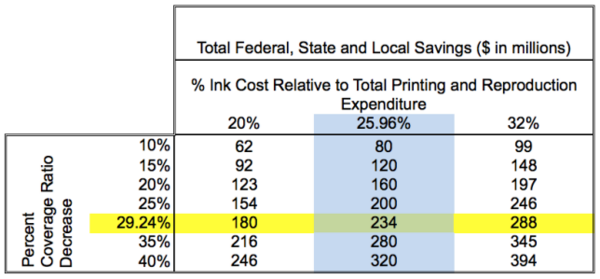
The printing-related expenditure that is budgeted in 2014 for U.S. Federal agencies is $1.8 billion. A sample of five publically available documents produced by various federal agencies is analyzed and the cost savings arising from a change in font type are estimated. The analysis predicts that the Government’s annual savings by switching to Garamond are likely to be about $234 million with worst-case savings of $62 million and best-case savings of $394 million. Indirect benefits arising from a less detrimental impact on the environment due to lower ink production and disposal volumes are not included in these estimates. Times New Roman is not as efficient as Garamond, and the third federally-recommended font, Century Gothic, is actually worse on average than the fonts used in the sample documents.
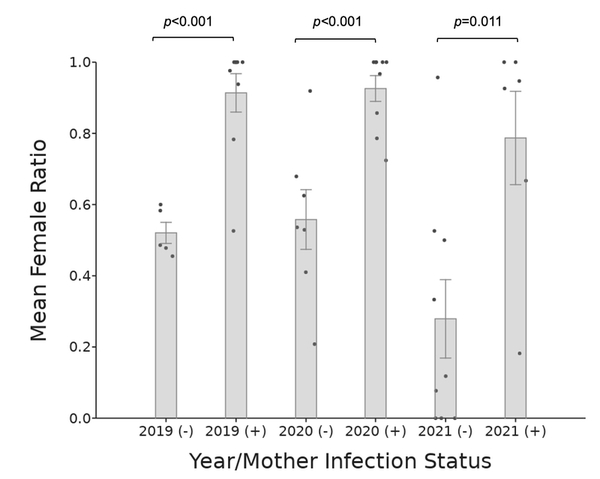
Wolbachia pipientis (Wolbachia) is a maternally inherited endosymbiotic bacterium that infects over 50% of arthropods, including pillbugs, and acts as a reproductive parasite in the host. In the common terrestrial pillbug Armadillidium vulgare (A. vulgare), Wolbachia alters the sex ratio of offspring through a phenomenon called feminization, where genetic males develop into reproductive females. Previous studies have focused on the presence or absence of Wolbachia as a sex ratio distorter in laboratory cultured and natural populations mainly from sites in Europe and Japan. Our three-year study is the first to evaluate the effects of the Wolbachia sex ratio distorter in cultured A. vulgare offspring in North America. We asked whether Wolbachia bacteria feminize A. vulgare isopod male offspring from infected mothers and if this effect can be detected in F1 offspring by comparing the male/female offspring ratios. If so, the F1 offspring ratio should show a higher number of females than males compared to the offspring of uninfected mothers. Over three years, pillbug offspring were cultured from pregnant A. vulgare females and developed into adults. We determined the Wolbachia status of mothers and counted the ratios of male and female F1 progeny to determine feminization effects. In each year sampled, significantly more female offspring were born to Wolbachia-infected mothers than those from uninfected mothers. These ratio differences suggest that the Wolbachia infection status of mothers directly impacts the A. vulgare population through the production of reproductive feminized males, which in turn provides an advantage for further Wolbachia transmission.
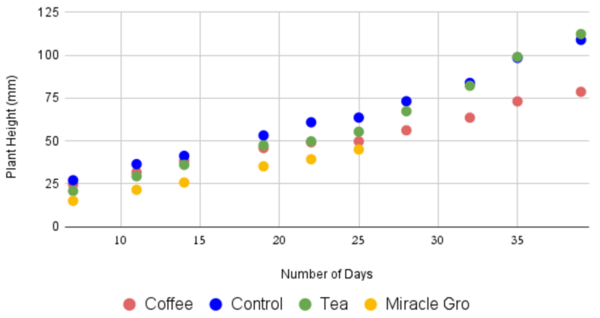
The authors looked at fertilizer derived from coffee ground tea leaves, measuring the effectiveness by measuring the height, weight, and number of leaves on basil plants.